Fused Glass and Fused Quartz Fillers: Choosing a Route for Resin Slabs
Compare glass and fused-silica filler routes for resin slabs, with practical checks for chemistry, phase evidence, particle grading, moisture, color and trial fit.
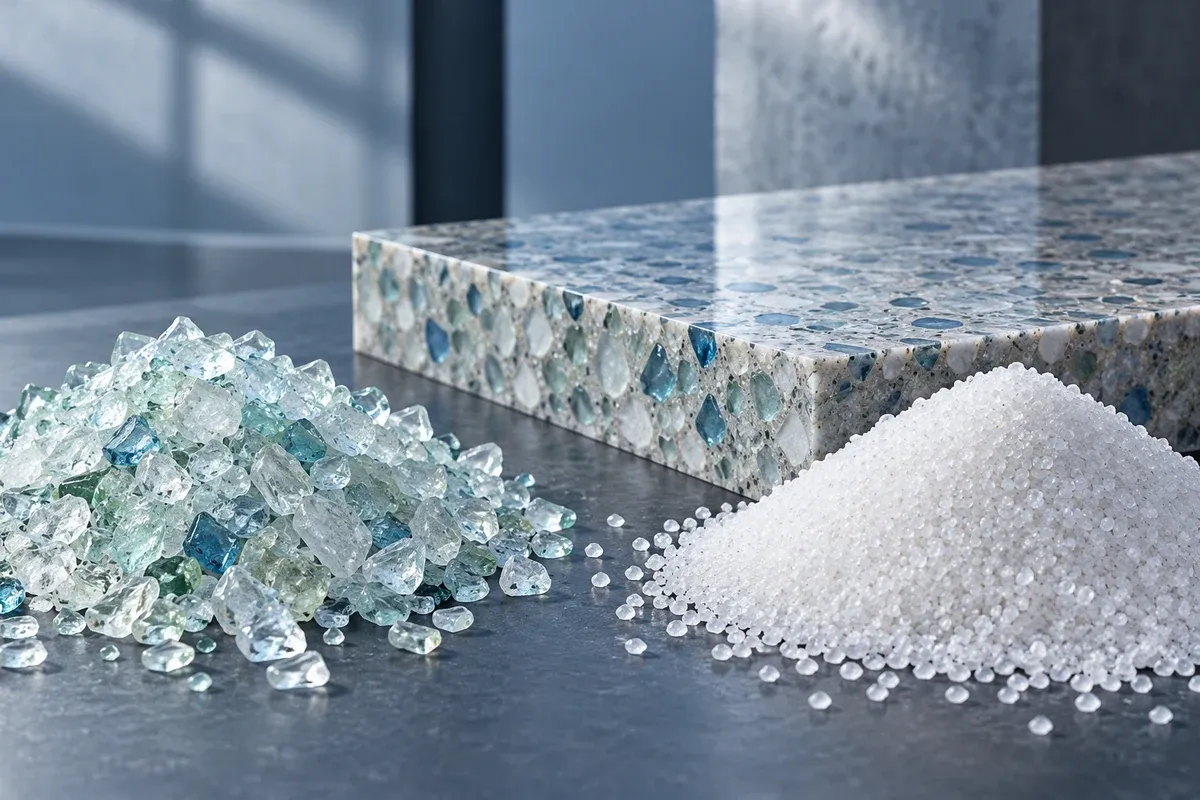
Two fillers can both carry the word fused and still raise different questions for a slab buyer. A customer-provided 2024 research-and-development record for a material called fused glass reports 70.89% SiO2 in its oxide composition. A separate 2014 qualitative XRD report classified two particular fused-silica powder samples as amorphous. Those results describe different samples and different measurements; neither identifies the phase content of a current lot. The name on a bag does not answer either question by itself.
That distinction matters when a plant is balancing surface appearance, process fit and documentation. Glass and quartz are not interchangeable labels. Start by defining the outcome your resin slab needs, then ask for evidence that matches the material and lot being purchased.
Choose by the job, not by the adjective
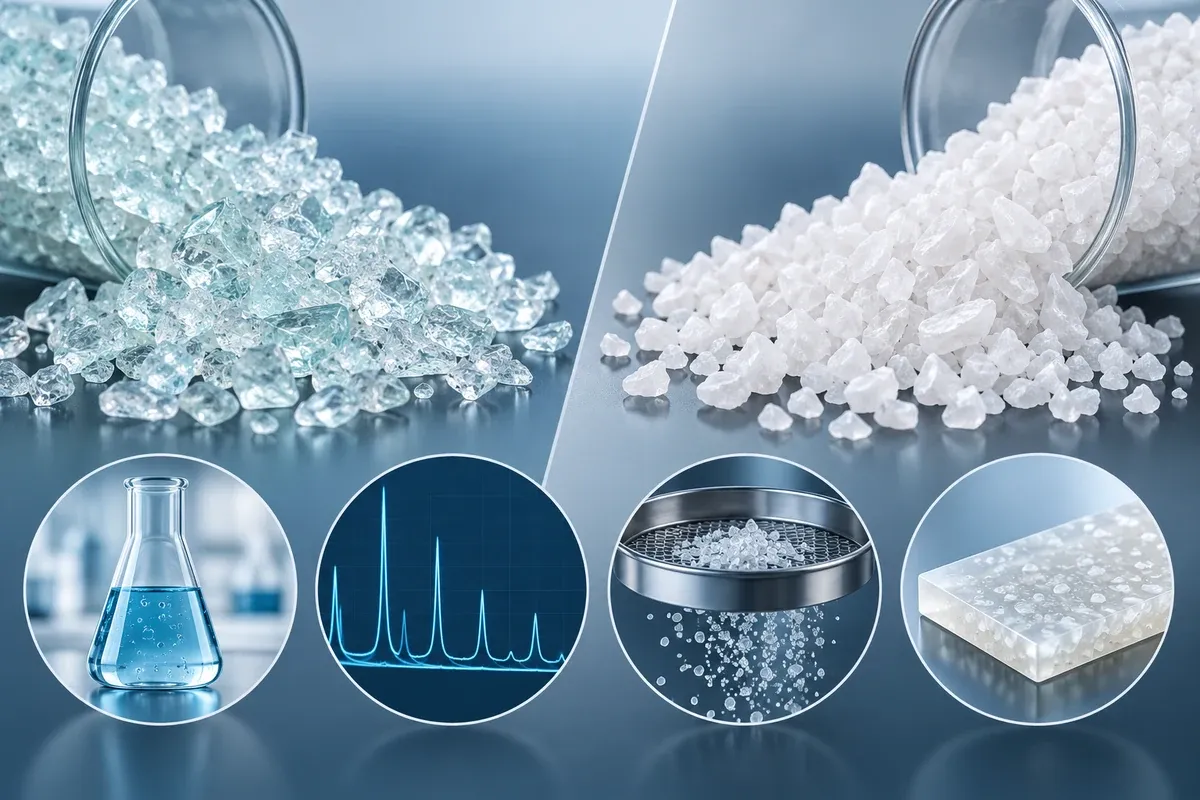
For a glass route, a buyer may prioritize color, clarity, surface character, grading, moisture and consistency between deliveries. For a fused-silica route, phase identification and crystalline-silica quantification may be additional purchasing questions. The 2014 report is a dated, qualitative observation on two powder samples only: it gave no crystalline-silica weight percentage, detection or quantification limit, or uncertainty. It says nothing about current lots, sand, glass or a finished slab. Neither route can be approved from an attractive sample photo or a headline oxide value alone. A specification should say what the slab needs to do and what evidence will demonstrate that the incoming filler meets that need.
What one historical glass evaluation can—and cannot—show
One customer-provided R&D report records a fused-glass sand evaluation in two gradings. In that test snapshot, the 0.063–0.212 mm material had a reported humidity value of 0.04% and L* of 96.26; the 0.1–0.4 mm material also had a reported humidity value of 0.04% and L* of 94.30. These are historical readings from specific customer-submitted samples, not a current certificate, a product specification, or a promise that future lots will match.
The size ranges themselves can affect how a filler packs and how a slab surface reads, but the data do not isolate particle size as the sole cause of an appearance difference. Resin system, filler loading, mixing, curing, finishing and measurement conditions all matter. Treat the two L* figures as points to discuss in a trial plan—not as a direct ranking of grades or a production guarantee.
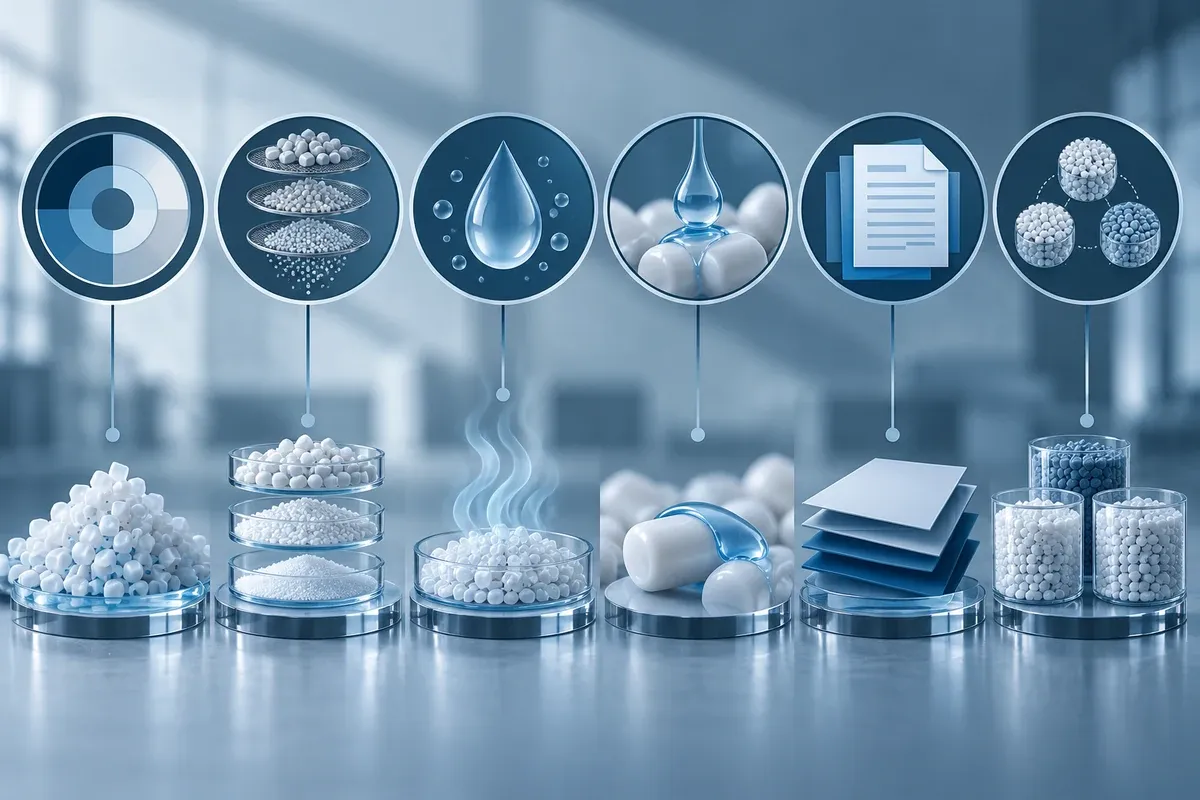
Turn a promising sample into a purchasing control
- Write down the slab target. Specify the desired color range, surface finish, application, and any performance requirements your own product standard requires.
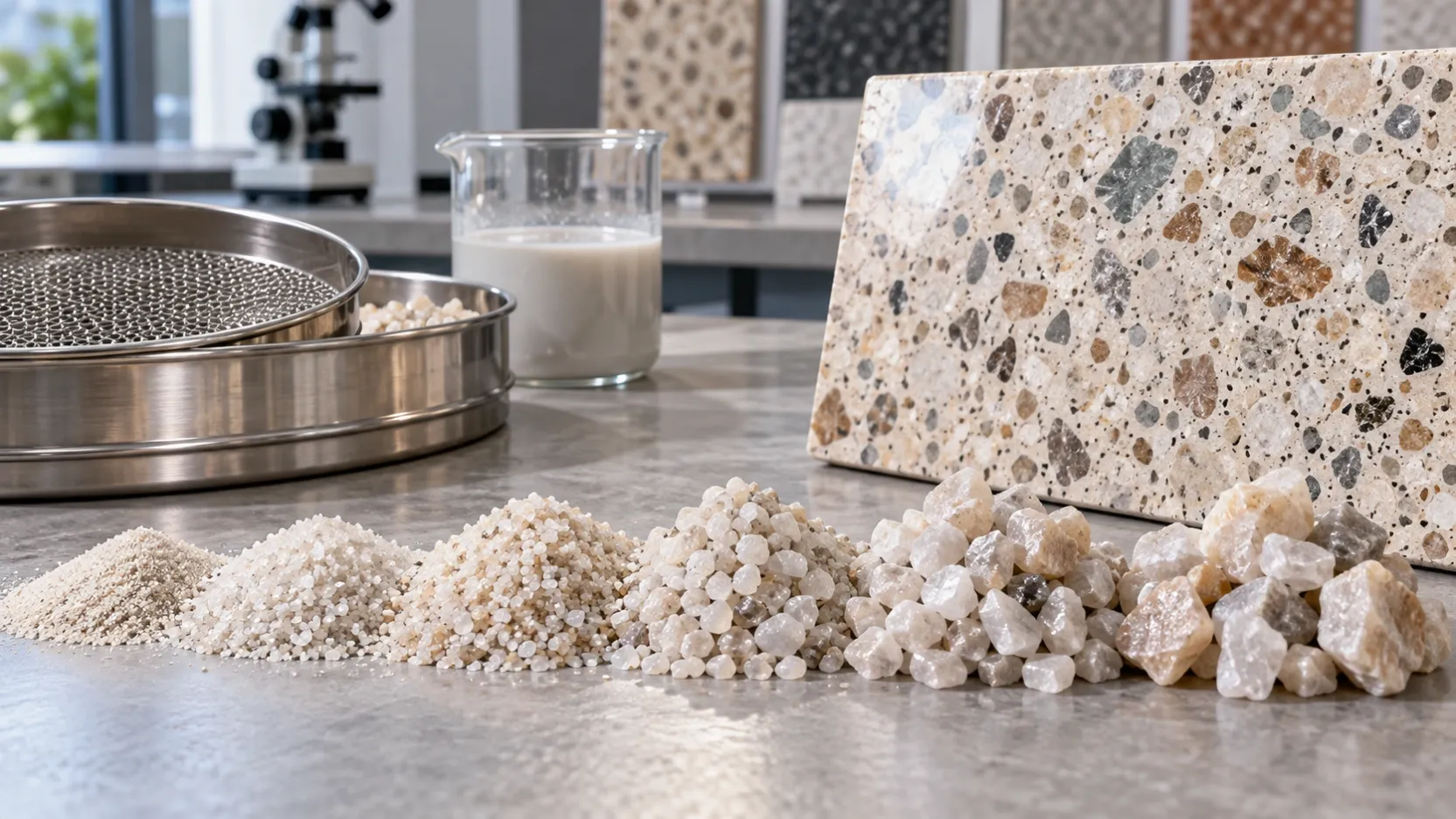
- Define the grading in measurable terms. State nominal range, sieve method, minimum material in range, and limits for oversize and fines. A label such as “medium sand” is not a control plan.
- Request fit-for-purpose evidence. Ask for lot identification, a recent test date, method, units, sampling point and acceptance limits. For a quartz grade, request phase-specific analytical evidence; oxide chemistry alone cannot establish crystalline phase.
- Run a controlled slab trial. Keep the resin, filler loading, mixing, cure and finishing conditions stable. Compare the candidate with the current material and record both the visual result and any process observations.
- Set incoming inspection and change control. Agree how often color, grading, moisture, contamination and any phase-related parameters will be checked, and what happens when a source or process changes.
For an initial glass screening, see fused glass sand for engineered-stone slab trials or fused glass powder. If your process calls for a quartz-based route, compare the fused quartz sand option and verify the exact grade and documentation with your supplier. The product-page names describe a material family; confirm the exact grade, lot evidence, stock and application fit with the supplier.
Questions buyers often ask
Does “fused” mean a material is amorphous?
No. The word is not a substitute for phase analysis. Ask what material was tested, which phases were measured, and whether the result applies to the lot you will receive.
Can the historical L* readings be used as a purchasing limit?
Not without a buyer-defined method and repeatable lot data. Use historical R&D values to frame a trial; set a specification only after agreeing on sampling, instrument conditions, tolerances and a verification plan.
What should I send when requesting a recommendation?
Share your target particle range, resin system, intended filler loading, slab appearance, process constraints and the evidence your quality team requires. Contact Changtong to discuss a material fit and sample-evaluation plan.
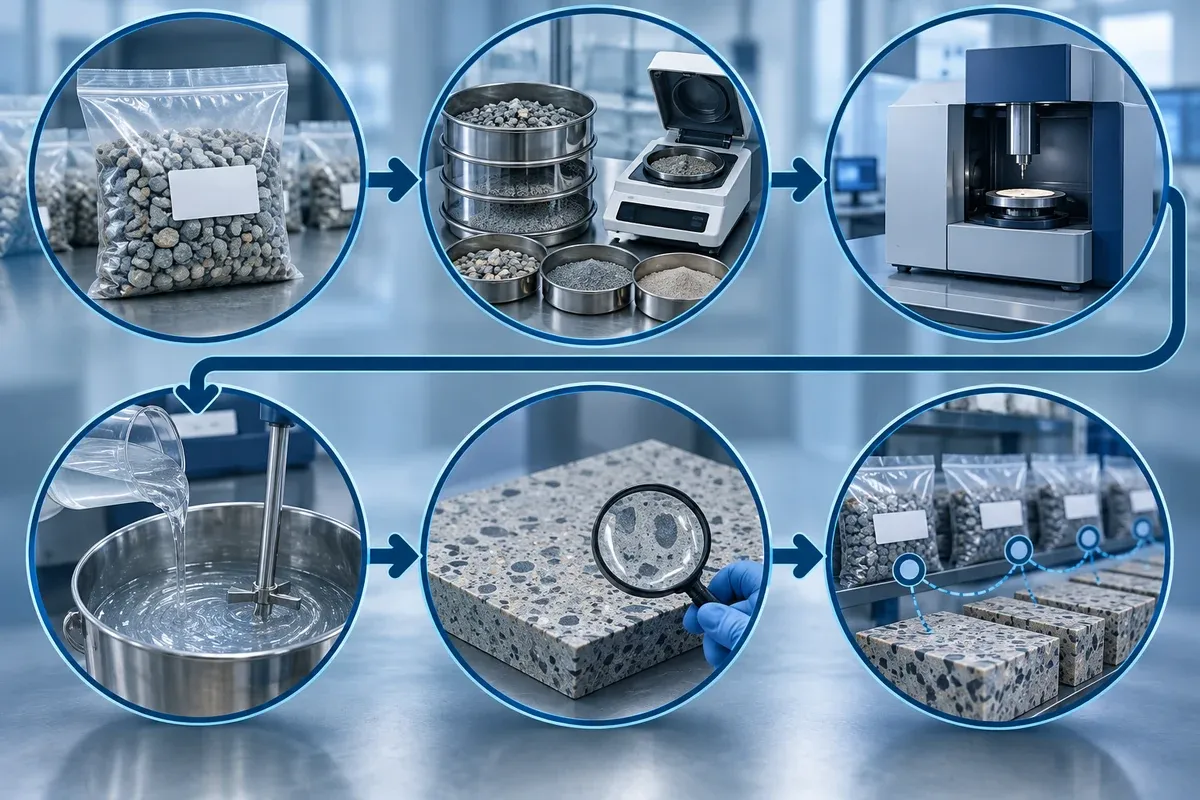
Evidence boundary: The figures above summarize a customer-provided historical R&D evaluation. They are not independently certified, do not define a current Changtong product specification, and do not establish phase composition or workplace exposure. Confirm the current lot, test method and acceptance criteria before making a production or compliance decision.
Related products
Related technical guides
Request a quote for your slab filler trial
Share your target grading, resin system, intended use and evaluation requirements to prepare a focused request for quote.
Request a quote