Fused Silica for Kiln Setters: A Thermal-Cycle Trial Plan
A kiln-setter trial plan for fused silica: fix a baseline, select grade evidence, inspect thermal cycling and separate powder claims from fixture results.
FIXTURE-FIRST TRIAL PLAN
Define the thermal-cycle baseline before comparing powder claims.
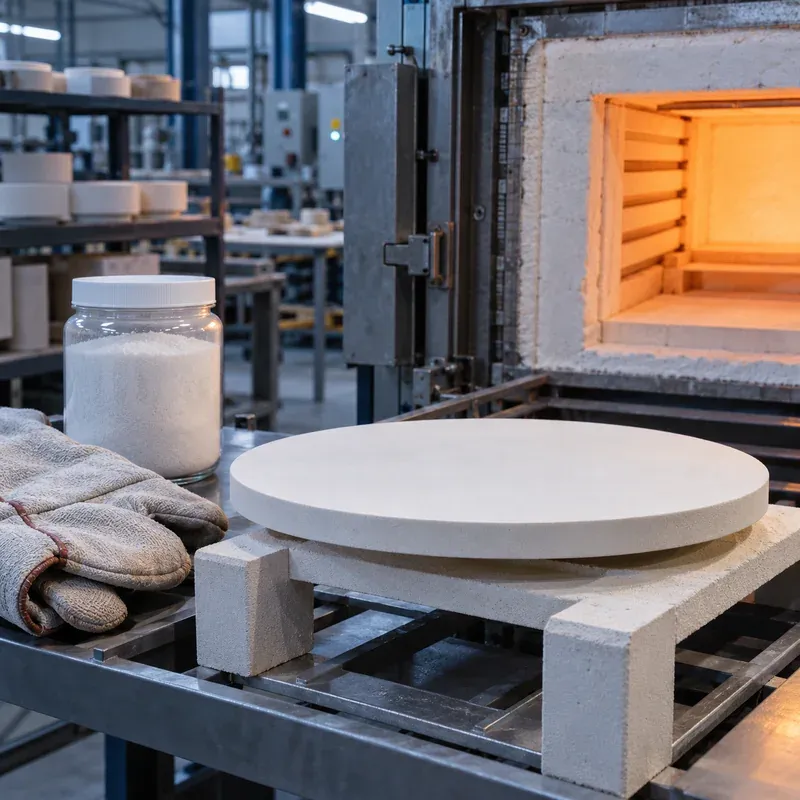
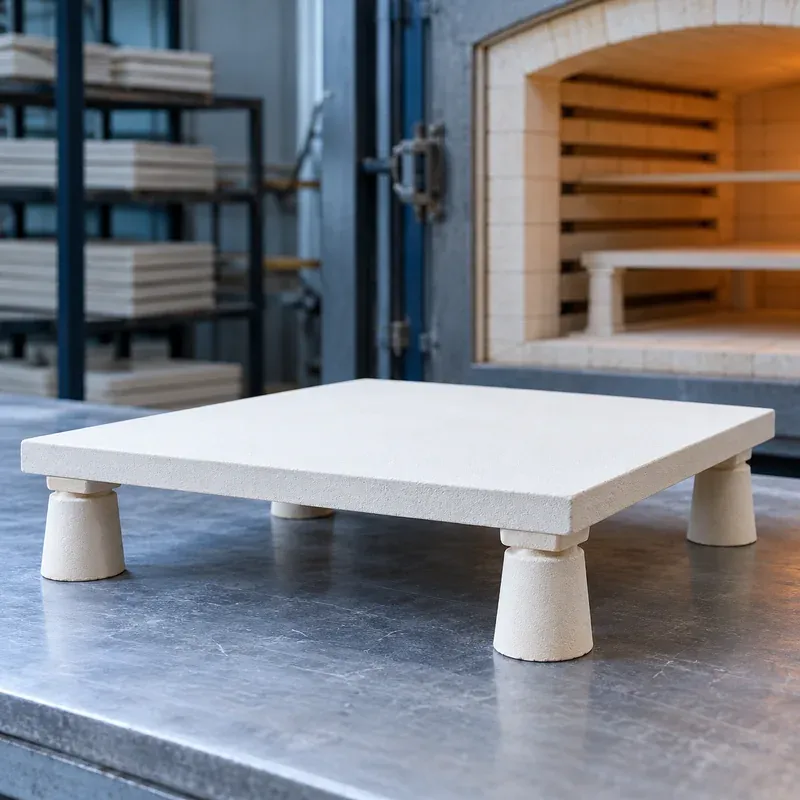
A kiln setter can look acceptable after one firing and still fail the next thermal cycle. For a fused-silica trial, define the fixture geometry, support points, load and inspection record first; then compare powder identity and grade evidence against that baseline.
Freeze the fixture and furnace variables first
Write down plate dimensions, green and fired thickness, support points, load mass and placement, binder and additives, peak temperature, dwell, heating/cooling profile and atmosphere. These are customer trial inputs, not published Changtong capabilities. Keep a reference setter under the same conditions, and define inspection after each cycle rather than only after failure.
Decision gate: do not approve a powder because a single unloaded coupon survives. A repeatable loaded fixture trial should measure the failure mode the plant actually pays for: distortion, cracking, surface transfer, debris or part contamination.
What the Changtong product page can support
The Fused Silica Powder for Battery-Ceramic Kiln Setter Development page identifies amorphous fused silica and lists mesh options including 120, 200 and 325 mesh as well as finer grades. It gives a SiO₂ catalog range of 99.8–99.99%. This is a product-page range across options, not a current lot result, a setter composition or an operating-temperature guarantee. Request the exact candidate grade’s TDS, SDS and lot COA; agree how phase and size will be checked where critical.
| Evidence layer | Record for each candidate | Do not infer |
|---|---|---|
| Incoming powder | Grade, lot, size method, chemistry and applicable phase evidence. | Finished setter strength from powder chemistry. |
| Green fixture | Mixing water/binder, forming pressure, dimensions and drying defects. | Production yield from one coupon. |
| Fired fixture | Warp, cracks, mass, surface and dimensional change. | Thermal-cycle life without a defined schedule. |
| Contact with ware | Part-side marks, sticking, transfer and debris after the same cycle. | Battery-cell performance or contamination-free status. |
Run a bounded A/B sequence
- Approve a reference fixture and a candidate with identical geometry and recipe except the defined powder change.
- Predefine the cycle and inspection positions; use the plant’s actual production temperature, load and atmosphere, not a generic temperature from an unrelated ceramic standard.
- Inspect after the first and later cycles; retain representative powder and fixture records for a repeat run.
- If failure changes, isolate size, binder, firing and support variables before assigning the cause to silica chemistry.
Fused silica’s low-expansion rationale is material context; it is not evidence that a particular fixture will withstand a specified cycle. If the formulation includes other crystalline phases, test the finished body rather than assuming the raw powder determines its phase behavior.
What a quotation request should contain
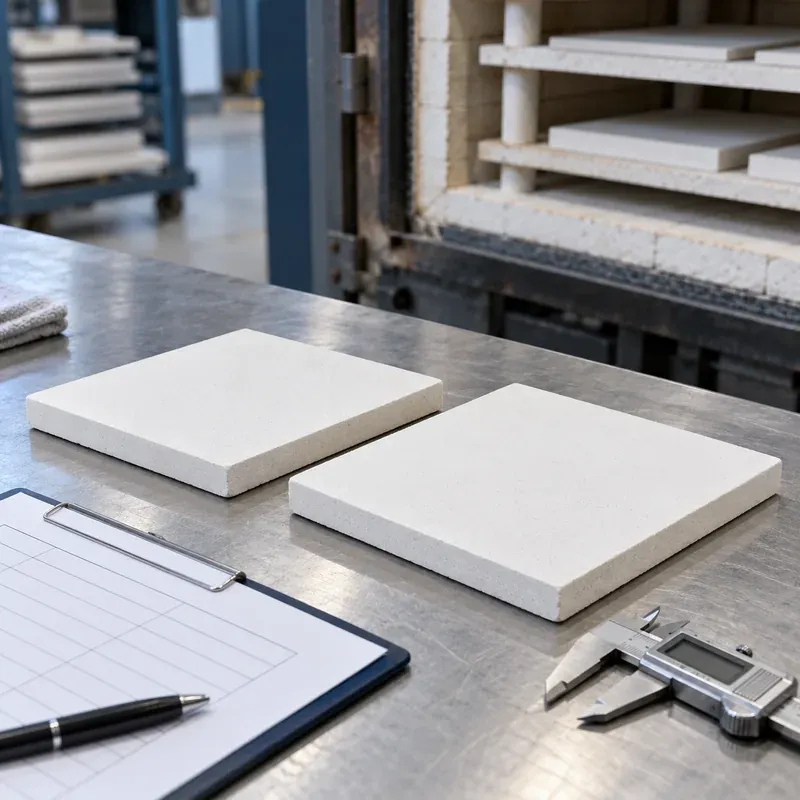
Ask for the proposed grade, size distribution and method, lot documentation, sample amount, packing and lead time alongside your binder and firing conditions. A second 325 mesh fused silica powder catalog page can help identify a candidate size label, but do not treat it as a substitute acceptance specification.

FAQ
Does the published SiO₂ range guarantee setter service life?
No. It describes catalog powder chemistry; geometry, recipe and furnace conditions determine the fixture response.
Is 325 mesh automatically the best grade?
No. Use the plant’s particle packing, forming and firing trial to select a size distribution.
Can an industry thermal-shock method be quoted as a Changtong result?
No. Any external method is reference context only; report the actual customer fixture test and its conditions separately.
Source basis: Changtong’s linked kiln-setter and fused silica product pages. The trial framework is a proposed customer experiment, not a reported Changtong or customer test.
Request a Quote
Share your setter geometry, firing schedule, binder and target failure modes for a grade-specific sample discussion.
Contact Changtong about a kiln-setter trial