How to Handle Crystalline Silica Dust Safely
Learn how to control crystalline silica dust during receiving, transfer, mixing, cleanup, and packaging with a practical facility checklist.

Crystalline silica dust should be managed through a site-specific hierarchy of controls.
The priority is to prevent dust from becoming airborne with enclosure, local exhaust, suitable process design and controlled housekeeping. Respiratory protection and training support those controls; they should not be treated as the only control.
Last updated:
Where Dust Exposure Can Occur
| Task or area | Potential dust event | Primary control question |
|---|---|---|
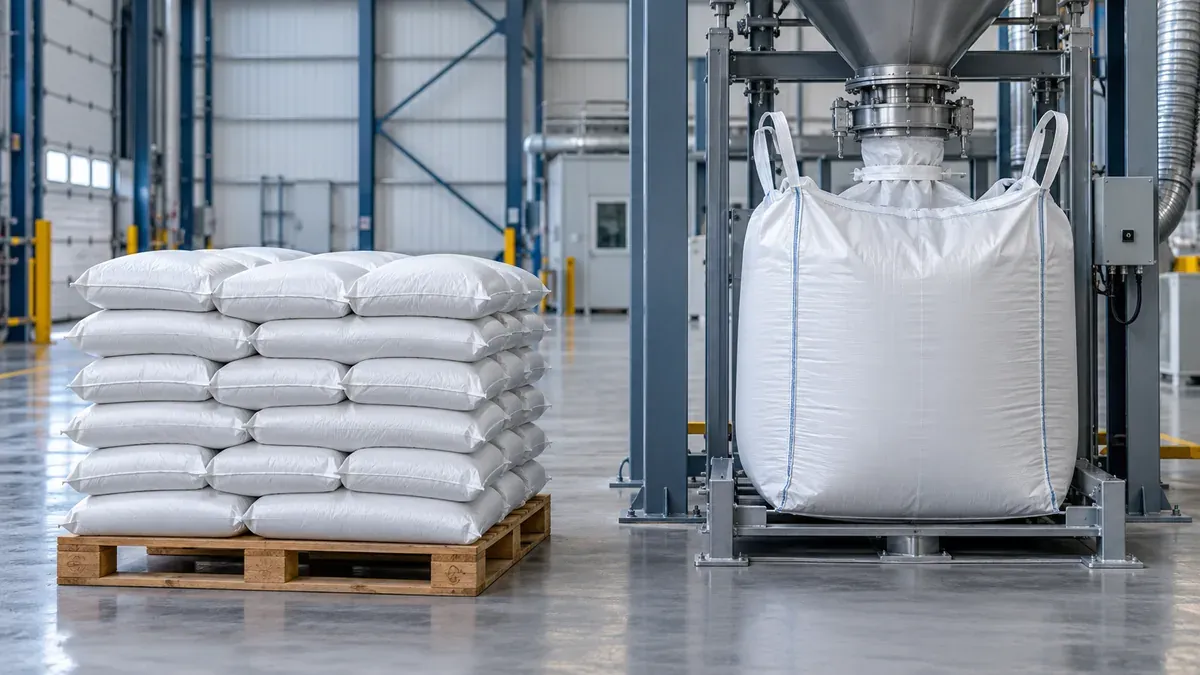
| Bag receiving and opening | Damaged bags, cutting, pouring or compressed air can release settled fines. | Can the package be opened in a contained or locally exhausted area? |
| Charging and transfer | Dropping powder into a hopper or mixer may create a dust plume. | Is the transfer point enclosed and under effective local exhaust? |
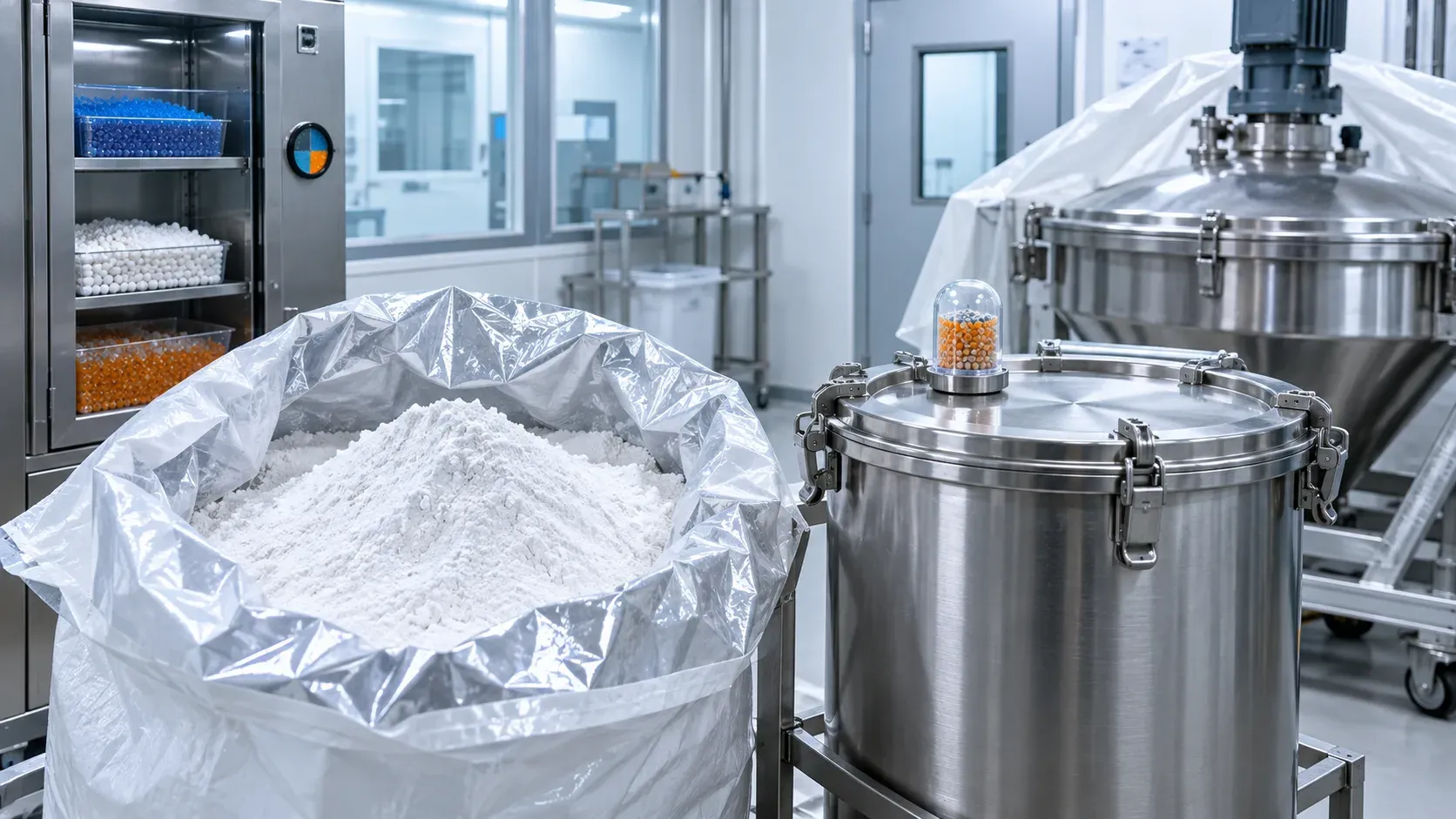
| Mixing and formulation | Dry addition, manual scooping or poor lid fit can expose operators. | Can the material be charged before liquid addition or by a closed system? |
| Cleanup and maintenance | Dry sweeping or blowing re-suspends settled dust. | Is suitable vacuum or wet cleaning available, and is it used consistently? |
Apply the Hierarchy of Controls
1. Engineering controls first
Use enclosure, local exhaust ventilation, closed conveying, dust collection and suitable interlocks where feasible. NIOSH identifies engineering controls such as local exhaust and wet methods as important approaches for crushing and grinding operations. The actual design must be verified by a competent professional.
2. Work practices and housekeeping
Keep containers closed, minimize drop heights, clean spills promptly with an approved method, and avoid dry sweeping or compressed-air blowdown. Inspect extraction and collection equipment before work begins.
3. Exposure assessment and training
Measure or assess exposure using the applicable local occupational-hygiene approach. Train workers on the task, controls, symptoms, cleaning method, PPE limits and emergency response. Keep training and inspection records.
4. Respiratory protection where required
If engineering and work-practice controls do not sufficiently reduce exposure, use a respiratory-protection program selected by a qualified person and required by local law. A mask chosen without fit, filter, medical and program controls is not a complete solution.
Receiving, Storage and Mixing Checklist
- Check the package, label, lot number and SDS before opening.
- Move damaged or leaking bags to a controlled area under the site's spill procedure.
- Store dry powder in a stable, closed condition away from incompatible materials listed in the SDS.
- Use dedicated or cleaned tools and equipment to prevent cross-contamination.
- Keep the material path as closed as practical during charging and transfer.
- Record the lot used in the batch or production record.
- Review the site exposure assessment after equipment, material, volume or process changes.
Safety Data Sheets and Local Limits
Request the current SDS for the exact grade and jurisdiction. The SDS should be read together with the technical data sheet and the site's risk assessment. Requirements can differ between crystalline silica powder, fused silica and cristobalite products, especially when the material form and applicable hazard classification differ.
Changtong SDS handling controls
The following controls are stated in the Changtong fused silica MSDS dated March 2021. Treat them as source-backed handling guidance, then verify the current SDS and site risk assessment for the exact grade and destination.
| Control point | Source-backed requirement |
|---|---|
| Dust generation | Avoid creating dust during handling and transfer. |
| Spill cleanup | Avoid dry sweeping; use water spray/flushing or a suitably ventilated vacuum method. |
| Residue storage | Place collected residues in closed containers. |
| Personal protection | Use PPE selected under the current SDS and the facility's exposure-control program. |
Source: Changtong fused silica MSDS, March 25, 2021. This dated document does not replace the current jurisdiction-specific SDS.
For a United States benchmark, OSHA's general-industry rule lists an action level of 25 µg/m³ and a permissible exposure limit of 50 µg/m³ as 8-hour time-weighted averages for respirable crystalline silica. Facilities outside the United States must use their applicable national or regional requirements. These limits are not a substitute for measuring the actual task exposure.
| Document or record | Use before routine handling | Review trigger |
|---|---|---|
| Current SDS | Hazards, handling, storage, PPE and emergency information | New grade, destination or revised supplier document |
| Technical data sheet | Material identity, grade and intended specification | New application or changed grade |
| Exposure assessment | Determines whether controls reduce task exposure | Equipment, volume, process or workforce change |
| Training and inspection records | Shows that controls are understood and maintained | Periodic review, incident or corrective action |
Frequently Asked Questions
Is a sealed bag automatically safe?
No. The risk can arise when the bag is damaged, opened, emptied, transferred or cleaned around. Plan the full material path.
Can ordinary sweeping be used for silica powder?
Dry sweeping can re-suspend settled dust. Use the cleaning method approved by the site's EHS program, commonly a suitable vacuum or wet method where compatible.
Does PPE replace ventilation?
No. PPE is the last line in the hierarchy and must support effective engineering and work-practice controls.
Related Changtong Product
For a crystalline-silica handling reference, review General-Purpose Crystalline Silica Powder 325 Mesh and request the current grade- and market-specific SDS before receipt, transfer or cleanup.
References
- OSHA 29 CFR 1910.1053 — Respirable crystalline silica.
- NIOSH — Engineering controls for dust from crushing and grinding.
- OSHA — Crystalline silica overview.
Ask for the Documents Before the Material Arrives
Share the grade, application, package format and destination market when requesting the current SDS, technical data and lot-document requirements.
Contact our technical sales team