Hard Settling in Silica-Filled Coatings: Remixability Checks
Diagnose hard settling in silica-filled coatings with sediment, remixability and film checks. Separate physical settling from gelation before changing filler.
OBSERVATION AT THE MIXING STATION
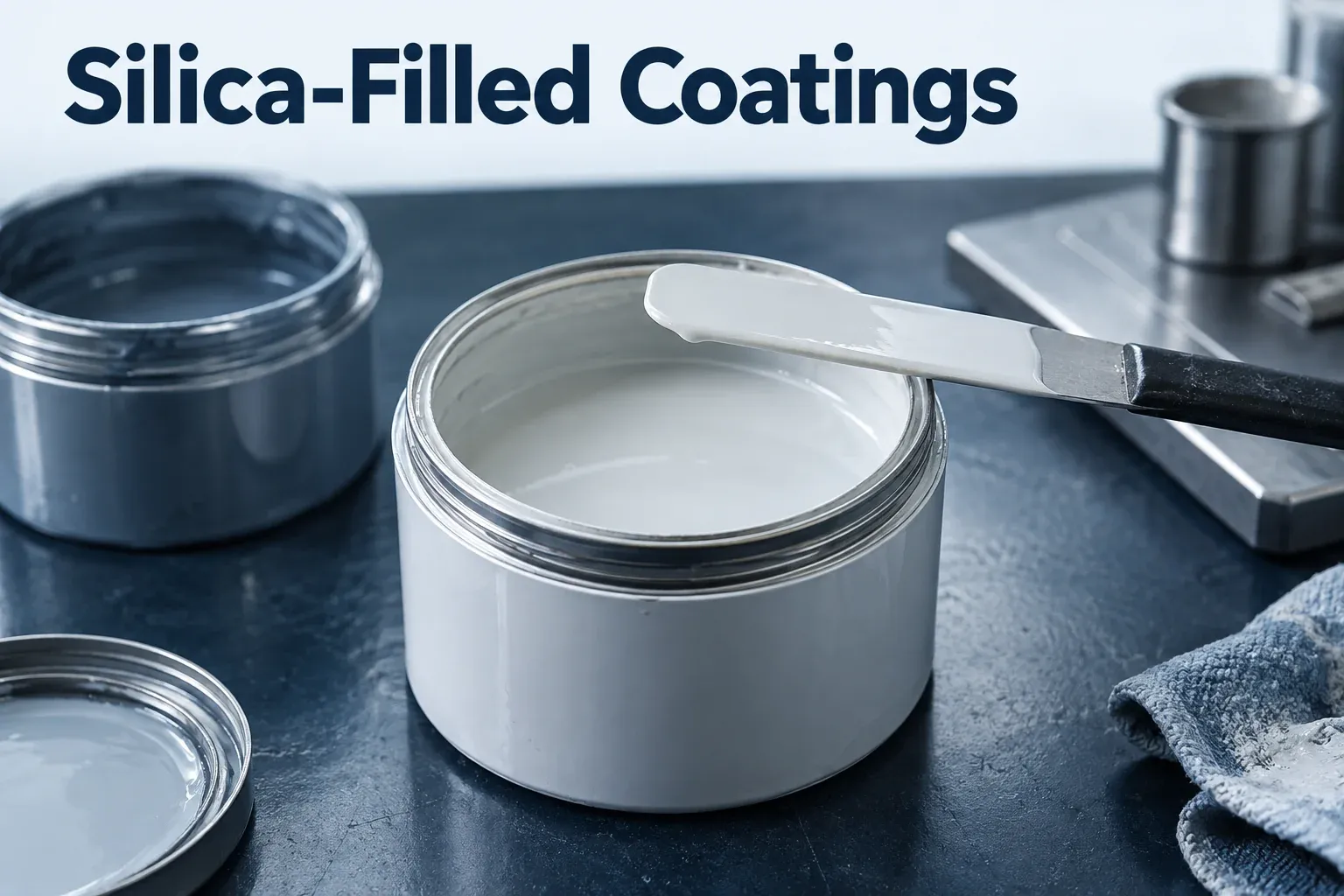
- Liquid has separated above a settled layer.
- A spatula can enter part of the deposit, but a compact bottom layer remains.
- After mixing, the coating still contains lumps or draws down unevenly.
Those observations do not establish that the silica grade is wrong. They establish a storage-and-recovery problem that needs to be described before the recipe changes. The first decision is whether the material is physically settled and recoverable, or whether a different change such as gelation has occurred. The next is whether the recovered coating can still meet the application requirements.
Classify the Deposit Before Naming the Cause
| Observed condition | Record next | Do not conclude yet |
|---|---|---|
| Loose deposit that redistributes readily | Recovery method and post-mix appearance | Visible separation alone proves product failure. |
| Compact bottom layer requiring more work | Remaining deposit, lumps and practical mixing effort | A higher mixer speed will necessarily restore quality. |
| Rubbery, stringy or coherent material | Appearance throughout the container and formulation history | Every non-flowing layer is simple sediment. |
Photograph the undisturbed container and note storage age, temperature history, fill level and orientation. Identify resin, filler and additive lots. A sample taken only from the upper liquid cannot represent the original mixture. If a chemical or microbial change is suspected, escalate to the formulation team rather than attempting to force the deposit back into service.

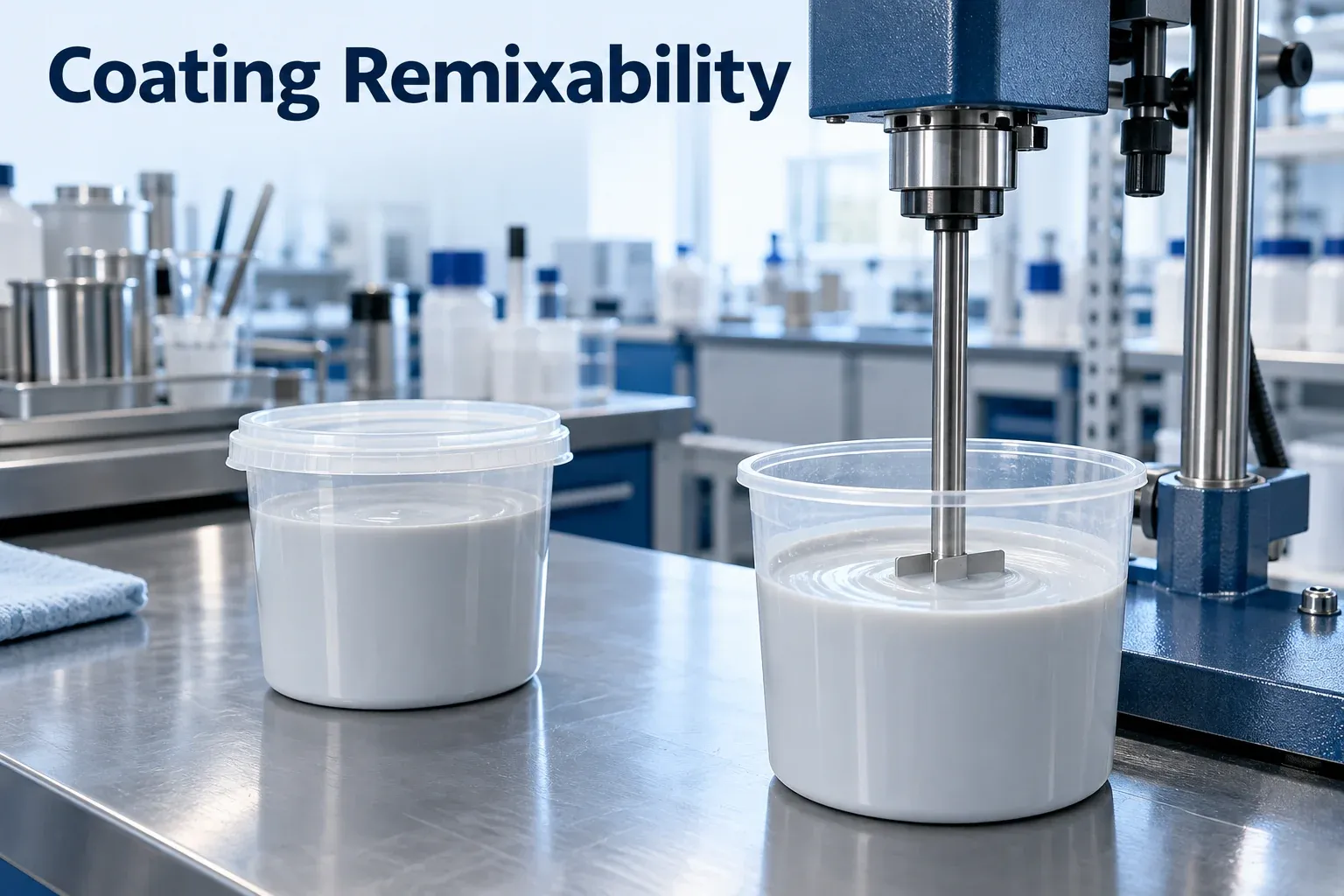
Measure Recovery as a Practical Property
ASTM D869 addresses degree of settling and ease of remixing shelf-aged paint to a homogeneous state suitable for intended use. Its public scope also notes the subjective nature of the assessment. It is an appropriate reference for discussing settling records; citing it does not establish that an informal jar observation was performed to the full standard.
For a customer screening exercise, fix container geometry, sample amount, storage interval and recovery equipment. Record the recovery sequence, mixing time and any remaining deposit. Keep an unstored baseline so that the aged material has a reference. Define the response before the test; do not assign a pass after seeing which sample looks easier to stir.
| Recovery record | After-remix check | Reason for the check |
|---|---|---|
| Remaining bottom material | Uniformity across the recovered batch | Residual solids may make top and bottom portions different. |
| Lumps or visible aggregates | Drawdown and film appearance | A visually mixed container can still produce defects. |
| Mixing effort and temperature | Application viscosity using the agreed method | Recovery conditions can alter the measurement context. |
| Baseline and stored samples | Required finish and application performance | Storage suitability concerns the finished formulation. |
Change One Variable with a Clear Hypothesis
A practical investigation might compare dispersant level, binder rheology or filler selection in separate branches. Those are candidate variables, not diagnosed causes. Keep the original formulation as the control, label every revision and use the same storage-and-recovery protocol. When more than one factor must change, describe the result as a reformulation rather than a single-variable finding.
Do not assume that a finer mineral grade will always solve hard settling or that an oil-absorption number predicts storage stability. A powder specification is one input to a multicomponent liquid formulation. Changes intended to improve suspension also need application checks; easy remixing is insufficient if the coating cannot be applied or produces an unacceptable film.
Match the Material Description to the Binder
Separate ground quartz, surface-treated quartz, cristobalite and fused silica in the test file. Fumed and precipitated silica are different families and cannot inherit the application claims or specifications of mineral fillers. For a relevant existing product, see cristobalite powder for cool-roof coating trials. Its inclusion here is an application link, not a promise of anti-settling performance.

Before asking Changtong for a replacement filler, provide the binder type, current grade identity, loading basis, storage conditions, failure observations and recovery constraints. Grade-specific documents can inform the comparison; they cannot establish shelf life for a coating that the supplier has not tested.
For the wider choice of coating filler and application properties, read silica powder selection for paints and coatings.
Questions Buyers Ask
Is all sediment unacceptable?
The acceptance criterion depends on the coating’s intended use and agreed specification, including whether sediment can be reincorporated.
Can stronger mixing guarantee recovery?
No. Remaining deposits, aggregates and changed film behavior require inspection. Treat suspected gelation separately.
Can an accelerated test prove normal shelf life?
Not automatically. Define and validate the relationship to actual storage before making a shelf-life claim.
What is the best filler to prevent hard settling?
There is no universal answer. The binder, additives, loading and recovery process must be evaluated together.
Settling Assessment Reference
ASTM D869-21, Evaluating Degree of Settling of Paint, public scope. The diagnostic sequence here is proposed engineering guidance, not a Changtong storage test or a complete reproduction of the standard. Reference checked 8 October 2026.
Request a Quote
Share the coating system, settled-layer observations, storage history and available remixing equipment. Define the recovery and film criteria before requesting trial powder.
Discuss Your Silica Requirement