Low-Carbon Sintered Stone Supply: Quartz Powder, Recycled Glass, and Porosity Controls
A practical supply guide for matching quartz powder with recycled glass in low-carbon sintered stone, with packing, porosity, color and lot-control checkpoints.
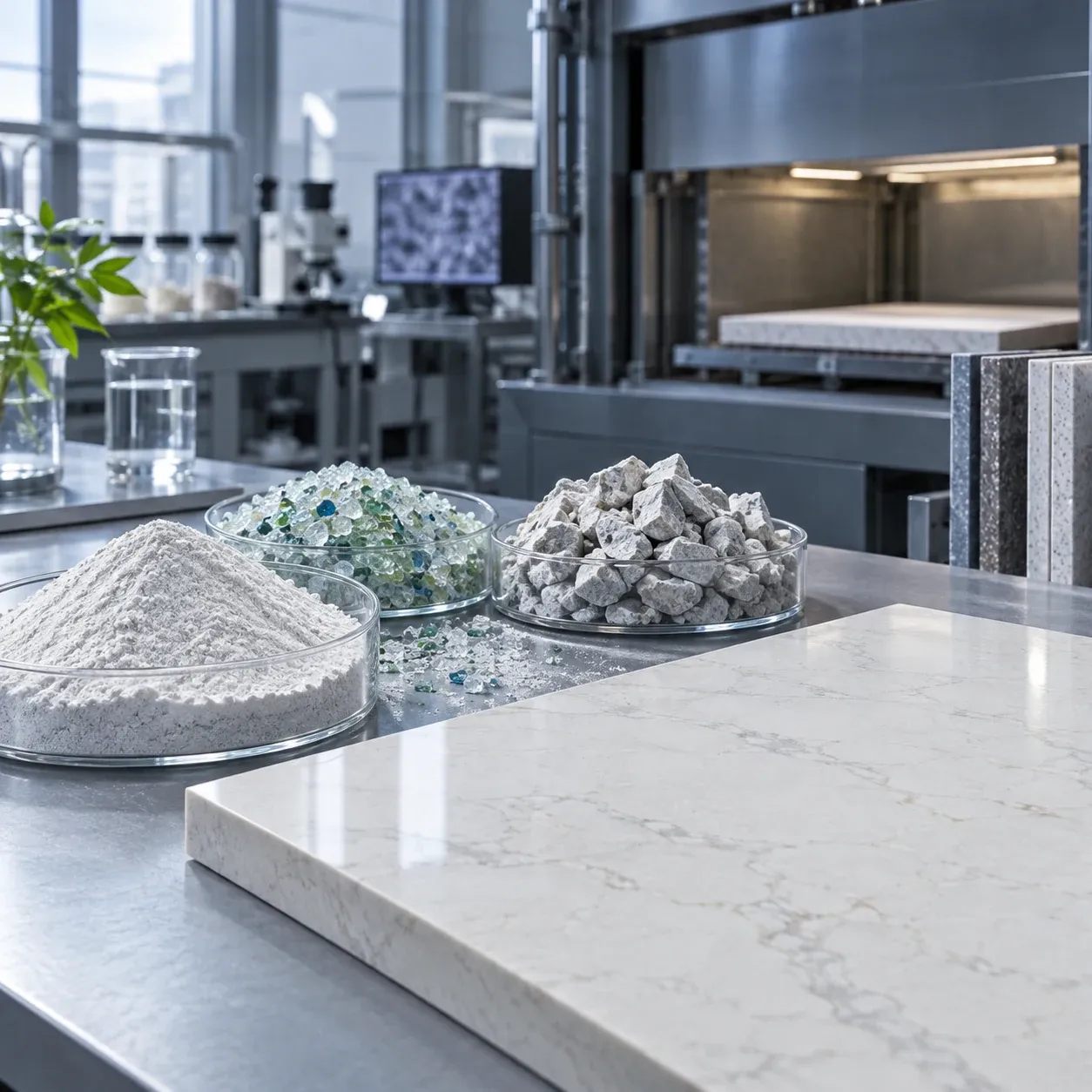
Lower-carbon sintered stone is not created by adding recycled glass and hoping the press will correct the rest. The supply decision is a matching exercise: quartz powder, recycled-glass chemistry, packing, firing response, color and lot continuity must work together.
This is a raw-material qualification guide. It does not set a universal glass ratio, firing schedule, porosity value or slab performance. Final limits must be established with the plant’s own body recipe, press and kiln.
An experienced buyer usually sees the risk before the first trial: a powder that looks acceptable in a sample can shift the press fill, the green-body density, the firing window or the final shade when the next lot arrives. Recycled glass adds another variable because its source, cleaning and chemistry may change.
The practical goal is not to find a “green” filler in isolation. It is to define a repeatable raw-material package that the production team can inspect and the supplier can replenish.
1. Separate the roles of quartz powder and recycled glass
Write down what each input is expected to do. Quartz powder may influence mineral packing, color, phase identity and the fine fraction. Recycled glass may contribute a different chemistry, shape distribution or melting response. If the roles are not separated, a change in one material can be blamed on the other.
For a supplier RFQ, state the body process, pressing route, target appearance, recycled-glass source and whether the recipe is intended for a pilot line or regular production. These details are more useful than forwarding only a product name.
2. Use identity and chemistry checks before changing the blend
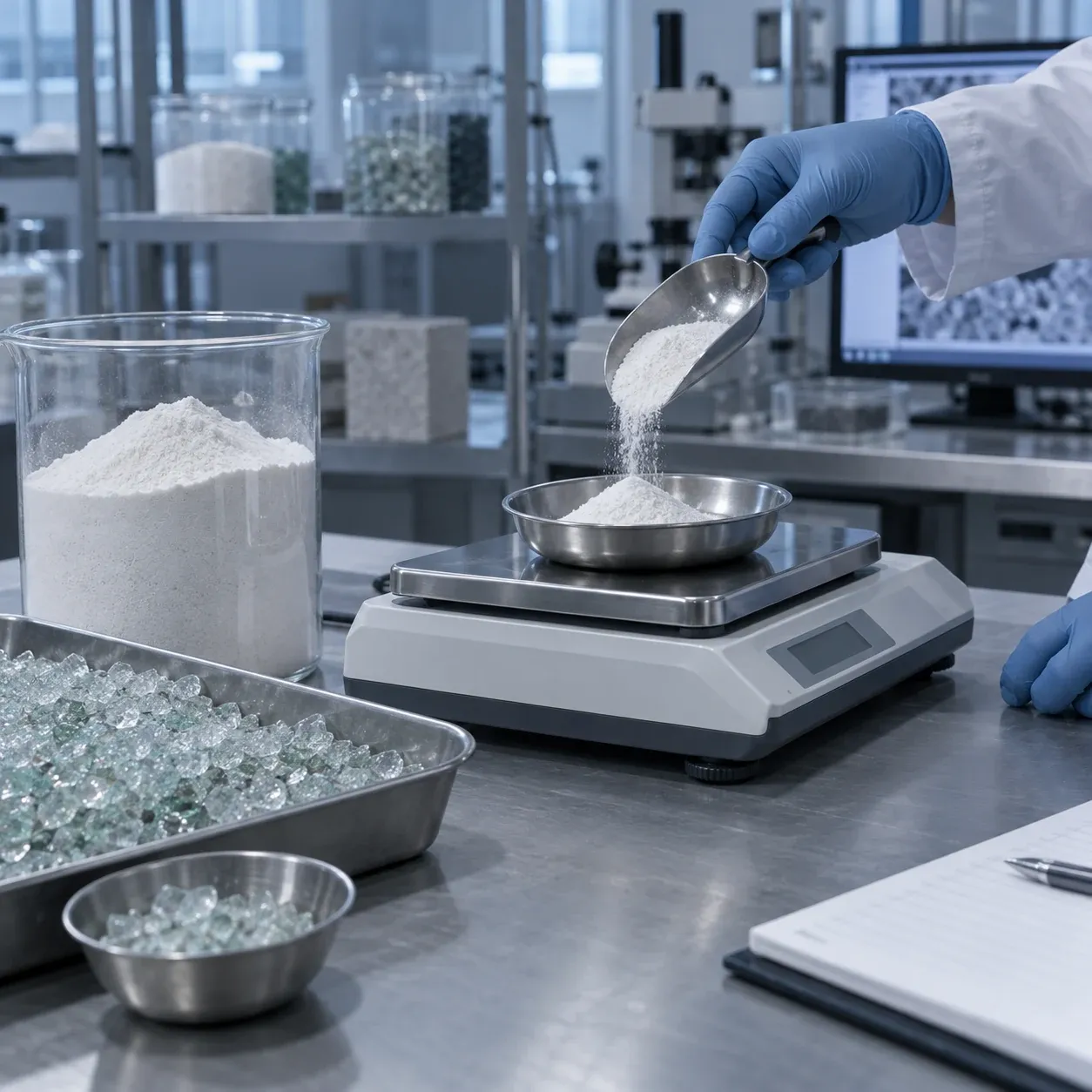
Confirm the quartz material identity, phase description, color expectation and documented test fields. Keep natural-quartz-derived powder distinct from fused silica, cristobalite, silica fume and other synthetic silica families. The same word—silica—does not make materials interchangeable.
For recycled glass, record source, cleaning route and any available chemistry or contamination information. A visually clean cullet stream can still create a process change if its chemistry or particle-shape distribution moves outside the approved window.
3. Check packing behavior rather than chasing one particle-size number
| Control point | Buyer question | Useful record |
|---|---|---|
| Fine fraction | Does the powder fill the intended gaps without creating a new mixing or dust problem? | Agreed PSD method, sample preparation and retained sample |
| Glass fraction | Is the recycled stream stable in source, cleaning and shape? | Supplier lot, source note and incoming visual check |
| Body response | Does the blend remain pressable and dimensionally controlled after firing? | Green-body, fired-body and appearance observations |
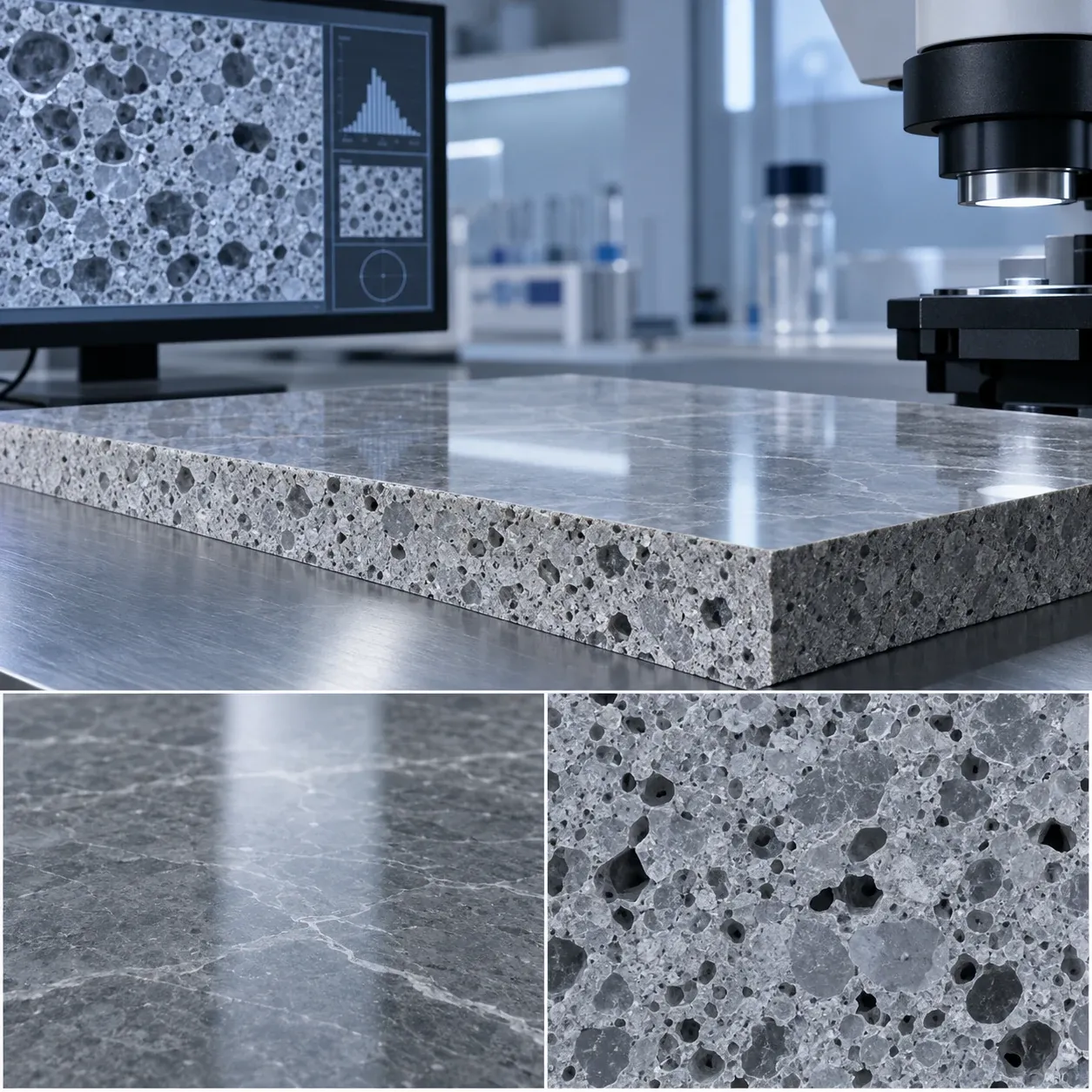
Particle-size distribution is a process input, not a complete performance claim. Keep the measurement method, mixing time and sampling point consistent when comparing suppliers. Otherwise a reported change may be a test-method change rather than a material change.
4. Run a staged trial: bench blend, pressed body, then fired slab
Start with a control blend and one candidate. Record the blend sequence, mixing time, moisture adjustment, press behavior, green-body handling and fired appearance. Move to a larger trial only after the small trial shows a clear reason to proceed.
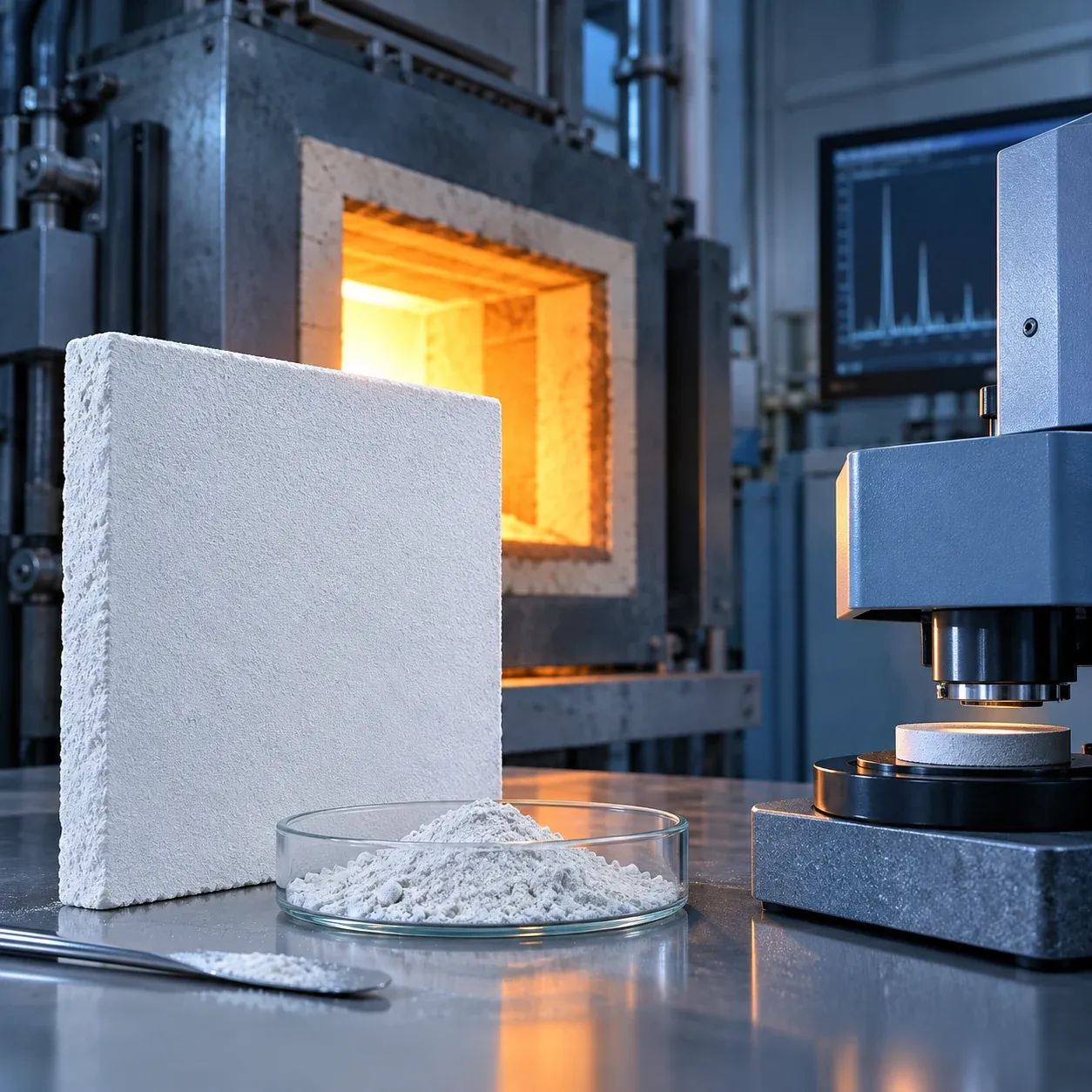
For porosity and dimensional observations, define the method before firing. For color, keep lighting and reference tiles stable. For supplier comparison, use the same kiln schedule and cooling route so that the material decision is not mixed with a furnace decision.
5. Protect supply continuity after approval
- Approved quartz identity, phase description and agreed COA fields.
- Recycled-glass source and incoming acceptance notes.
- Retained samples and a documented lot-change route.
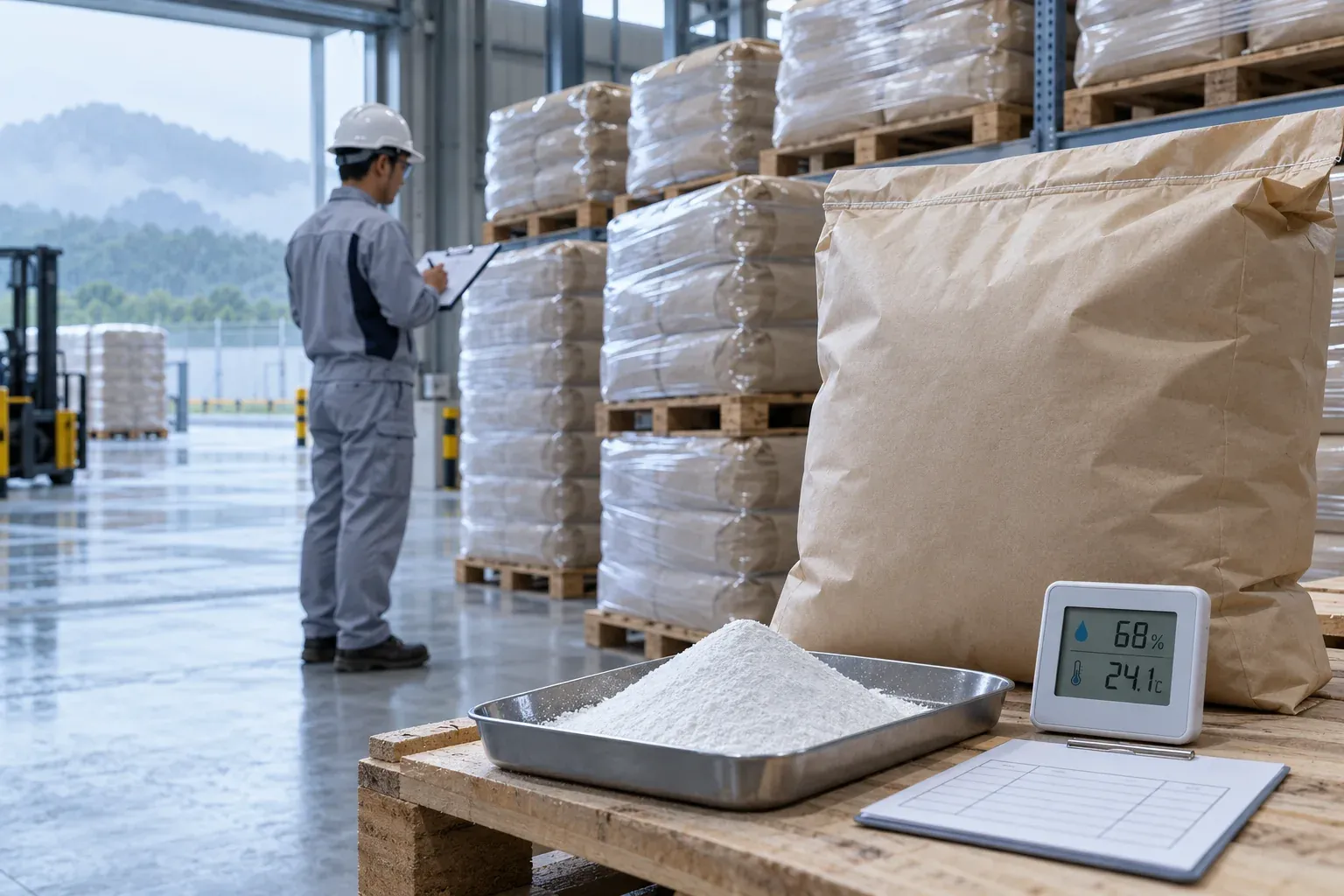
- Packaging, storage and moisture-control instructions.
- Realistic lead-time and replenishment communication.
A trader or distributor can add real value by delivering this file with the quotation. It turns a low-carbon claim into a purchasing package that a factory can actually audit.
FAQ
Can recycled glass replace all quartz powder?
That is a formulation decision, not a general purchasing rule. The plant must verify packing, chemistry, firing response, appearance and dimensional control for its own body.
Is a single PSD result enough to approve a supplier?
No. PSD should be read with identity, sampling method, packing behavior, fired-body evidence and lot-to-lot records.
Build a repeatable raw-material RFQ
Share the body process, target appearance, recycled-glass source, trial quantity and required COA fields with the Changtong technical team.
Contact Changtong Technical TeamRelated: quartz material reference and engineered-stone raw-material matching guide.