Silica Powder in Ceramic Membrane Supports: A Slurry-to-Sintering Screening Guide
Learn how to screen silica powder for ceramic membrane supports by linking phase, PSD, slurry behavior, forming, firing, porosity, permeability and strength.
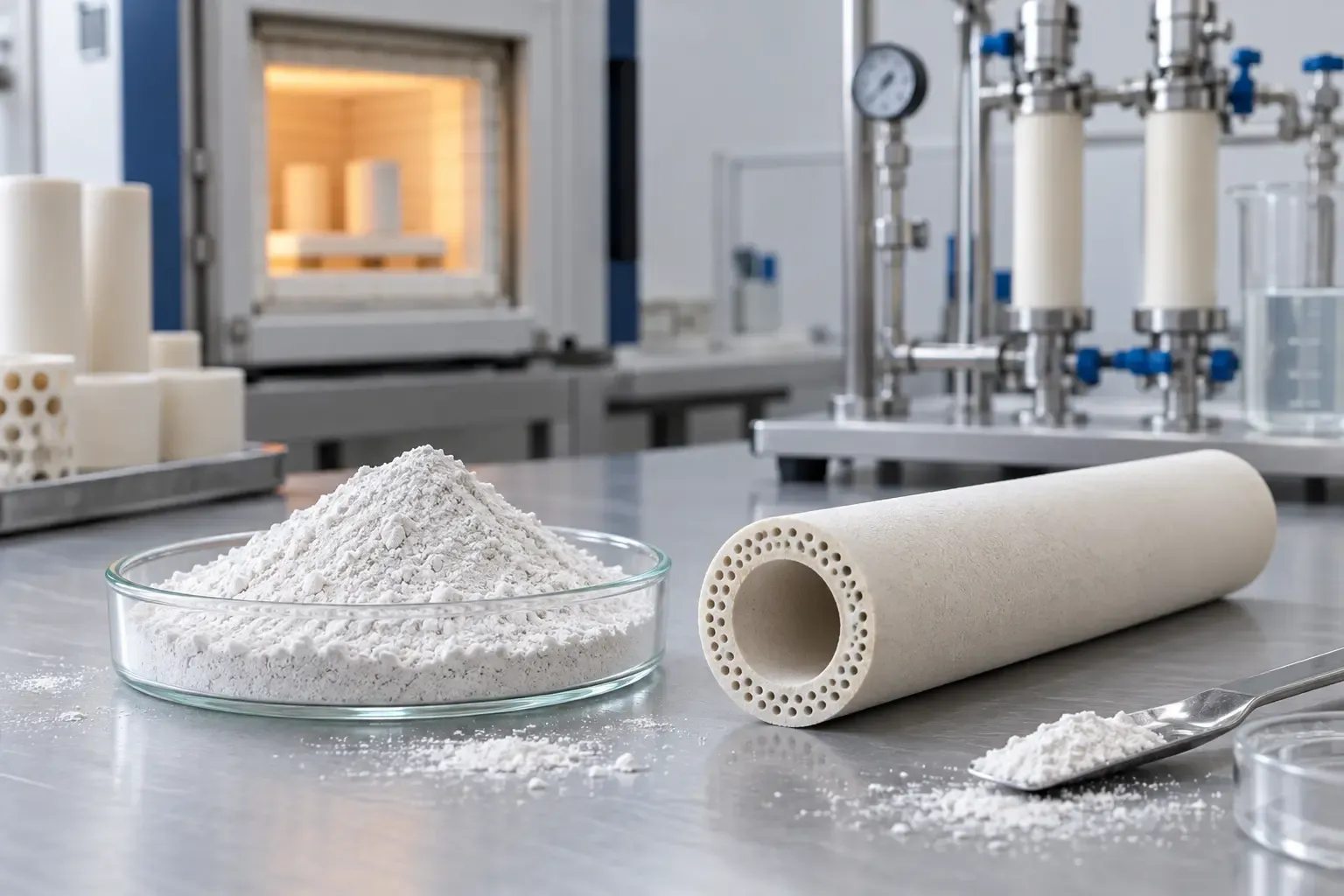
Engineering takeaway: silica powder can be considered for ceramic membrane support development, but a powder certificate alone cannot predict permeability or strength. The useful qualification path connects powder identity and grading to slurry behavior, green-body integrity, pore formation and the final membrane test.
This guide treats silica powder as a mineral raw material for laboratory or pilot ceramic membrane-support trials. It does not claim that every crystalline silica grade is suitable for a membrane, and it does not replace the customer’s slurry, forming, sintering, filtration or occupational-safety validation.
A buyer searching for silica powder for ceramic membrane supports is usually trying to solve a practical problem: which powder information should be fixed before a slurry trial, and which results can only be judged after forming and firing? The answer is not simply “choose the finest powder.” A support must balance a connected set of requirements: the powder must disperse consistently, the green body must survive handling, the pore-forming route must remain controllable, and the fired structure must provide the intended compromise between permeability and mechanical stability.
1. Start with the support function, not a powder label
A ceramic membrane support is the mechanically stable, permeable structure beneath a selective membrane layer. Its job is different from the job of a dense technical ceramic or a fine coating. A support normally needs enough open porosity for flow while retaining sufficient strength for handling, assembly, cleaning and service. The target depends on the membrane architecture, module design and separation duty.
That distinction changes the material question. A very fine silica powder may help produce a uniform green body, but it can also raise surface area, increase liquid demand and encourage shrinkage during firing. A coarser fraction may improve packing or permeability, yet create defects or weaken the connection between particles if the forming route is not adjusted. The right grade is therefore a process variable, not a universal ranking.
Boundary to keep clear: a crystalline silica powder for a porous ceramic support is not the same material category as colloidal silica, fumed silica or a pre-made ceramic membrane. Confirm phase, morphology, surface treatment and intended use before comparing supplier data.
2. Which powder fields deserve attention before a slurry trial?
The pre-trial review should be short enough for purchasing teams to use, but detailed enough to prevent a false comparison between unlike powders. Request the test method as well as the number, because “particle size” can refer to different measurement principles and reporting conventions.
| Powder field | Why it matters to a support trial | What still needs customer testing |
|---|---|---|
| Phase and material identity | Affects thermal response, firing behavior and the meaning of comparisons. | Phase stability and compatibility with the complete ceramic recipe. |
| Particle-size distribution | Influences packing, liquid demand, pore-former interaction and surface finish. | Green density, shrinkage, pore-size distribution and permeability. |
| Moisture and storage history | Can change weighing, flow, agglomeration and slurry solids content. | Actual moisture after the customer’s conditioning and mixing sequence. |
| Chemistry and trace elements | May affect sintering, color, contamination risk or interactions with additives. | Fired chemistry, leachability or separation-specific acceptance criteria. |
3. Build the slurry around measurable behavior
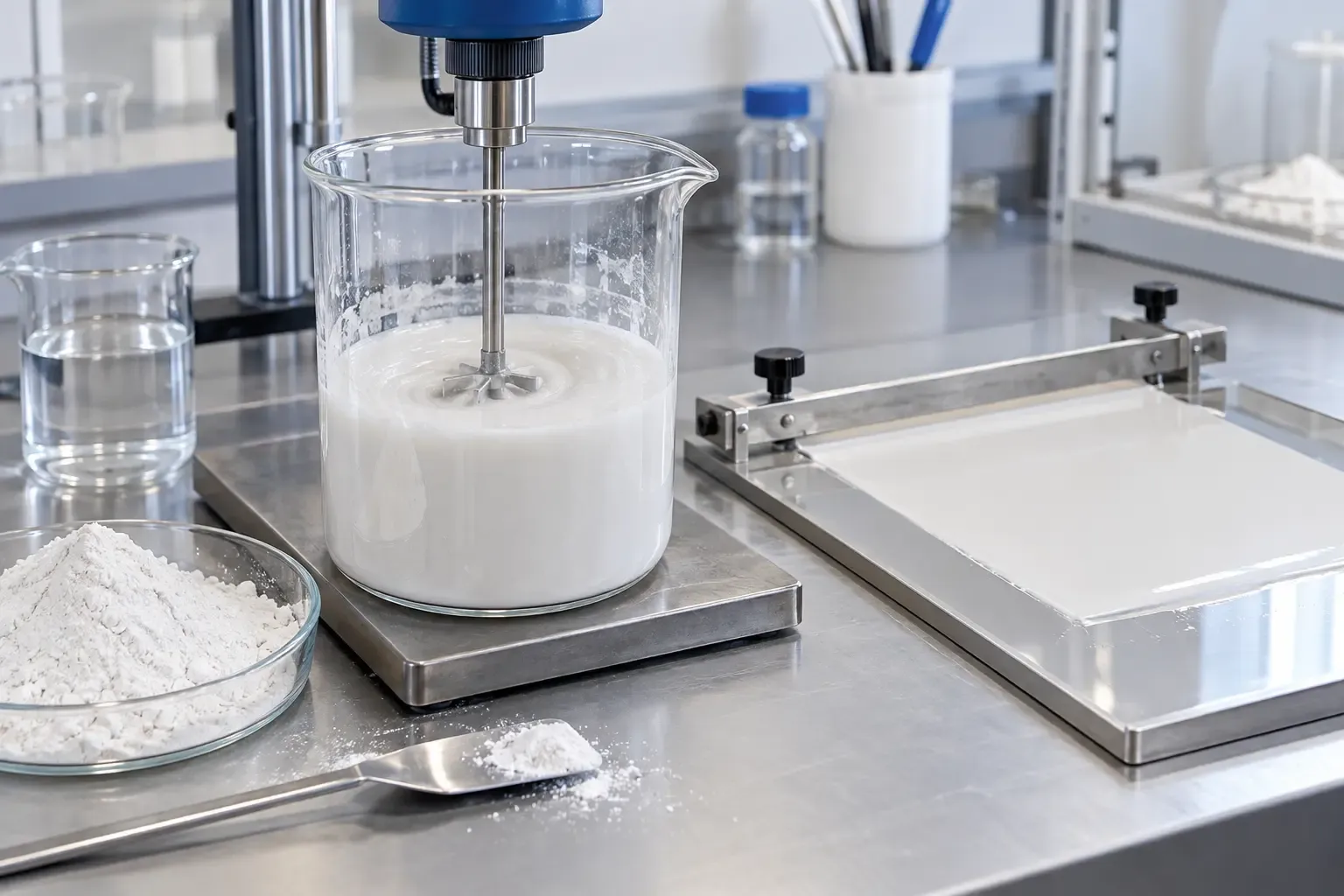
A powder that looks clean and uniform in a dry sample can behave differently after liquid addition. The trial should record the order of addition, mixing energy, hold time, solids loading, dispersant or binder use, viscosity trend and visible agglomerates. These records make it possible to distinguish a powder issue from a formulation or equipment issue.
For a support slurry, compare candidates at a controlled solids level before changing several variables at once. Useful observations include sedimentation, air release, coating or casting smoothness, screen behavior and the condition of the dried green body. If the formulation uses a pore former, keep its type and addition method fixed during the first powder comparison. Otherwise, the pore former can hide the effect of the silica grade.
4. Treat forming and pore creation as a linked decision
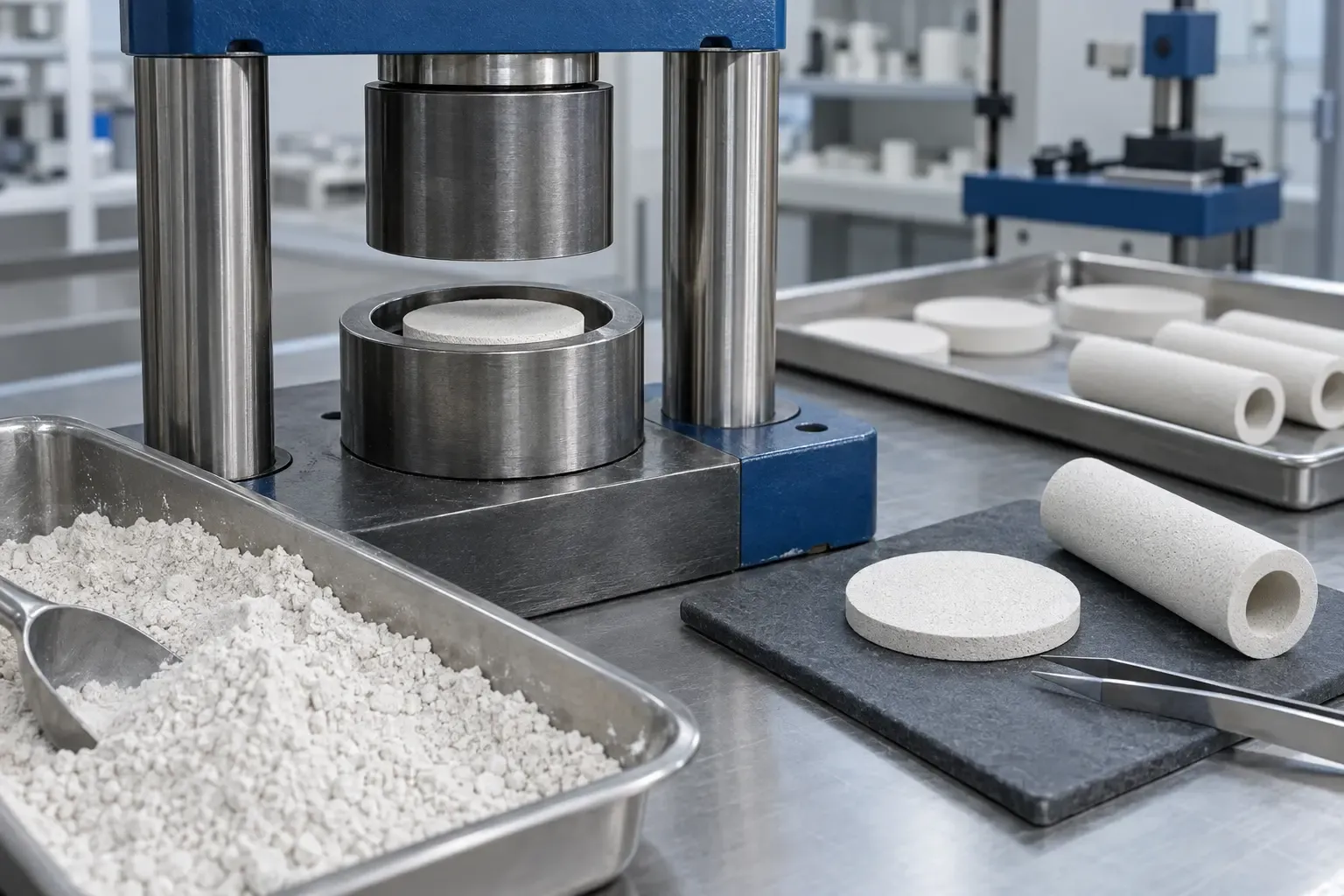
Pressing, extrusion, slip casting and tape casting do not impose the same requirements on a powder. The forming route controls how particles pack and how defects are introduced or removed. The pore structure may come from incomplete densification, a sacrificial pore former, a bimodal powder design or a combination of mechanisms. It should not be inferred from the powder’s nominal mesh or D-value alone.
| Trial stage | Hold constant | Record as a decision signal |
|---|---|---|
| Dry powder preparation | Conditioning time, sieve practice and batch mass. | Flow, agglomeration, retained oversize and weighing repeatability. |
| Slurry or wet mix | Liquid system, additive package, mixing order and temperature. | Viscosity drift, settling, air release and casting response. |
| Green body | Forming pressure or casting gap, drying conditions and handling time. | Cracking, edge damage, density variation and dimensional change. |
| Firing | Heating profile, peak condition, hold and atmosphere. | Warping, shrinkage, open structure, strength and permeability. |
5. Use a staged qualification plan
- Define the support target. State the membrane architecture, forming route, intended flow direction and the strength or cleaning requirement that matters to the application.
- Screen the powder record. Check phase identity, chemistry, PSD method, moisture, packaging condition and available safety documentation before opening a trial batch.
- Run a controlled wet-process comparison. Keep the liquid system, solids level and mixing sequence stable while recording viscosity, settling and green-body behavior.
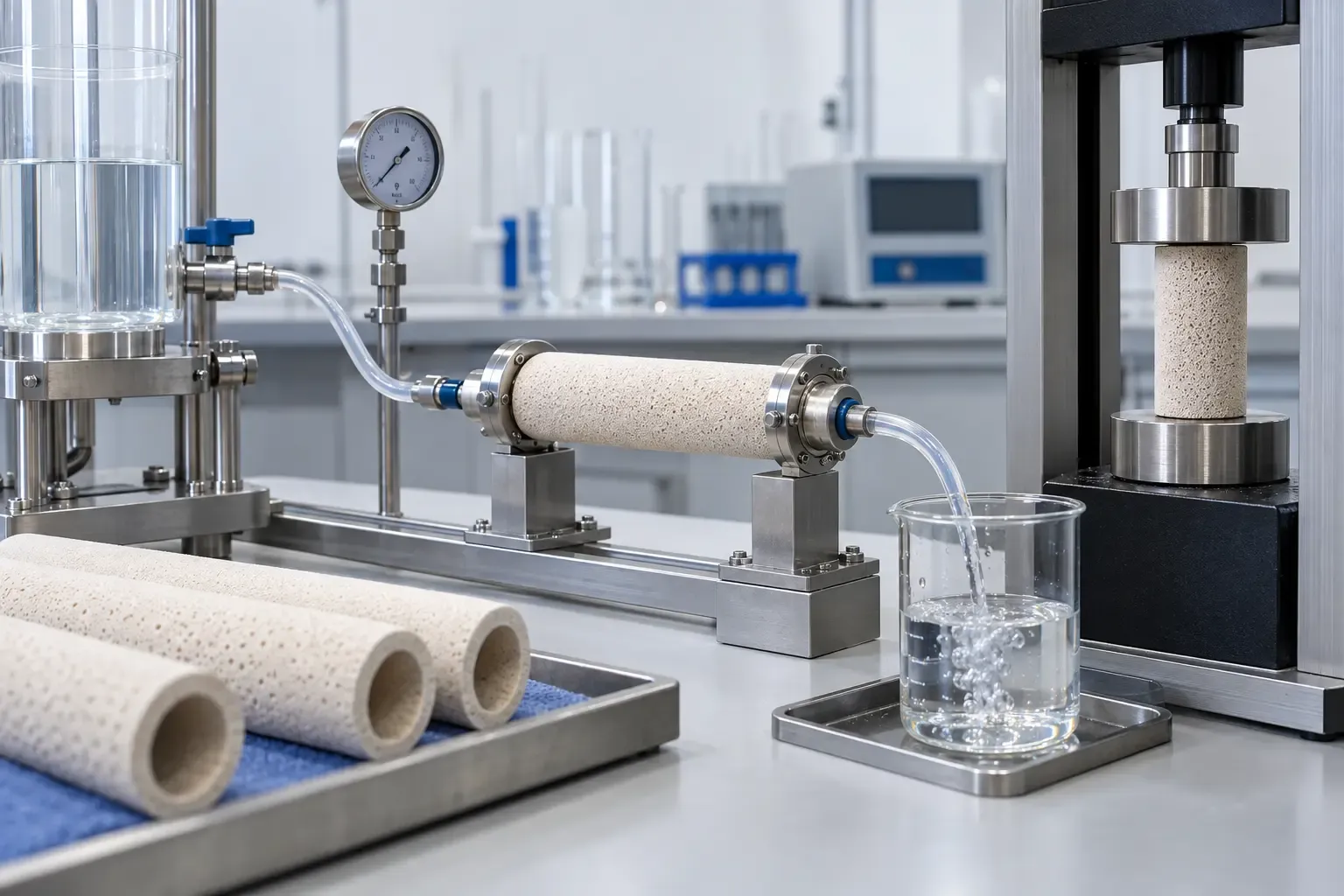
- Fire a small matrix. Vary only the agreed firing variables and measure shrinkage, apparent porosity, pore-size distribution, permeability and mechanical response using the customer’s methods.
- Review the evidence chain. Select a powder only when the supplier data, process observations and fired support results point in the same direction.
6. What a supplier RFQ should include
An RFQ becomes more useful when the buyer describes the process instead of asking only for a “high-purity silica powder.” Include the material phase or identity required, target grading range, batch quantity, forming method, liquid system, firing window, preferred documentation and the tests that determine acceptance. If the powder will be compared with alumina, zirconia, kaolin or another silica source, state the comparison basis explicitly.
Changtong product information can support the initial material review, but the application decision remains customer-specific. For available mineral grades, begin with the company’s ultrafine silica powder for precision ceramics and technical glass, then request the grade-specific data needed for the membrane-support trial.
Frequently asked questions
Can the finest silica powder automatically produce the most permeable support?
No. Fineness can change liquid demand, packing and shrinkage. Permeability is a fired-structure result and must be measured with the forming, pore-former and firing conditions held under control.
Is crystalline silica powder the same as colloidal silica used in some ceramic processes?
No. They differ in physical form, dispersion state and process role. Confirm the material identity and do not substitute one for the other without a documented formulation and performance study.
Which documents should be requested before a ceramic membrane support trial?
Request a current TDS and COA, the stated test methods, SDS, phase or XRD evidence where relevant, packaging and storage information, and any grade-specific particle-size or moisture limits. Treat supplied values as batch or reference data unless the document states otherwise.
How should a buyer compare two silica powders?
Compare identity, measurement methods, PSD, moisture, chemistry, slurry behavior and fired results on the same basis. Avoid selecting by a single mesh number or by a supplier’s general application label.
Need a silica powder screening package?
Share the support architecture, forming method, liquid system, firing conditions and required tests. Changtong can help match the inquiry to a candidate mineral grade and the documentation needed for a controlled trial.
Contact Changtong Technical TeamGeneral ceramic membrane support processing context is informed by the 2024 review Preparation of low-cost ceramic membrane supports and the open research article Asymmetric LSCF membranes utilizing commercial powders. These sources are industry references, not Changtong test reports or performance guarantees.