Cristobalite Powder for Graphite–Silicone PTC Compound Development
Cristobalite powder candidate for graphite–silicone PTC research. Verify phase and lot PSD, then measure resistance and repeatability in the buyer's complete compounded coupon.
Material application brief ·
Separate phase response from device switching
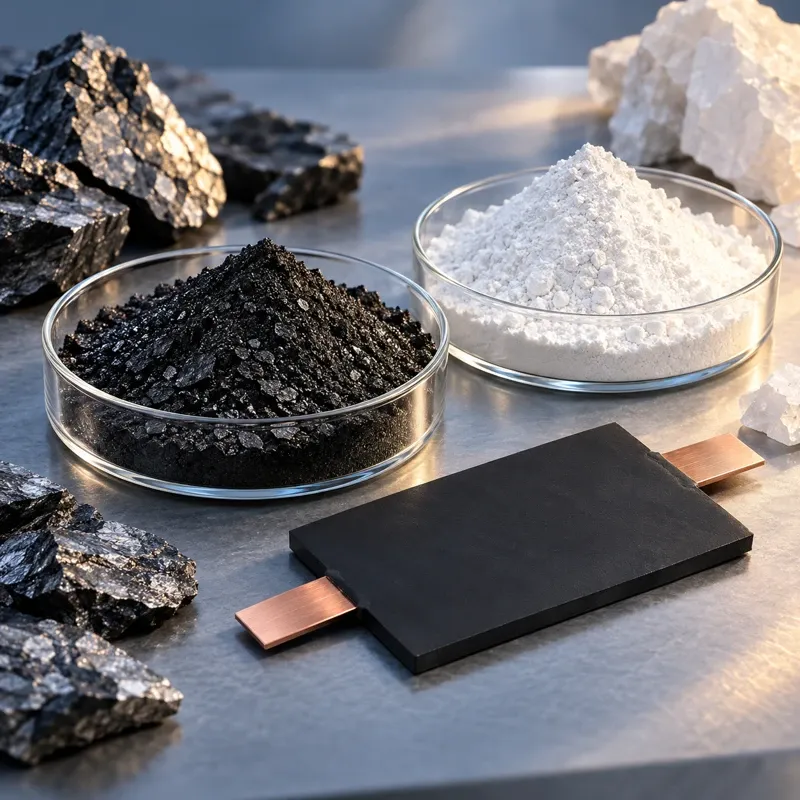
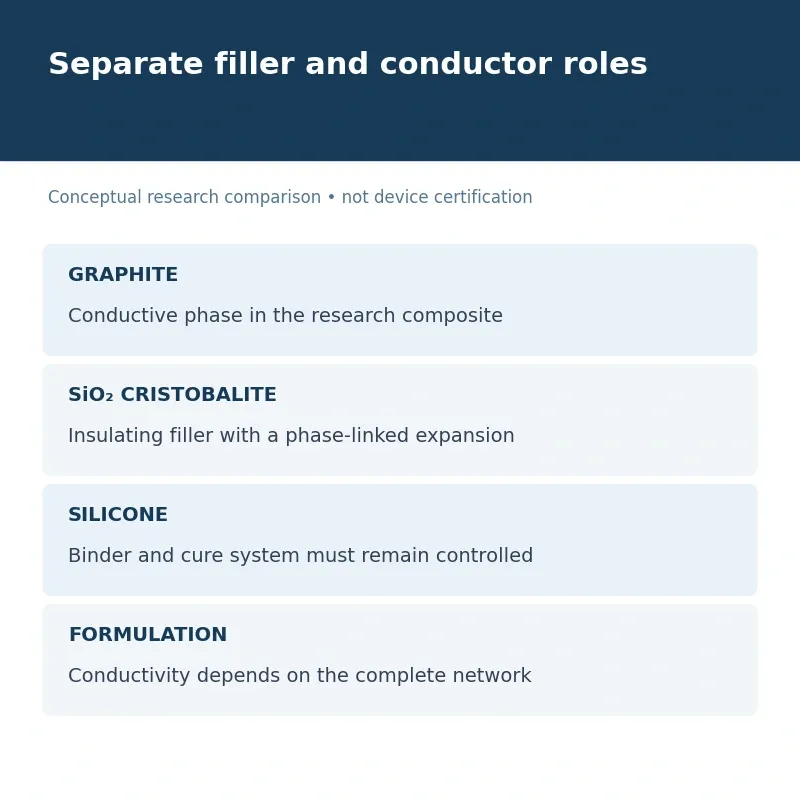
Cristobalite powder for graphite–silicone PTC compound research. The target is a conducting graphite network dispersed with a phase-changing mineral in silicone, where resistance is assessed during heating and cooling. It is not the ordinary insulating filler brief of a silicone cable compound. Changtong can discuss a cristobalite grade for a controlled experimental formulation; powder identity and phase evidence must be confirmed before any switching behavior is attributed to a finished compound.
Why phase identity belongs in the brief
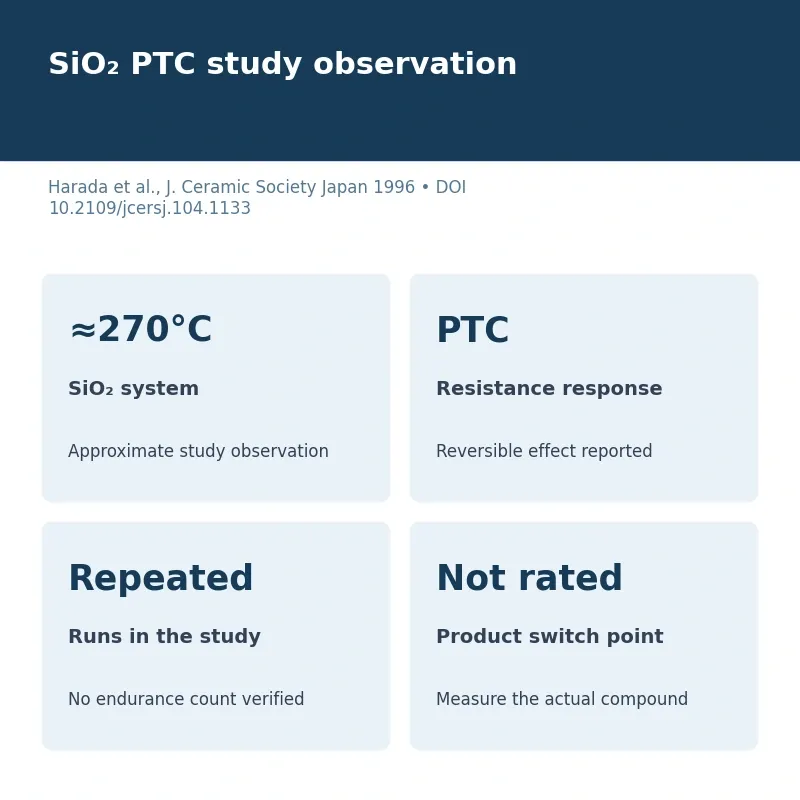
Harada and colleagues prepared PTC materials from graphite, cristobalite-form SiO₂ and silicone rubber. Their paper reported a reproducible positive-temperature-coefficient effect at the reversible phase transition, around 270 °C for the SiO₂ system. It also found a stronger effect in a middle conductor/insulator composition along the tested percolation curve. This observation is about those experimental specimens, graphite proportions and thermal cycling. It does not specify the switching temperature of a Changtong powder, guarantee a stable heater, or authorize a device-design claim. Read the original experiment.
Properties to request before compounding
| Cristobalite field | Why it affects the comparison | Source required |
|---|---|---|
| Phase composition | Residual quartz or amorphous silica can complicate interpretation of a thermal/resistance response. | Current XRD phase report with method, detection limits and lot ID. |
| Particle size and shape | Dispersion and spatial relation to graphite paths depend on the powder distribution. | Lot PSD in μm, method and microscopy if morphology is a design variable. |
| Chemistry and moisture | Trace impurities and water may alter cure and repeatability in the selected silicone. | Grade TDS, batch COA and SDS with agreed analytes and limits. |
| Surface condition | A treatment may alter filler–polymer wetting and graphite dispersion. | Explicitly confirm untreated or treated status; do not assume either for the quoted grade. |
Company sample reference, not PTC qualification: the existing M4000 silicone-rubber page cites submitted sample 260820-1 (20 August 2026): D50 6.15 μm, SiO₂ 99.63%, Fe₂O₃ 0.009%, moisture 0.1% and whiteness 94%. These are one sample's report values, not this new product's limits. The separate 2024 PSD sample has a different D50 and must not be merged with the 2026 result. Confirm a current lot and XRD phase before PTC testing.
Applications and exclusions
| Formulation goal | Qualification focus |
|---|---|
| Exploratory graphite–silicone PTC coupon | Graphite percolation, mineral phase, resistance-versus-temperature on heating and cooling, cycle repeatability. |
| Insulating silicone cable compound | Electrical insulation, cure and cable geometry; see the existing EV cable cristobalite page. |
| General silicone rubber filler | Mechanical, dispersion and appearance targets rather than PTC switching; see the rubber grade page. |
How to frame a defensible coupon comparison
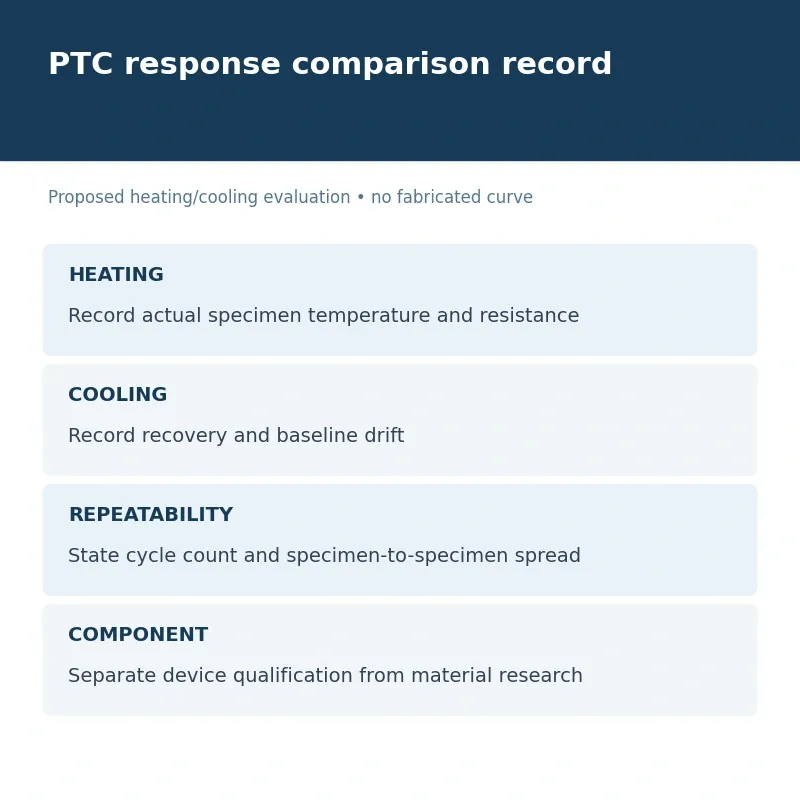
First document the baseline silicone and graphite system, including graphite grade, volume fraction and mixing sequence. Hold cure and specimen geometry constant while varying only one cristobalite or graphite factor at a time. Measure resistance across a defined heating and cooling ramp, report contact arrangement, temperature at the coupon, hysteresis and repeated-cycle drift. Pair electrical traces with phase and dimensional evidence where useful. Device safety, lifetime, voltage and control-system behavior require their own validation; a powder COA cannot stand in for them.
Frequently asked questions
Is 270 °C a guaranteed switching point?
No. It is an approximate observation in the cited SiO₂–graphite–silicone experiment; formulation and measurement conditions determine the finished coupon response.
Why is a cable-grade page not enough?
The cable brief is centered on insulation. This work intentionally includes conducting graphite and investigates a resistance transition, so its acceptance tests differ.
What should we send for a sample proposal?
Send the silicone chemistry, graphite grade and fraction, coupon dimensions, planned thermal range and ramp, phase/PSD requirements in μm, lot-document fields and desired cycling tests.
Share your graphite–silicone baseline and phase/size requirements for a grade and sample-document review.
Send a technical RFQTechnical source and image context
Harada, T.; Ikeda, N.; Ota, T.; Hikichi, Y.; Unuma, H.; Takahashi, M.; Suzuki, H. Preparation of Graphite/Critstobalite/Silicone Rubber PTC Composites [publisher title spelling]. Journal of the Ceramic Society of Japan 104(1216), 1133–1136 (1 December 1996). Source record. Peer-reviewed research; publisher abstract reviewed. No absolute resistivity, filler loading or endurance-cycle count is reproduced. Source checked 15 October 2026. This is background evidence, not a newly published October 2026 study.
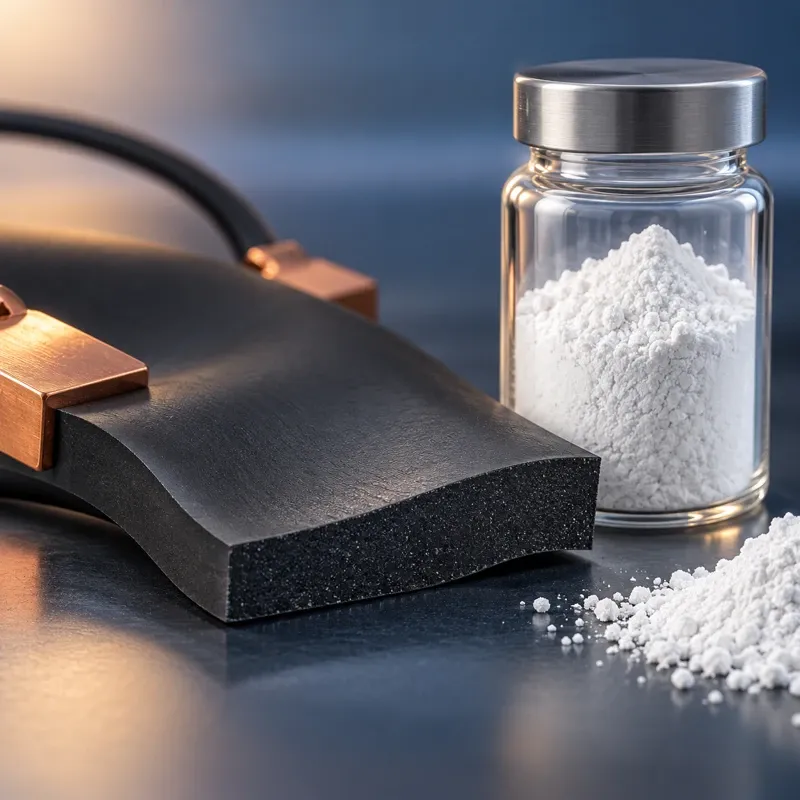
Main and detail images are conceptual AI-generated application illustrations, not photographs of Changtong production or tested customer parts. Body figures are original summaries of the stated research and proposed evaluation comparisons; they are not Changtong measurements.