Silica Powder Filler for Electronic Potting Compounds
Fine silica powder filler developed for epoxy and other electronic potting compounds. Controlled particle-size options, low moisture and consistent batch processing support stable mixing, reliable filling and dimensional control in encapsulation formulations. Final grade and acceptance limits should be matched to the customer’s resin system.
SILICA FILLER FOR ELECTRONIC MATERIALS
Silica Powder Filler for Electronic Potting Compounds
A fine crystalline silica filler for epoxy and other electronic potting formulations. Controlled particle-size options and low-moisture handling support repeatable mixing, reliable cavity filling and stable mineral loading.
Product Overview
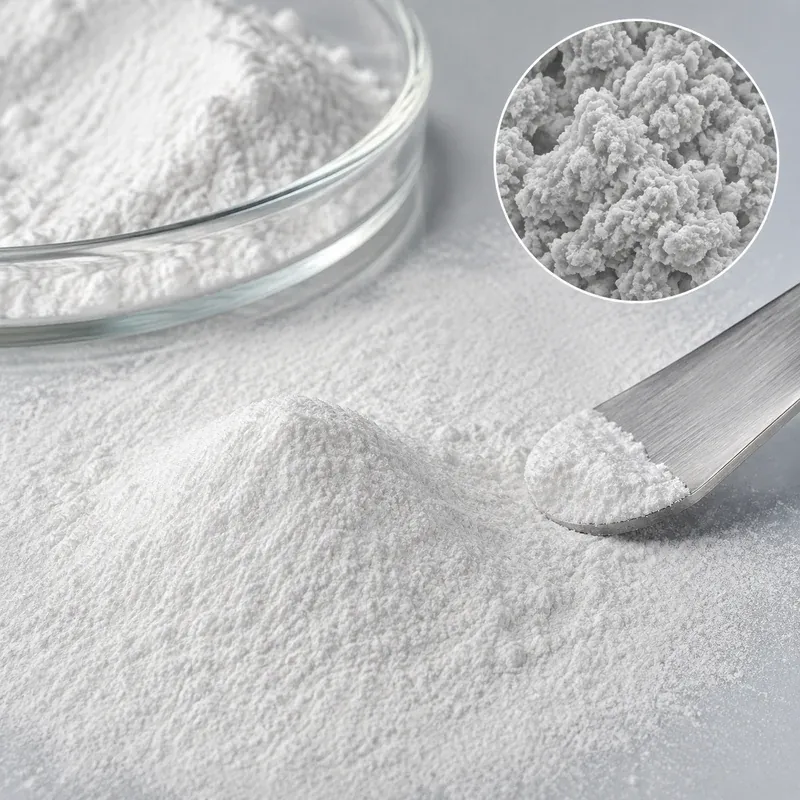
This product is a micronized crystalline silica powder intended for use as an inorganic filler in electronic encapsulation and potting systems. Its role is to add controlled mineral solids to the formulation while allowing the compound manufacturer to balance viscosity, flow, curing behavior and final-part requirements. It is supplied as a dry filler—not as a finished resin or ready-to-use potting compound.
Different resin chemistries and component geometries require different particle-size distributions. The appropriate grade should therefore be selected against the customer’s resin, curing agent, mixer, dispensing equipment and target loading level.
Technical Properties
| Property | Typical Specification | Selection Note |
|---|---|---|
| Material | Micronized crystalline silica | Not fused silica or silica fume |
| Mesh options | 600–1250 mesh | Choose according to viscosity and filling requirements |
| Particle size (μm) | Nominal sieve range approximately 25–10 μm | Final PSD and test method to be agreed |
| SiO₂ content | 99.3–99.7% | Approved crystalline silica range |
| Fe₂O₃ | <0.015% | Specification limit |
| Moisture | <0.1% | Keep sealed and dry after delivery |
| Whiteness | 92–95 | Confirm method for color-sensitive formulations |
| Specific gravity | 2.65 g/cm³ | Useful for loading calculations |
Particle-size note: Mesh is a screening reference, not a complete particle-size distribution. If viscosity, sedimentation or dispensing clearance is critical, specify the required PSD curve, screen residue and test method.
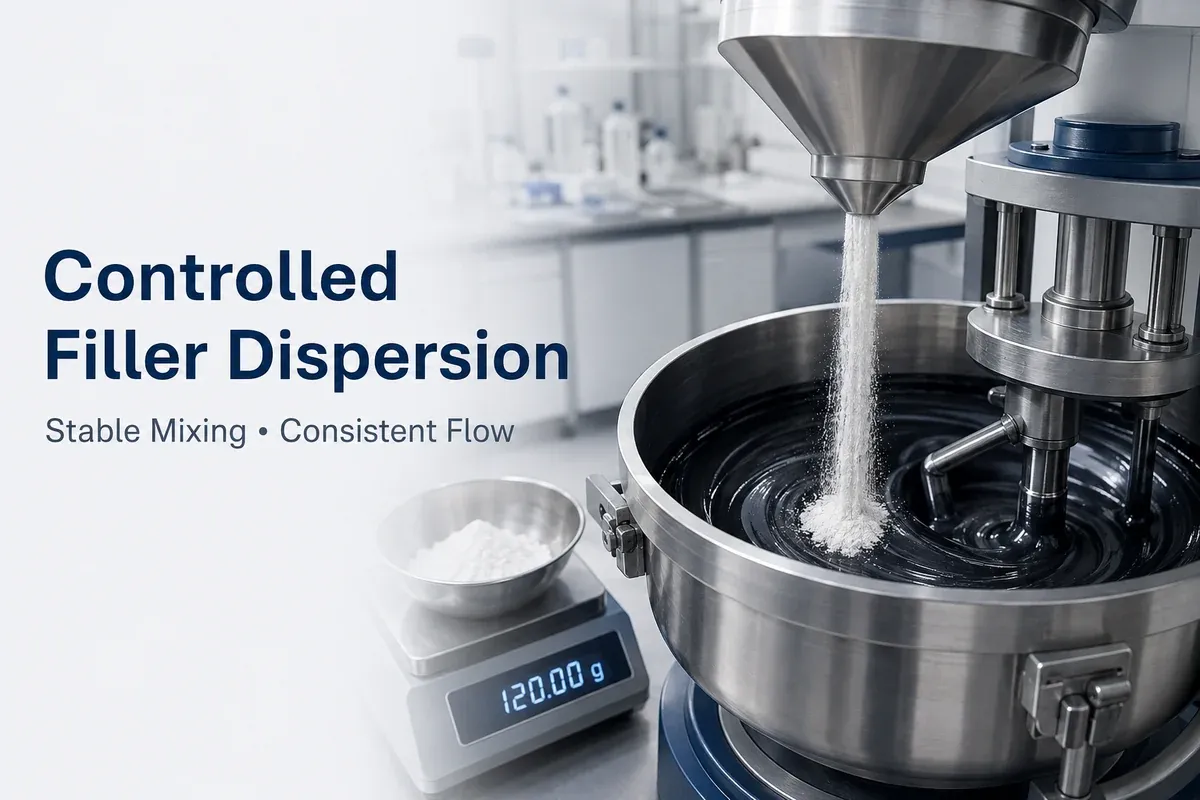
Controlled Filler Dispersion
Consistent feeding and adequate wetting are important when incorporating mineral filler into a liquid resin. Gradual addition, suitable mixing energy and controlled temperature help reduce dry agglomerates and maintain repeatable compound flow. The optimum loading is formulation-specific and should be confirmed by laboratory trials before production use.
Properties and Application Value
| Filler Attribute | Formulation Role | Typical Use |
|---|---|---|
| Fine particle-size options | Allows the formulator to balance loading, flow and dispensing clearance | Electronic encapsulation compounds |
| Low-moisture supply | Helps limit unnecessary moisture introduced with the mineral filler | Epoxy and other moisture-sensitive resin systems |
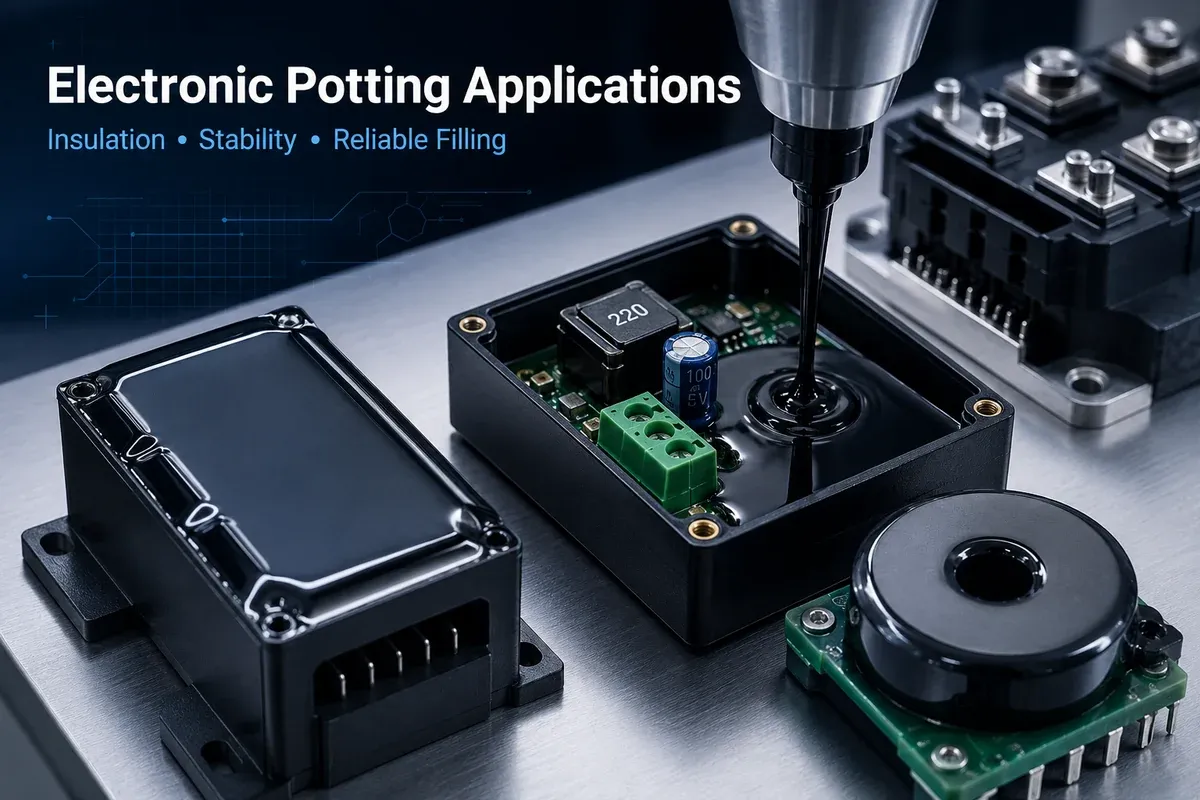
| Inorganic mineral structure | Provides stable solid loading and electrically insulating filler content | Power modules, sensors and control units |
| Batch-controlled powder | Supports repeatable incoming-material evaluation and processing | Regular compound production |
Quality Control and Protected Packing
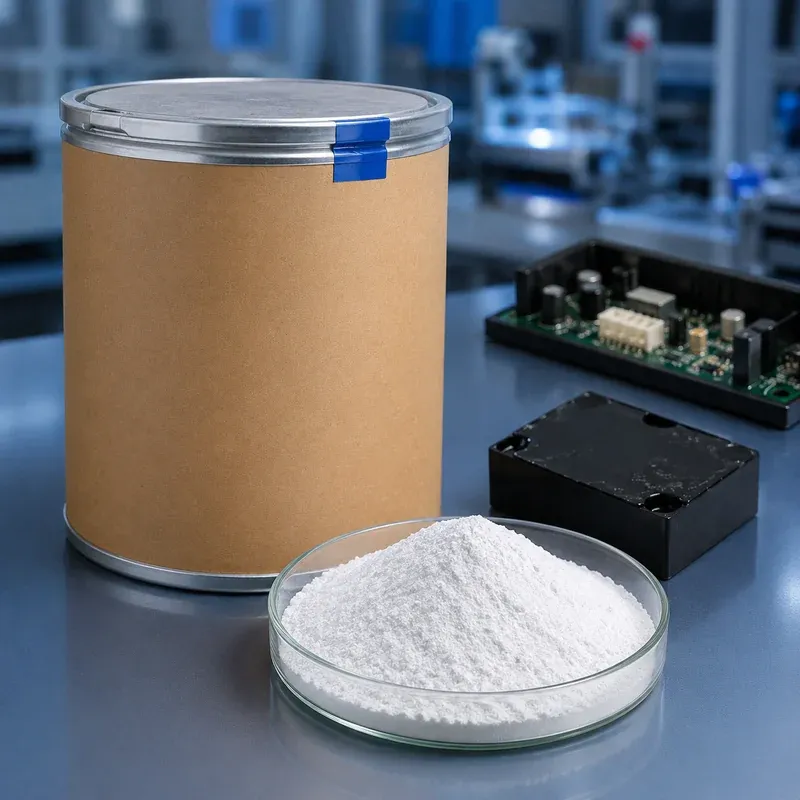
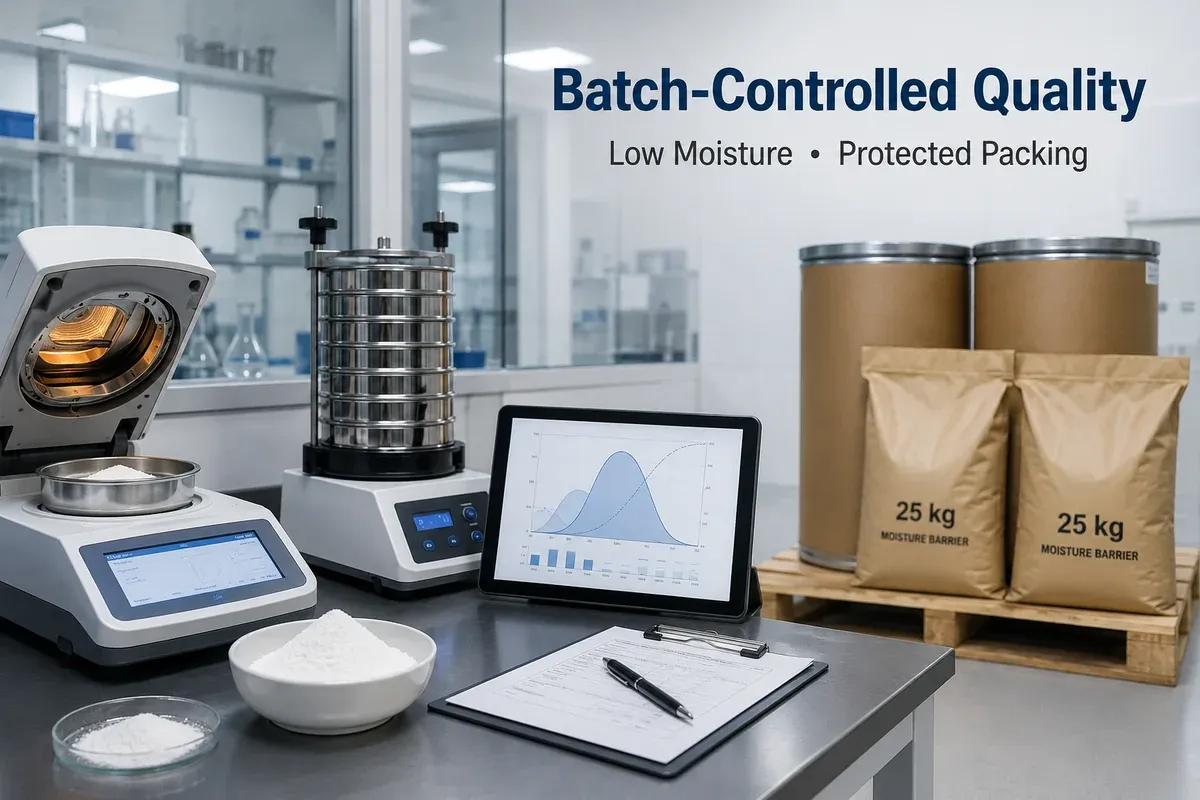
Representative samples can be checked for chemistry, moisture and particle-size requirements before batch release. Moisture-protected inner liners or sealed paper drums help preserve the powder during storage and shipment. Packing format is selected according to order size and the customer’s handling process.
- Batch identification and retained samples support shipment traceability.
- Particle-size testing can be aligned with the agreed sieve or PSD method.
- Standard 25 kg bags and sealed paper-drum options are available.
- Store sealed in a dry area and follow the SDS and local dust-control requirements during transfer.
Information Needed for Grade Selection
- Resin and curing-agent type.
- Target filler loading and mixed-compound viscosity.
- Required mesh, PSD, screen residue and test method.
- Dispensing clearance, component geometry and settling limits.
- Trial quantity, regular demand and packing requirements.
Frequently Asked Questions
Request an Electronic Potting Filler Quote
Send your resin type, target loading, particle-size requirement, quantity and packing needs for grade review.
Request a Quote