How Is Cristobalite Flour Made: Process and Particle Size
Learn how cristobalite flour is produced through phase conversion, grinding, classification, and particle-size control.
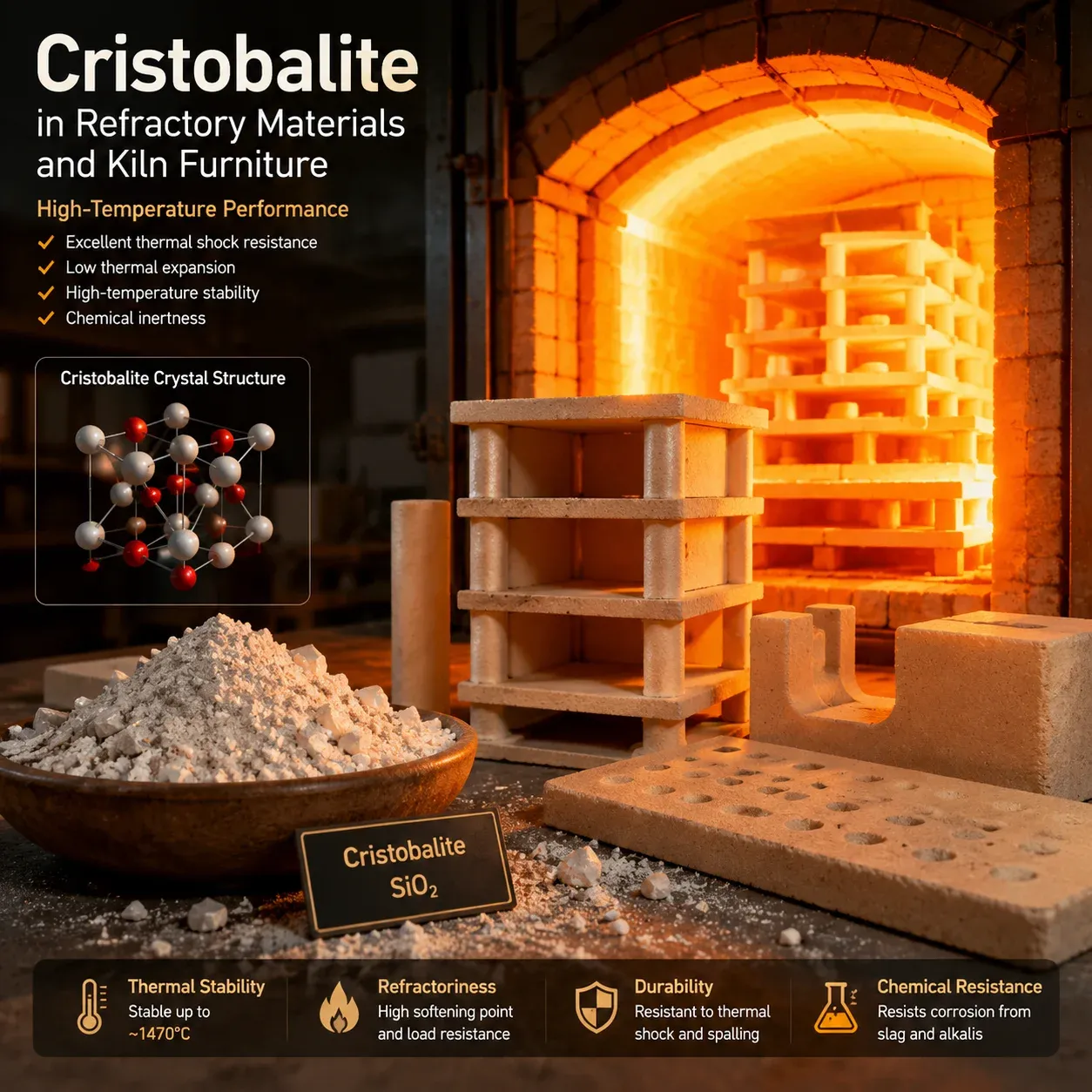
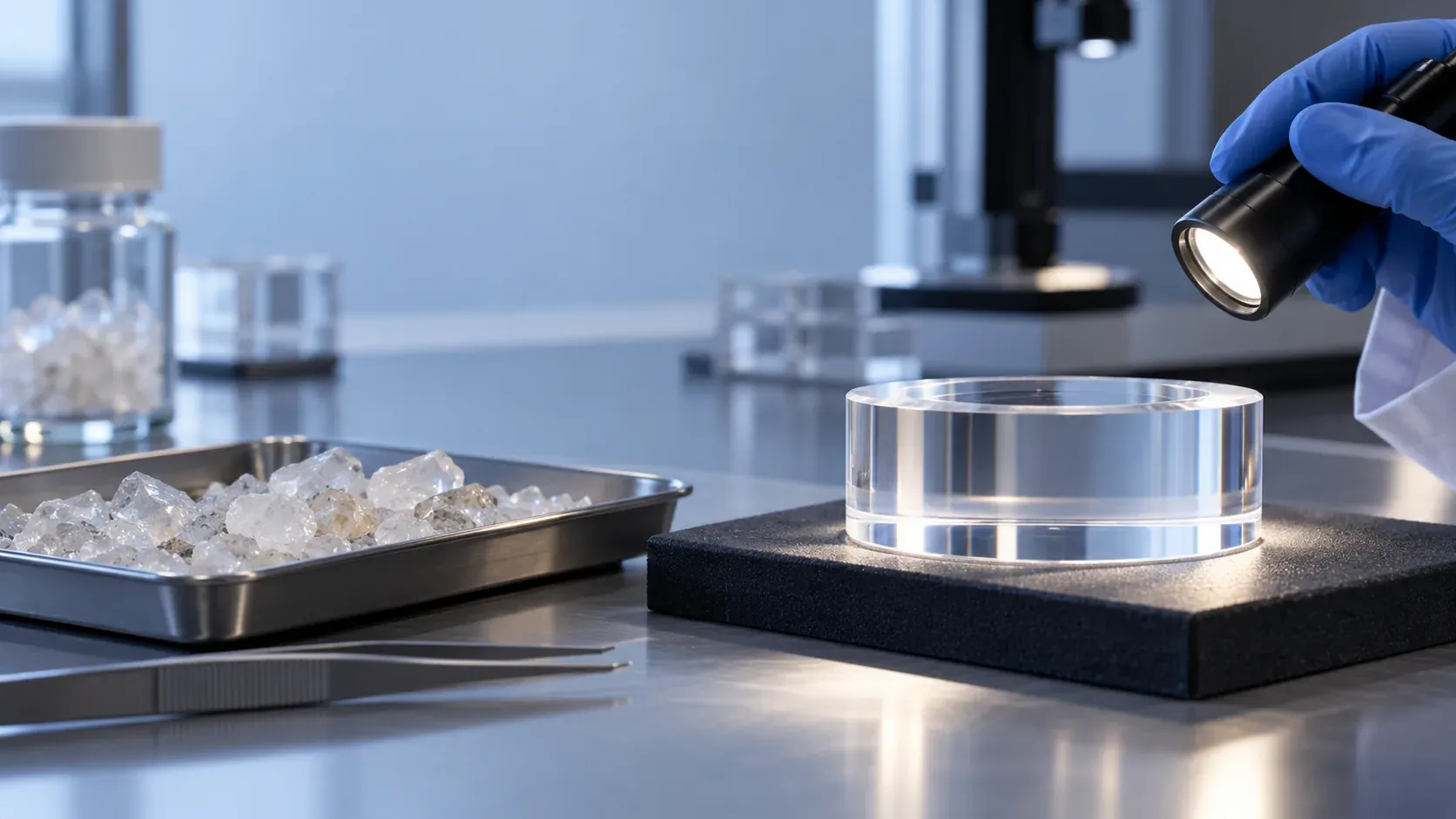
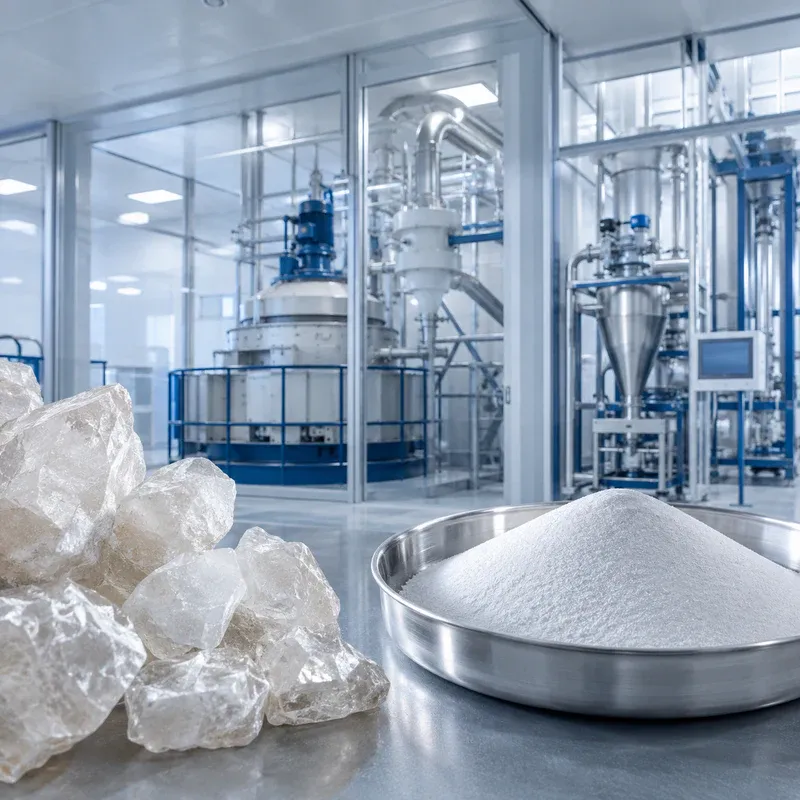
Cristobalite flour is made by converting selected natural quartz through controlled high-temperature treatment, then grinding and classifying the converted material into a defined powder grade.
The conversion step establishes the material phase; grinding and classification establish the usable particle-size cut. Quality control must address both.
Public industry references for context
When a Changtong document does not report a field, a public manufacturer source can provide context—but it must remain separate from Changtong's own product evidence.
| Public source | Example data | Use and limitation |
|---|---|---|
| HPF Minerals cristobalite overview | Hardness about 6.5 Mohs; density about 2.35 g/cm³; thermal expansion 54 × 10-6/K at 20–300°C. | General product-family context; not a Changtong grade specification. |
| Hoben C200 technical data sheet | Typical SiO2 99.5%; typical Dv50 219 µm; separate sieve fractions are reported. | Another supplier's typical data; not transferable to Changtong without matching test evidence. |
References: HPF Minerals cristobalite properties and Hoben C200 Technical Data Sheet.
Last updated:
Published SDS reference data
The following identity data comes from the Changtong EU SDS, revision 02 dated March 5, 2020. It is a historical EU-market reference and should not be treated as a current universal specification.
| Field | Reference data |
|---|---|
| Trade names | M3000 / G325 |
| CAS number | 14464-46-1 |
| Material identity | Cristobalite Flour |
| Cristobalite content | >85% |
| Melting point | 1718°C |
| Document scope | EU SDS, revision 02, March 5, 2020 |
Confirm the latest TDS/SDS, destination-market classification and current lot documents before purchase. Do not generalize an old regional exposure limit to every jurisdiction.
Cristobalite Flour Manufacturing Route
1. Select and prepare natural quartz
Feed selection establishes the starting chemistry, color and inclusion risk. Sorting, size preparation and removal of loose contamination support a more stable thermal step.
2. Calcine for phase conversion
Controlled heating converts quartz toward the cristobalite phase. Temperature profile, residence time, feed condition and furnace control influence the result and must be managed as a process—not reduced to an unsupported single temperature claim.
3. Cool and inspect the converted material
Cooling and handling should protect the converted material from contamination and uncontrolled moisture. The release plan should identify the phase or conversion evidence required for the grade.
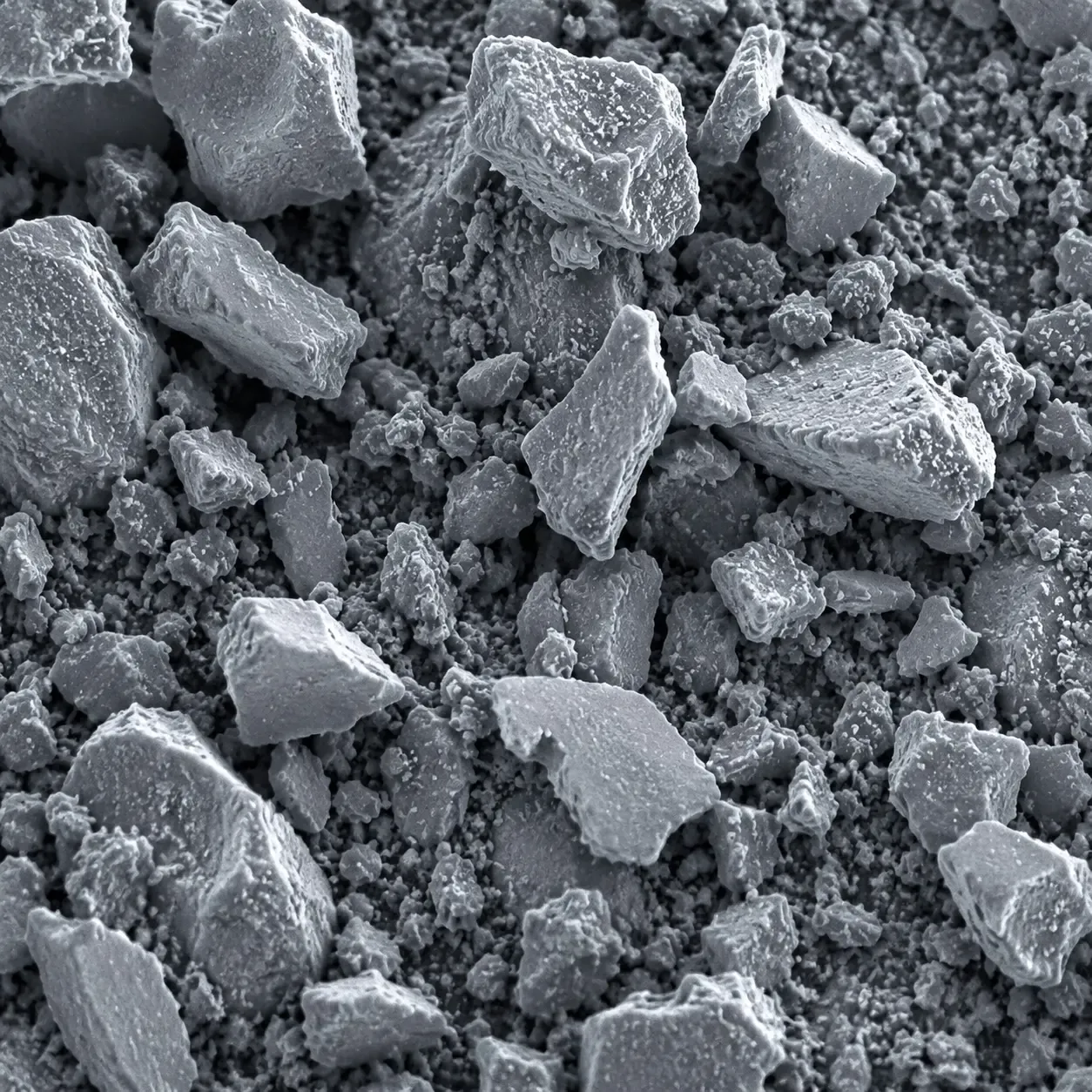
4. Grind to the target flour cut
Grinding reduces the calcined material to the required fineness. Mill wear, energy input, feed condition and residence time can affect PSD, contamination and handling behavior.
5. Classify, test and pack
Classification separates the desired fraction from coarse material. The finished lot is checked against agreed chemistry, whiteness, moisture, particle-size and packaging requirements before release.
What Quality Data Should Accompany the Grade?
| Control field | Why it matters | What the buyer should request |
|---|---|---|
| Material phase and identity | Confirms that the powder is the intended cristobalite-based material. | Grade description and applicable phase or conversion evidence. |
| SiO2 and trace oxides | Supports purity, color, thermal and formulation decisions. | Units, methods, typical or guaranteed status and lot result. |
| Whiteness | Important for bright fillers, coatings and appearance-sensitive products. | Measurement method, reference and acceptance requirement. |
| PSD and sieve result | Controls packing, surface finish, flow and application repeatability. | Mesh basis and/or D10/D50/D90 with method. |
| Moisture, pH or conductivity where relevant | Can affect dispersion, storage and formulation compatibility. | Current grade fields and test conditions. |
| Lot traceability and SDS | Supports release, safe handling and investigation. | Lot-linked COA, package label and current SDS. |
Why Particle Size Matters After Calcination
Calcination establishes the phase, but it does not by itself deliver the correct flour performance. Grinding and classification determine how the powder packs, flows, wets and disperses. A fine grade may increase surface area and binder demand; a coarse tail may change finish, packing or defect risk.
| Application concern | Particle-size question | Validation step |
|---|---|---|
| Coating appearance | Is the coarse tail controlled and is the distribution repeatable? | Compare sieve/PSD data with drawdown or formulation results. |
| Casting slurry | Does the flour change viscosity, settling or surface finish? | Trial at the same binder, solids loading and mixing condition. |
| Rubber or resin filler | Does the fine fraction change wetting, dispersion or compound viscosity? | Compare PSD and moisture, then validate in the target formulation. |
How to Specify Cristobalite Flour
- Name the phase/material family and grade.
- State the intended application and required appearance or thermal behavior.
- Define chemistry and whiteness fields with methods and limits.
- Define the particle-size method, sieve rule or PSD window.
- Specify moisture, packaging, lot identification and document requirements.
- Approve the grade through a controlled sample trial.
For a product starting point, review the High-Whiteness Cristobalite Powder for Epoxy and Refractory Applications page, then confirm the current specification and COA. Do not transfer values from a different cristobalite cut or from natural crystalline silica powder.
Frequently Asked Questions
Is cristobalite flour made by simply grinding quartz?
No. In the route described here, quartz is first converted through controlled high-temperature treatment and then ground and classified.
Does a high whiteness value prove the grade is suitable?
No. Whiteness is one control. Phase, chemistry, PSD, moisture, compatibility and the buyer's application trial also matter.
Why should the PSD method be written on the purchase specification?
Because a mesh limit, sieve residue and laser-diffraction D-value describe different aspects of the powder. The method makes supplier results comparable.
References
- ISO 13320 — Particle size analysis by laser diffraction methods.
- OSHA — Crystalline silica overview, for dry-powder handling context.
Match the Flour to the Application
Share your application, target whiteness, chemistry, particle-size method, packaging and required documents for a grade discussion and sample evaluation.
Contact our technical sales team