Quartz Filler Oil Absorption: Comparing Test Methods
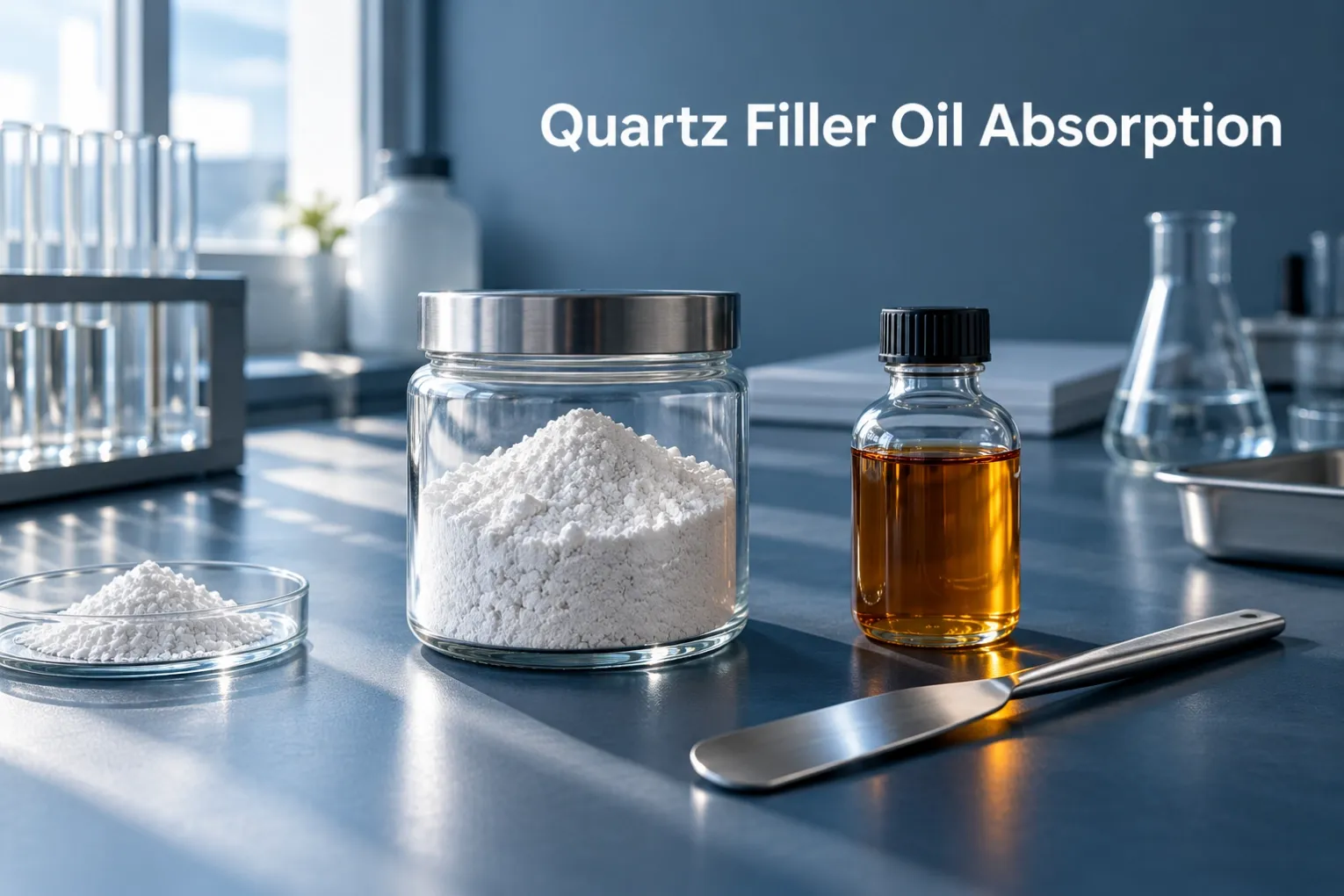
Compare quartz filler oil absorption by matching method, liquid, units and endpoint. Use a separate resin trial to check wetting and processing viscosity.
A PURCHASING QUESTION
One quotation lists a lower oil-absorption number. Does that make it the easier filler to process?
Oil absorption can be useful as a screening measurement, but it is often asked to answer a different question: how a powder will behave in a particular resin. Keep those questions separate. A comparable powder test can support grade discussion, while actual mixing and flow must be checked in the intended formulation. This guide focuses on that boundary rather than ranking fillers from unqualified numbers.
Read the Method Identifier First
ASTM D281 describes a spatula rub-out method associated with pigment vehicle demand. ASTM D1483 describes a Gardner-Coleman method. The published D281 scope explicitly distinguishes their mechanical handling and endpoints and notes that results generally differ. Consequently, a D281 value and a D1483 value should not be treated as a direct supplier ranking or connected by an assumed universal conversion factor.
| Report field | Question for the laboratory | Reason to hold comparison |
|---|---|---|
| Method and edition | Which written procedure was used? | A method name is absent or only “oil absorption” is stated. |
| Liquid and reporting unit | What liquid was used and how is the result expressed? | Volume per mass is compared with mass per mass without the conversion basis. |
| Sample preparation | Was drying or conditioning performed? | Preparation differs or is undocumented. |
| Endpoint and repeats | How was the endpoint judged; how many repeats were reported? | A single unqualified value obscures operator and repeat variability. |

Avoid Turning a Screening Number into a Resin Guarantee
The test liquid is not automatically equivalent to an epoxy, polyester, silicone or waterborne binder. A result measured under one procedure cannot by itself specify production viscosity, wet-out time, pot life or film finish. A lower number may justify a candidate trial, but the customer still needs a process-based acceptance condition.
Before comparing treated and untreated quartz, record the source material and surface-treatment description. Ground natural quartz remains a mineral filler even when its surface is modified. Do not assign it the structure, function or test values of fumed silica or precipitated silica. Fused silica and cristobalite also require their own grade identities; shared SiO₂ chemistry does not make every powder test interchangeable.
Run a Separate Application Check
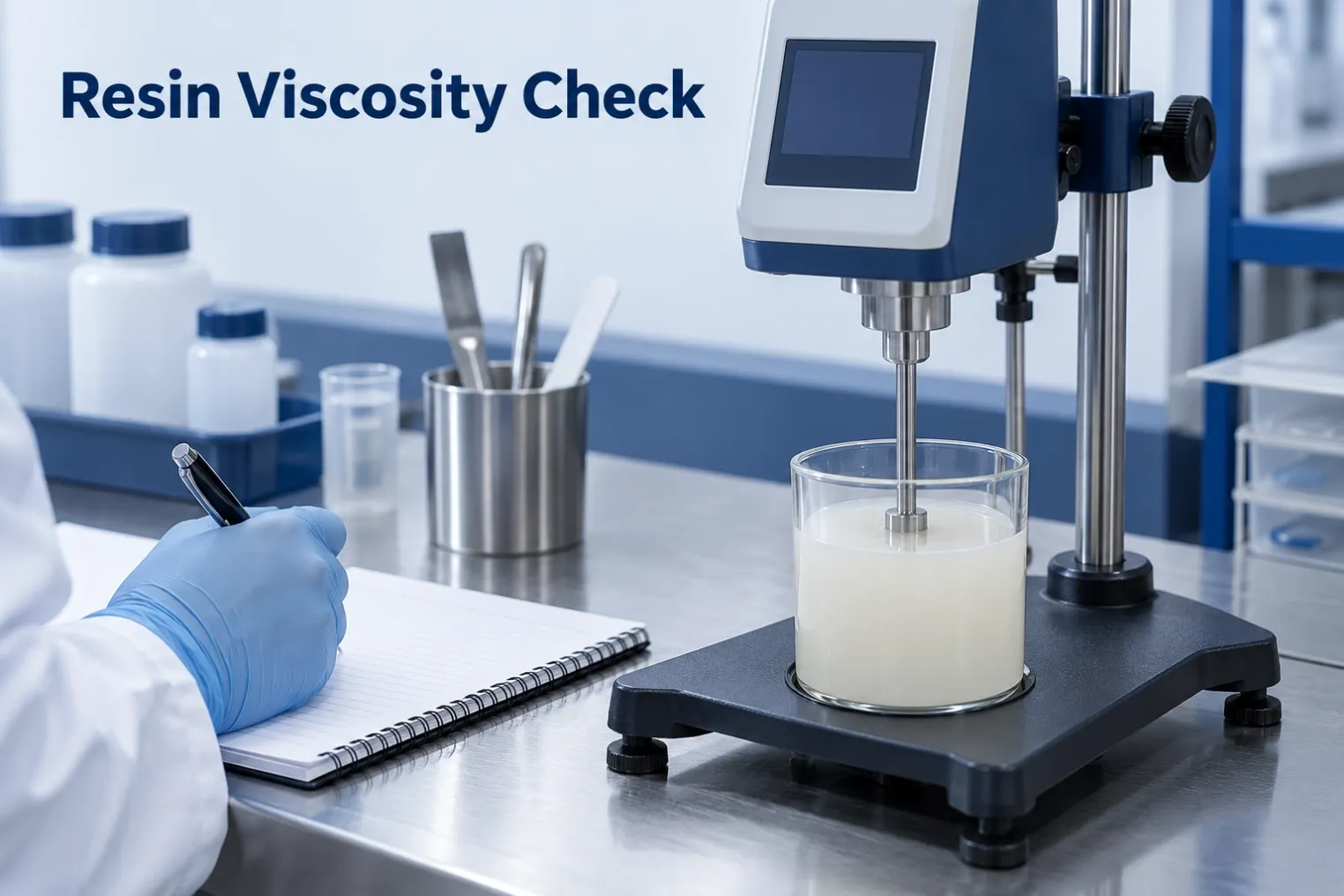
The following is a proposed customer screening workflow, not an ASTM procedure. Prepare a baseline and a candidate using the same resin lot, loading basis, temperature and mixing equipment. Fix the order of addition and mixing time. Record visible dry islands, the time needed to incorporate powder, air removal and the agreed viscosity measurement. State whether the measurement is made before or after adding a reactive hardener.
| Powder measurement | Application observation | Decision boundary |
|---|---|---|
| Oil absorption by an identified method | Powder incorporation and wet-out | A test difference creates a trial question, not an automatic pass. |
| Documented repeats or agreed retest | Viscosity under fixed temperature and shear conditions | Compare like measurements; do not merge incompatible units. |
| Lot and grade identification | Film or casting inspection after processing | Retain the actual recipe and processing record with the powder result. |
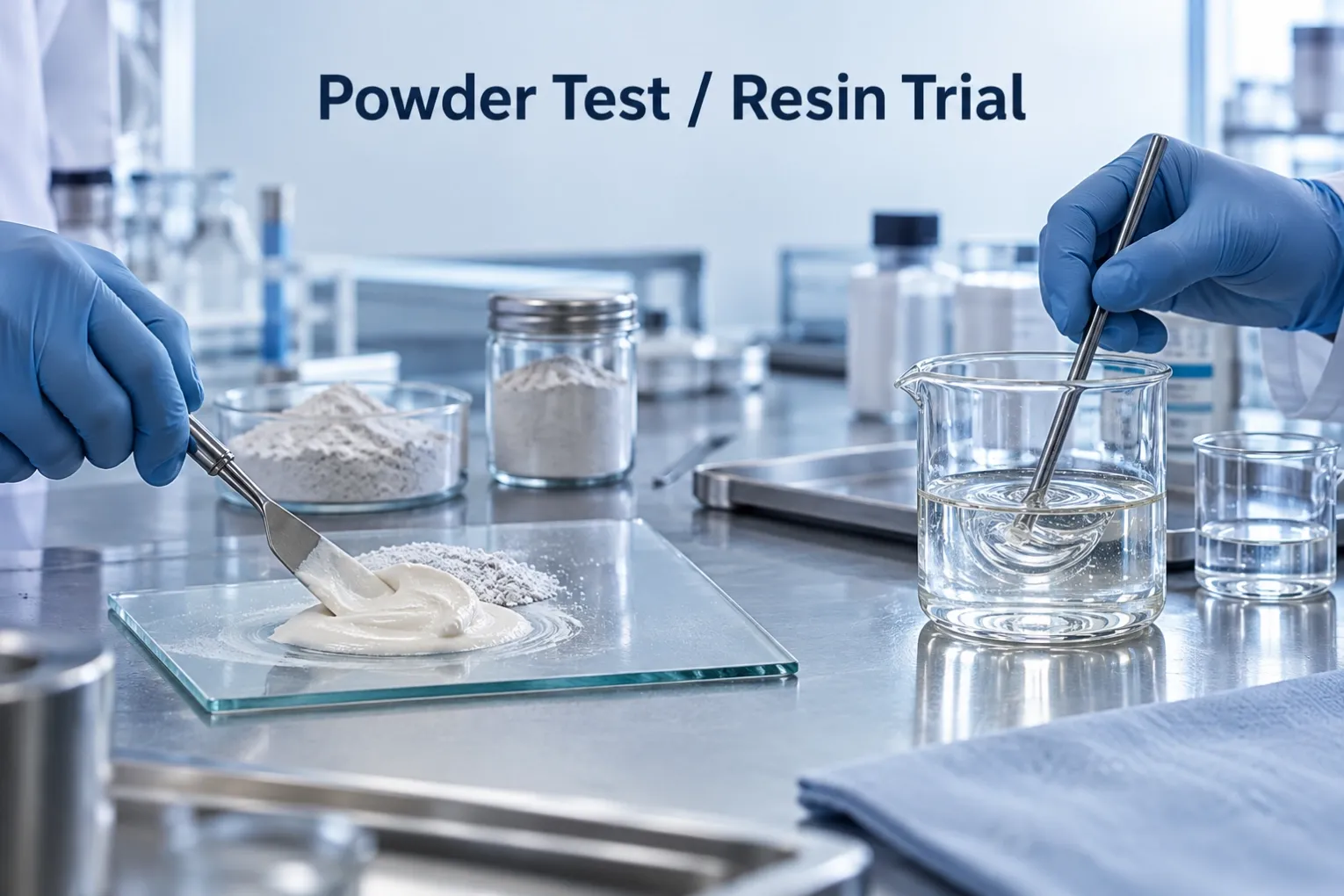
If incorporation improves while final viscosity does not, preserve both observations. They may describe different stages of processing. If a candidate only works after changing loading or dispersant, document the reformulated recipe separately from the unchanged-recipe comparison. This prevents the purchasing file from attributing every improvement to the incoming powder.
Use the RFQ to Close the Missing Fields
Ask whether the intended grade has an applicable oil-absorption test, the method used and the available lot evidence. No universal Changtong value is stated here. For a related material application, review surface-treated quartz powder for epoxy flooring. Treat the product page as a starting point for a grade-specific conversation, not as a substitute for a current test report.
When the project moves from a powder test to flooring formulation selection, continue with surface-treated quartz selection for epoxy flooring.
Questions Buyers Ask
Can I compare results reported in different units?
Only with the test basis and a valid conversion. A conversion of units does not eliminate differences between procedures.
Does a supplier’s “low oil absorption” label define acceptance?
No. Agree a method, reporting basis and acceptance criterion before using it as a purchasing limit.
Is surface-treated quartz the same as hydrophobic fumed silica?
No. Ask for the material origin, phase and surface-treatment identity; qualify each material family separately.
What should happen when reports disagree?
First reconcile methods and sample identity. If necessary, agree a common retest before discussing a grade change.
Primary Method References
ASTM D281-12(2021) and ASTM D1483 public scope descriptions. Follow the laboratory’s current applicable standard for execution. The application workflow above is engineering guidance, not Changtong test data. References checked 8 October 2026.
Request a Quote
Send your binder identity, loading basis, existing test method and the processing problem. Request comparable grade evidence before choosing a sample.
Discuss Your Silica Requirement