Silica-Filled Epoxy Cure: Compare DSC on a Reactive-Resin Basis
Check silica-filled epoxy cure by separating filler dilution from reaction changes, then connect DSC evidence to the temperature history of the cast part.
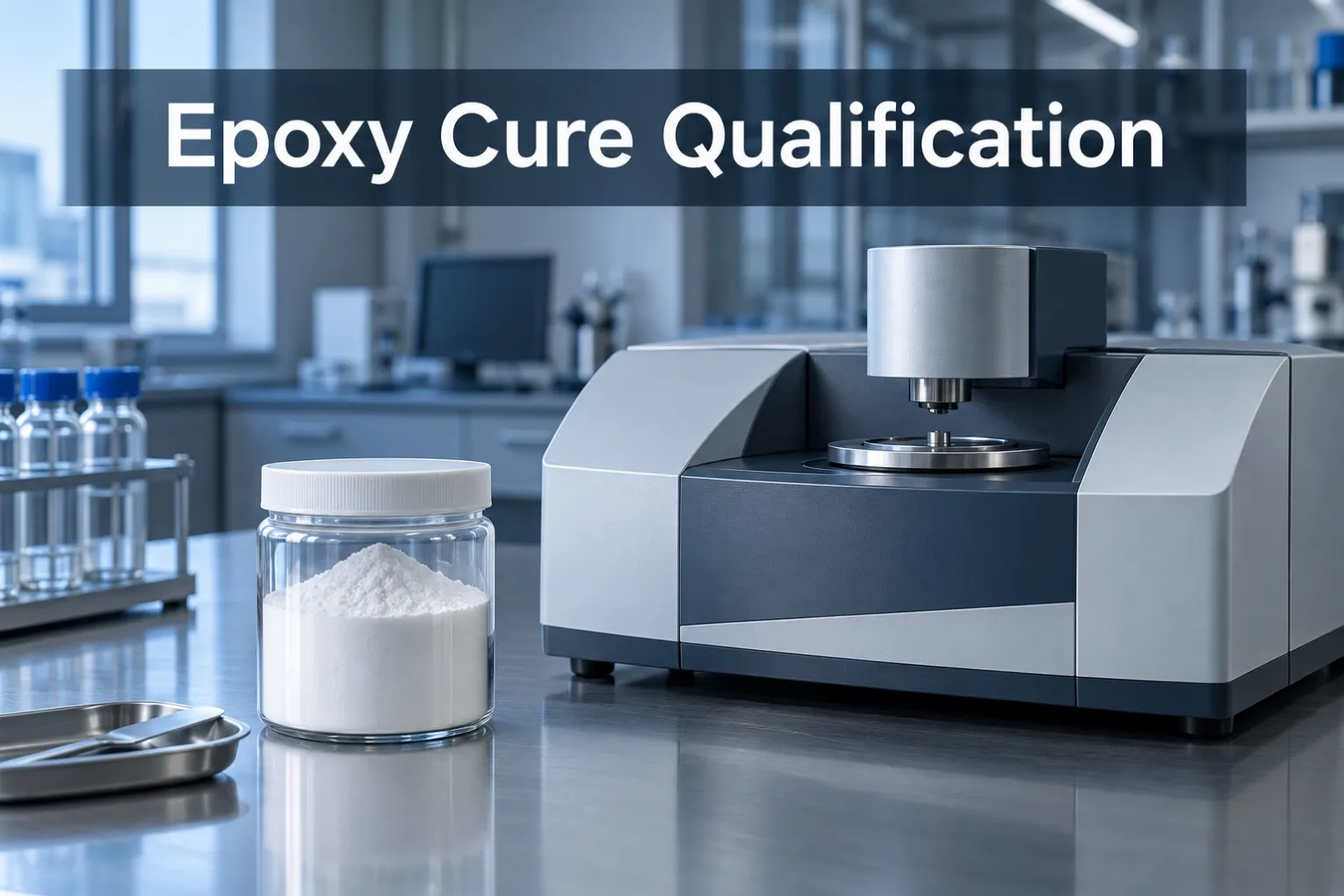
A lower DSC exotherm per gram of filled compound does not, by itself, mean the epoxy cured less. Part of that gram is mineral. Before changing the oven schedule or rejecting a filler, establish how much reactive material was actually inside the sample pan.
Changtong technical guide · · Quality, Testing & Compliance
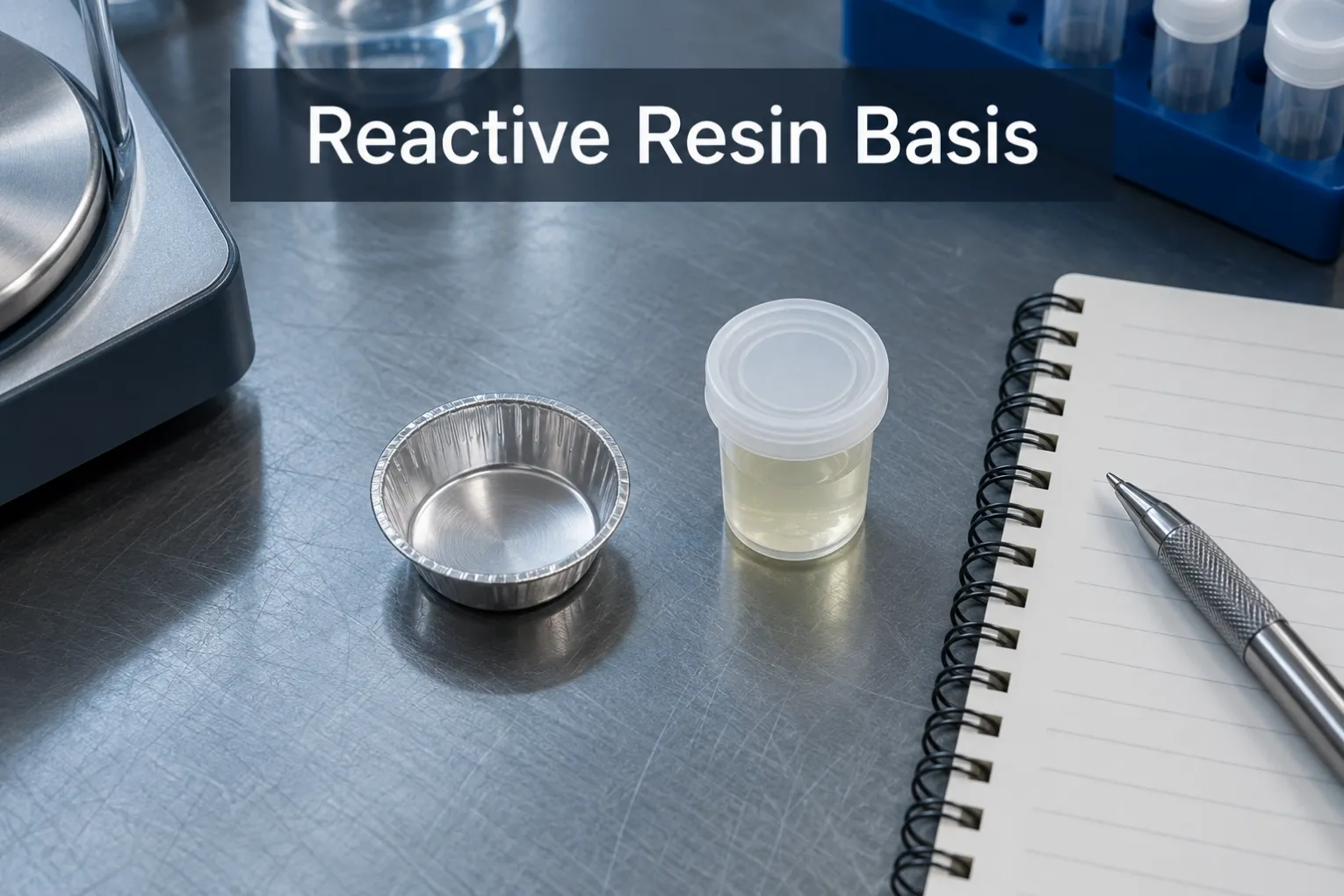
Start with the Mass Behind the Signal
The practical question is whether a candidate filler changes the working and curing window of the intended epoxy. This is different from asking whether the compound produces the same heat per gram as neat resin. Preserve the resin-to-hardener stoichiometry while recording the complete recipe, including additives and any nonreactive liquid. A dry filler mass is not a reason to alter the hardener calculation indiscriminately.
For a like-for-like comparison, ask the laboratory to report heat on the as-tested compound basis and on a clearly defined reactive-resin basis. If w is the mass fraction of the chosen reactive portion, dividing a compound-basis heat by w gives the corresponding normalized heat. This is a bookkeeping conversion, not proof that the filler is inert or that all reactions are identical. Surface chemistry, moisture and the chosen resin system still require investigation.
Use DSC to Separate Three Different Questions
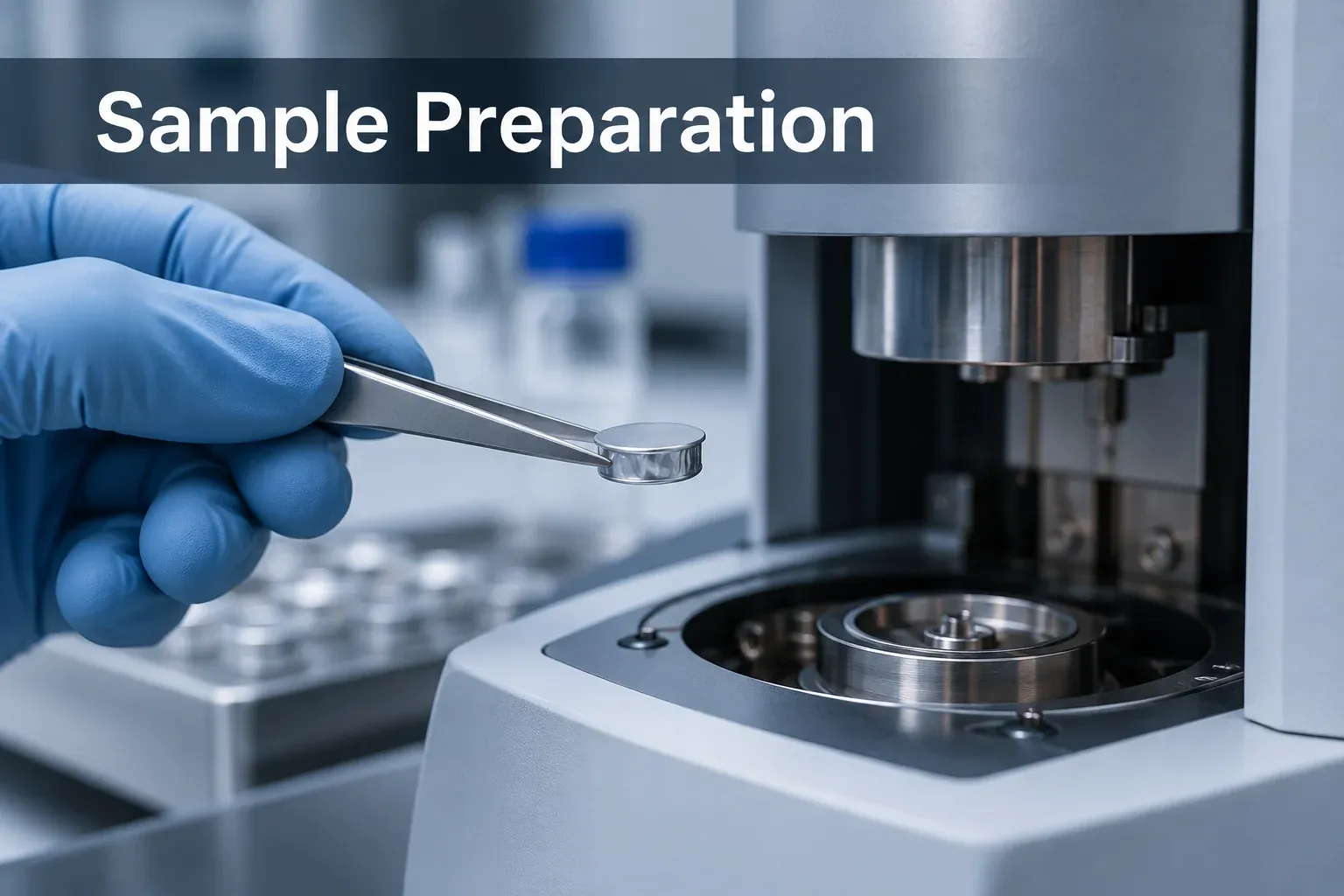
Dynamic heating can help compare reaction onset, peak position and integrated heat under a stated heating program. An isothermal experiment asks a different question: how the sample reacts while held at a selected condition. A residual-cure experiment examines material after a defined prior thermal history. These results should not be exchanged as if they were the same approval test.
ASTM E2160-23 provides a public method scope for reaction-heat measurements by DSC. The laboratory must use the applicable full method, instrument calibration and specimen precautions. Research on highly filled epoxy molding compounds also compares calorimetry with dielectric monitoring; those published formulations do not establish a cure schedule for Changtong natural-quartz-derived filler.
| Comparison point | Hold or record | What it prevents |
|---|---|---|
| Heat normalization | Compound mass and defined reactive fraction | Calling filler dilution an undercure |
| Thermal method | Heating program, pan, atmosphere and calibration | Comparing unlike DSC experiments |
| Production link | Part temperature and casting geometry | Treating oven setpoint as specimen history |
Carry the Trial from Pan to Mold
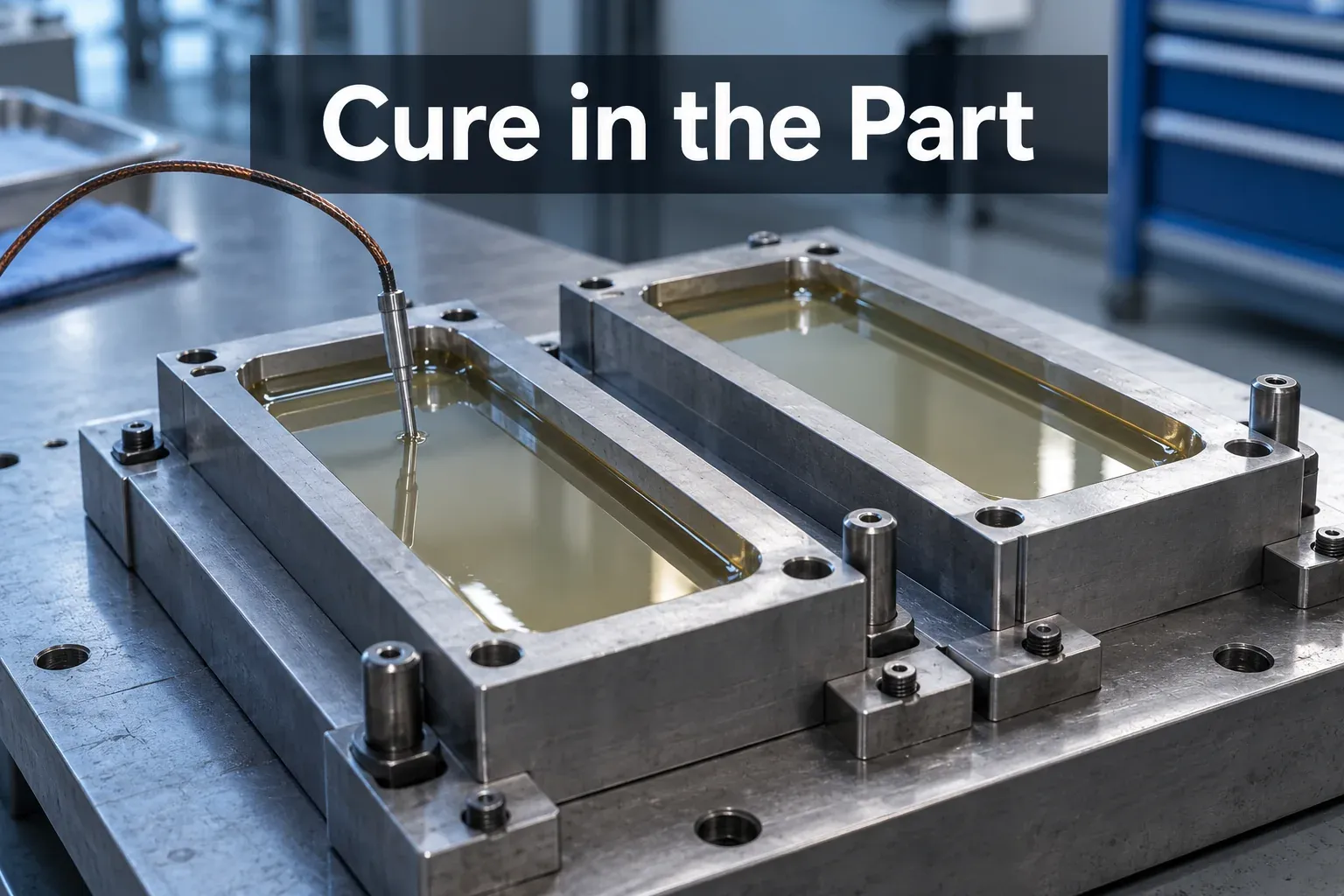
A small pan and a production casting do not share the same heat-transfer path. Log the temperature in a representative part or validated process specimen, along with oven conditions, mold material and fill geometry. Compare working time, flow and deaeration before interpreting the final cure result. A formulation that eventually cures in the laboratory can still fill badly or trap air during the actual manufacturing window.
Use the current approved filler as a control and a candidate grade as the planned change. Keep resin and hardener lots, mixing temperature, addition sequence and prior conditioning consistent. If a different filler loading is needed to obtain workable viscosity, identify that as a second formulation change. Test the resulting candidate as its own recipe rather than attributing every difference to surface treatment.
Define the Grade Decision Before Ordering
Changtong's EV encapsulation product is described as surface-treated natural quartz. It must not inherit the behavior of spherical fused silica or nanosilica reported elsewhere. Its useful procurement focus here is whether the ordered grade can be qualified against the buyer's resin and processing window, supported by current material identity, moisture and particle-size evidence.
A release decision should connect cure evidence to the cured component's requirements. Agree the required residual cure or thermal-state criterion with the responsible laboratory, then retain dimensional and electrical acceptance checks appropriate to the part. Neither a visually hard casting nor a shifted DSC peak alone closes that decision.
No Changtong DSC result or cure improvement is claimed. The normalization explanation is an engineering calculation; published EMC findings remain reference evidence for their own formulations.
Frequently Asked Questions
Can a DSC peak set the production cure schedule?
It is evidence for a specific experiment. Validate the actual time-temperature history, handling window and required cured properties in the part.
Should the same result be expected from every silica family?
No. Distinguish ground and surface-treated quartz, fused silica, glass beads and nanosilica before applying literature observations.
What should accompany a sample request?
The resin and hardener identities, recipe basis, working-time requirement, cure history, comparison method and relevant grade evidence.
Related products
Hydrophobic Silica Powder for EV Battery EncapsulationRelated technical guides
Silica filler loading: weight percent to volume percentReferences and Evidence Limits
Public source descriptions checked on 22 October 2026. References support the stated subject and method boundaries; they are not Changtong test certificates. Consult the applicable full method for execution.
Request a Quote
Send the resin system, target working window, filler loading basis and cure evidence needed for your encapsulation trial.
Request a Grade Review and Quote