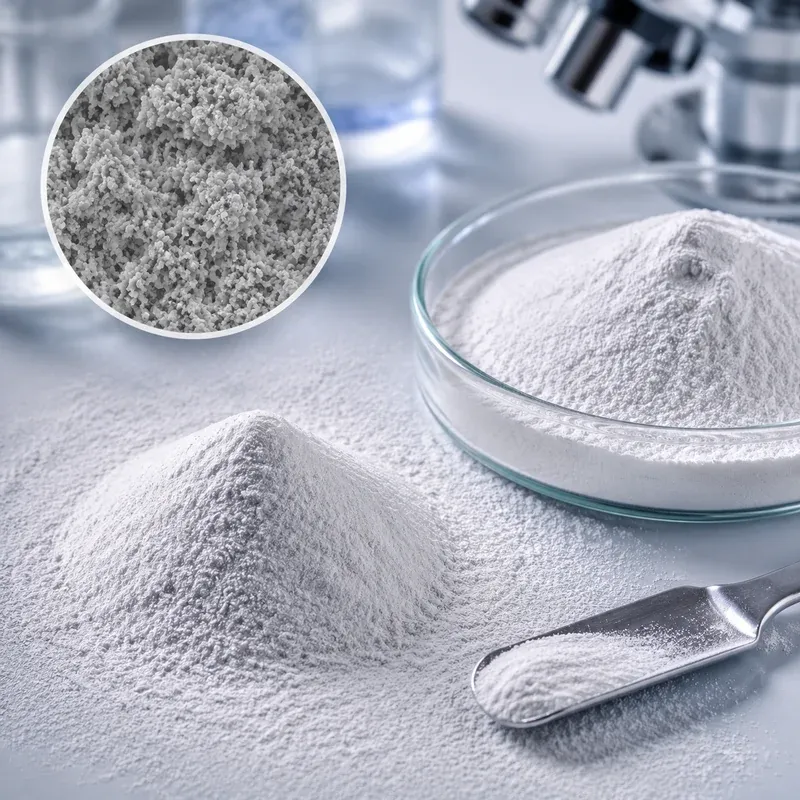
Electrode-Grade Ultrafine Silica Powder 1000–3000 Mesh
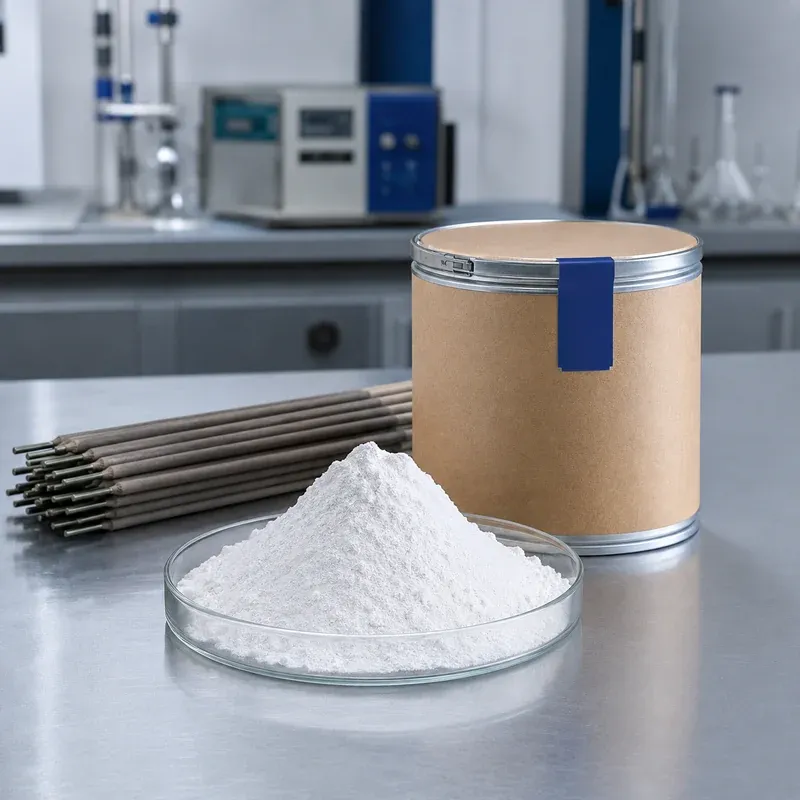
Ultrafine crystalline silica powder in 1000–3000 mesh options for welding-electrode coating and welding-flux formulations. Controlled grinding, classification and low-moisture packing support fine blending and consistent raw-material handling. Final grade must be matched to the manufacturer’s complete coating or flux formulation.
ULTRAFINE SILICA FOR WELDING CONSUMABLES
Electrode-Grade Ultrafine Silica Powder 1000–3000 Mesh
A micronized crystalline silica powder offered in 1000–3000 mesh options for welding-electrode coating and selected welding-flux formulations. Controlled classification and low-moisture packing support fine blending and repeatable raw-material handling.
Product Overview
This grade is produced from selected crystalline silica through fine grinding and controlled classification. It is intended as a silica-bearing mineral component for electrode coating mixes and selected welding-flux systems where fine distribution and repeatable blending are required.
The powder is not a finished electrode, binder or complete welding flux. Arc behavior, slag formation, weld-metal chemistry and mechanical properties depend on the full recipe, electrode classification and manufacturing process. The consumables producer should confirm the selected grade through its own formulation and welding trials.
Technical Properties
| Property | Typical Specification | Order Note |
|---|---|---|
| Material | Micronized crystalline silica | Not fused silica or silica fume |
| Mesh options | 1000–3000 mesh | Select according to the coating or flux formulation |
| Particle size (μm) | Nominal sieve range approximately 13–5 μm | Final PSD and test method to be agreed |
| SiO₂ content | 99.3–99.7% | Approved crystalline silica range |
| Fe₂O₃ | <0.015% | Specification limit |
| Moisture | <0.1% | Keep sealed and dry after delivery |
| Whiteness | 92–95 | Confirm method when color is controlled |
| Specific gravity | 2.65 g/cm³ | Use for batch and loading calculations |
Particle-size note: The 1000–3000 mesh range identifies commercial fine-grade options. It is not a complete PSD specification and does not mean that every particle lies between 5 and 13 μm. State D10, D50, D90, top-cut or residue requirements together with the test method when they are critical.
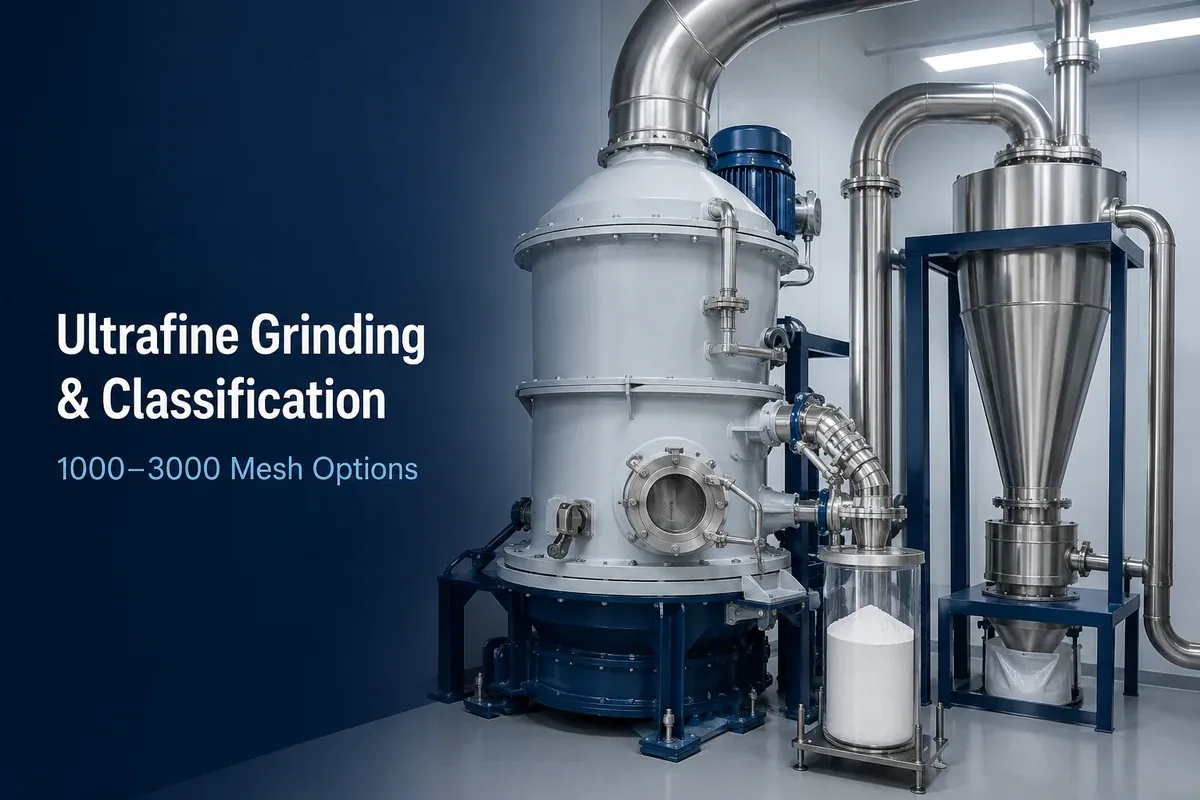
Ultrafine Grinding and Classification
Fine grinding reduces the selected silica feed, while air classification separates the required commercial grade. Enclosed conveying, batch sampling and clean collection help control contamination and powder loss. The release plan can be aligned with agreed chemistry, moisture and particle-size checks.
Properties and Application Value
| Powder Attribute | Formulation Role | Typical Use |
|---|---|---|
| Ultrafine grade options | Support fine distribution among other coating or flux ingredients | Welding-electrode coating mixtures |
| Controlled moisture | Helps limit unnecessary moisture introduced with the silica component | Moisture-managed raw-material storage |
| High SiO₂ content | Provides a defined silica-bearing mineral input | Selected welding-flux formulations |
| Batch-controlled supply | Supports repeatable incoming inspection and blend preparation | Regular electrode manufacturing |

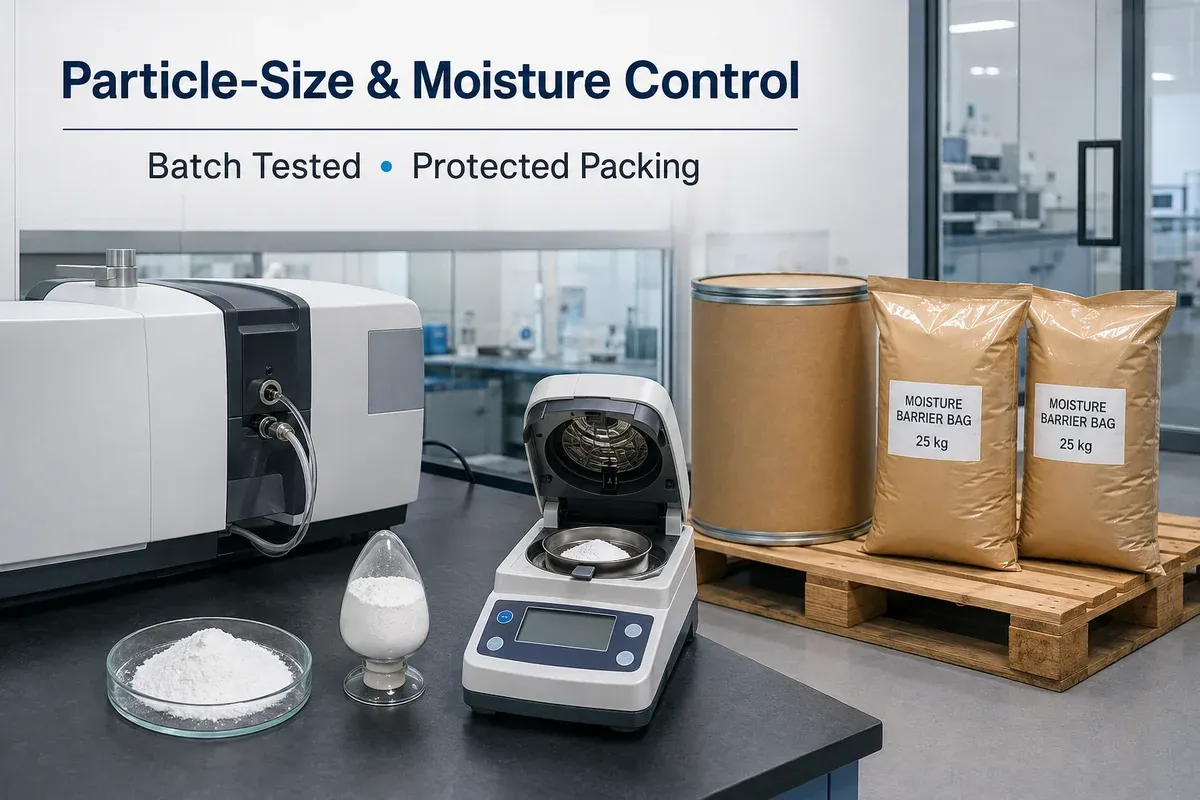
Particle-Size Control, Moisture Testing and Packing
Representative samples can be evaluated using the agreed particle-size and moisture methods before release. Moisture-barrier liners and sealed paper drums help preserve the ultrafine powder during storage and shipment. Packing configuration is selected according to handling equipment, order quantity and export conditions.
- Batch identification and retained samples support shipment traceability.
- Particle-size inspection can use an agreed sieve, laser diffraction or residue method.
- Standard 25 kg moisture-protected bags and sealed paper-drum options are available.
- Store sealed in a dry area and follow the SDS and local dust-control requirements during transfer.
Information Needed for Grade Selection
- Electrode coating or welding-flux application.
- Required mesh grade and PSD or screen-residue test method.
- Target silica contribution and complete formulation context.
- Moisture limit and storage or drying procedure.
- Trial quantity, regular demand and packing requirements.
Frequently Asked Questions
Request an Electrode-Grade Silica Quote
Send your coating or flux application, mesh or PSD requirement, moisture limit, quantity and packing needs.
Request a Quote