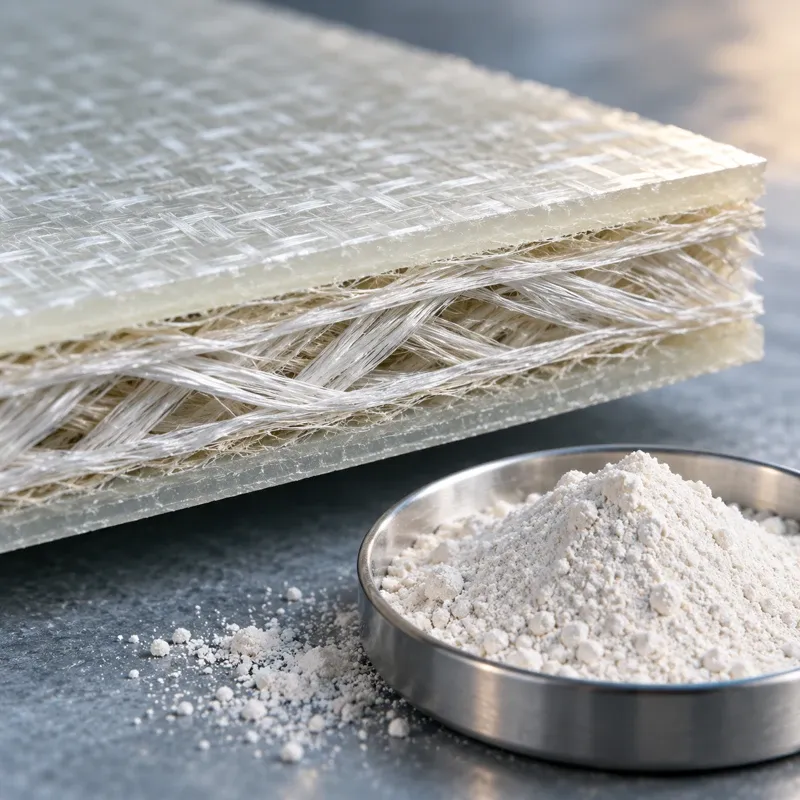
Natural Quartz Powder for Glass-Fiber Composite Floor Panels
Fine natural quartz powder for GFRP floor-panel formulation trials. Compare resin wet-out, wear and strength with lot-specific PSD and chemistry; performance depends on the full laminate.
Material application brief ·
Balance laminate wear with resin wet-out
Natural quartz powder for laminated GFRP floor-panel development. This is a fine crystalline mineral filler to be screened inside a glass-fiber/polymer laminate—not a coarse broadcast sand for resin flooring. The useful decision is whether the selected powder disperses and wets in your binder without compromising the panel's wear, interlaminar strength or processing window. Ask Changtong for a proposed grade and current lot documents before setting a production specification.
Where this powder fits
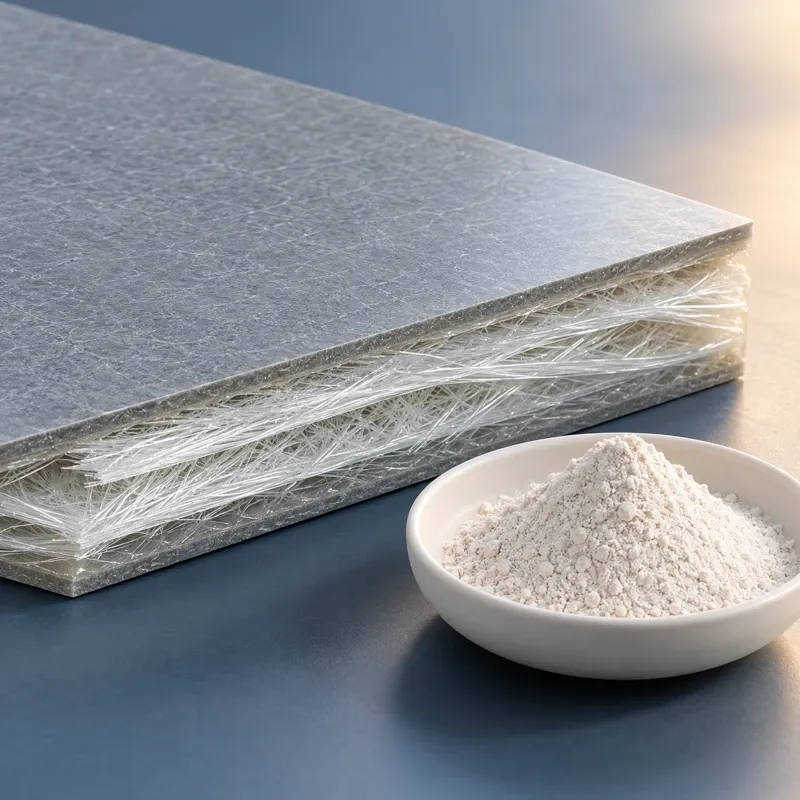
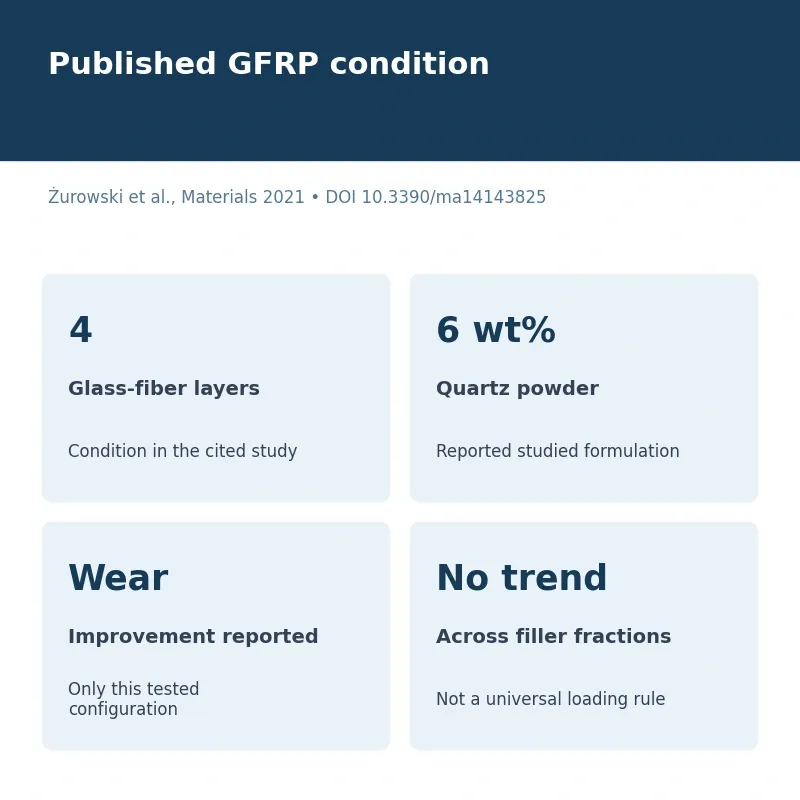
A reinforced floor panel combines a polymer matrix, glass-fiber layers and, in some designs, a particulate filler. Powder size and agglomeration affect how resin reaches the fibers; filler loading changes the available resin volume and can alter panel behavior. A paper on glass-fiber composite floor panels tested quartz-powder additions against wear, friction, hardness and strength. The four-layer laminate with 6 wt% quartz showed improved wear behavior in the reported test. Across the study, however, more quartz did not produce a uniform improvement in wear, friction, hardness and strength; the response depended on the property and laminate construction. This is a reason to run a controlled comparison, not a claim about Changtong material. See the original research.
Properties to confirm for the proposed lot
| Property | Purchasing and processing relevance | Evidence to request |
|---|---|---|
| Material identity | Natural-quartz-derived crystalline silica; keep separate from fused, precipitated and fumed silica. | Current TDS/SDS and, if phase is critical, XRD. |
| Particle-size distribution | Choose a size window that can enter the laminate without dry spots or visible agglomerates. | D10/D50/D90 or sieve data in μm, method and lot ID; do not infer PSD from a mesh label alone. |
| Chemistry and moisture | Set limits around binder compatibility, appearance and storage behavior. | Batch COA with SiO₂, relevant impurities and moisture measured by stated methods. |
| Surface condition | Untreated and treated powders may wet differently in the same resin. | Confirm whether a treatment exists for the quoted grade, its chemistry and evidence; no treatment is assumed here. |
Existing catalog reference: Changtong's general-purpose crystalline 325 mesh page carries an approved SiO₂ range of 99.3–99.7%, Fe₂O₃ <0.015% and moisture <0.1%. These describe that existing grade's template, not this GFRP candidate or a lot acceptance result. Request confirmation that the same grade and limits apply before using them in a purchase order.
Applications and selection boundary
| Panel development task | What the buyer should compare |
|---|---|
| Interior laminate filler | Dry-mix or resin premix route, wet-out between glass mats, voids and filler distribution through the section. |
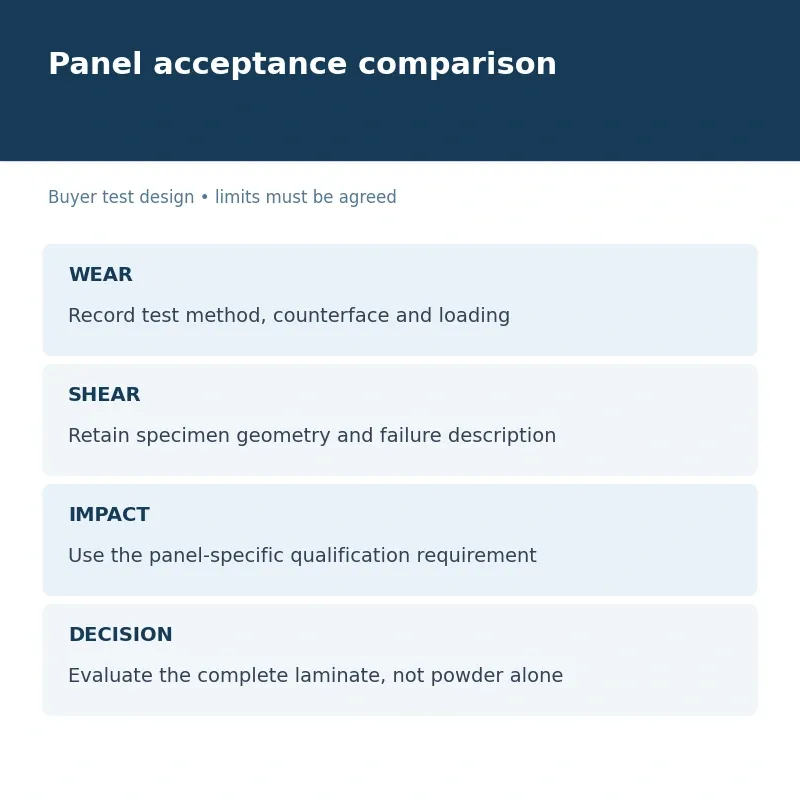
| Wear-exposed panel face | Wear method, counterface, applied load and finish against an otherwise identical unfilled control. |
| Structural panel qualification | Flexural, shear and impact results after identical cure and conditioning; record panel thickness and glass-mat count. |
A useful sample comparison
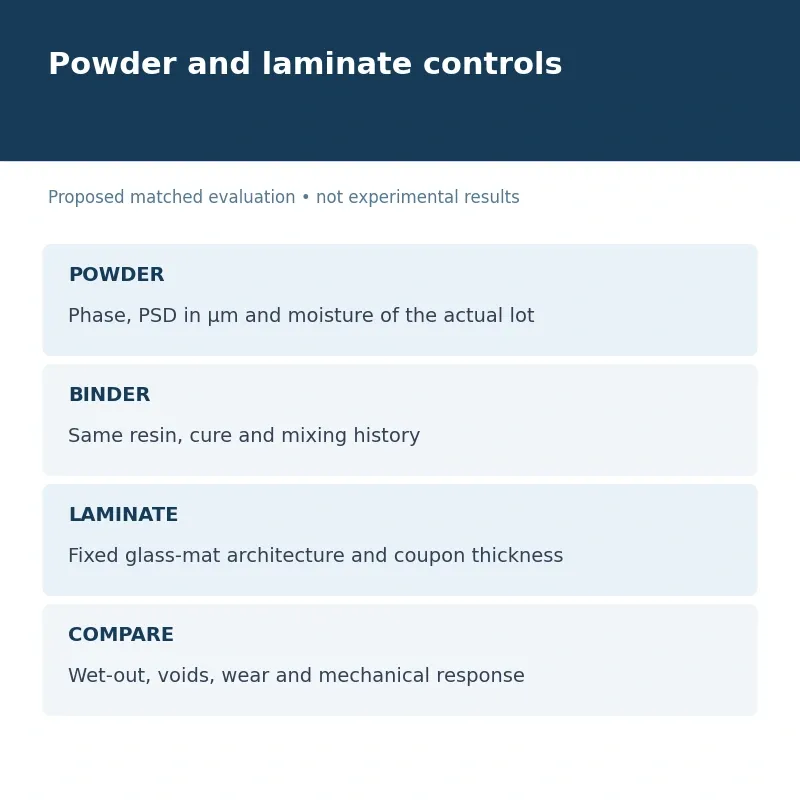
Keep resin, fiber architecture, cure and test conditioning constant while comparing an unfilled control with one or more measured powder additions. Record filler loading on both a mass and volume basis, dispersion method, actual panel thickness and any changes in viscosity or trapped air. If the surface is the purchase driver, test the finished panel under its intended wear and cleaning conditions; if load-bearing performance matters, test interlaminar and flexural behavior separately. A powder that is acceptable on appearance may still fail a strength or processing criterion.
Frequently asked questions
Is this the same as quartz sand for resin-bound flooring?
No. The graded quartz sand for resin flooring addresses aggregate grading and surface texture. This page concerns fine powder distributed inside a fiber-reinforced panel.
Will more quartz powder improve wear resistance?
That cannot be promised. The cited experiment did not find a universal improvement as the filler proportion increased. Compare the actual binder, mat structure and powder grade against a control.
What should go into an RFQ?
Share the resin and fiber system, panel thickness, target powder-size distribution in μm, desired loading range, curing method, annual volume and required COA/SDS fields. State whether wear, friction, appearance or structural properties are the controlling acceptance test.
Send the laminate construction, resin, target PSD and test priorities to request a suitable sample and lot-specific documents.
Request a quotation and technical reviewTechnical source and image context
Żurowski, W.; Zepchło, J.; Krzyżak, A.; Gevorkyan, E.; Rucki, M.; Siek, E.; Białkowska, A. Wear Resistance of the Glass-Fiber Reinforced Polymer Composite with the Addition of Quartz Filler. Materials 14(14), 3825 (8 July 2021). Source record. Peer-reviewed research; abstract and bibliographic record reviewed. No absolute wear-rate series is reproduced here. Source checked 15 October 2026. This is background evidence, not a newly published October 2026 study.
Main and detail images are conceptual AI-generated application illustrations, not photographs of Changtong production or tested customer parts. Body figures are original summaries of the stated research and proposed evaluation comparisons; they are not Changtong measurements.