Buying Hydrophobic Silica for MS Polymer Sealants: A Distributor's RFQ and Trial Checklist
A distributor-focused checklist for qualifying hydrophobic silica in MS polymer sealants, covering RFQ details, dispersion trials, storage evidence and repeat-order control.
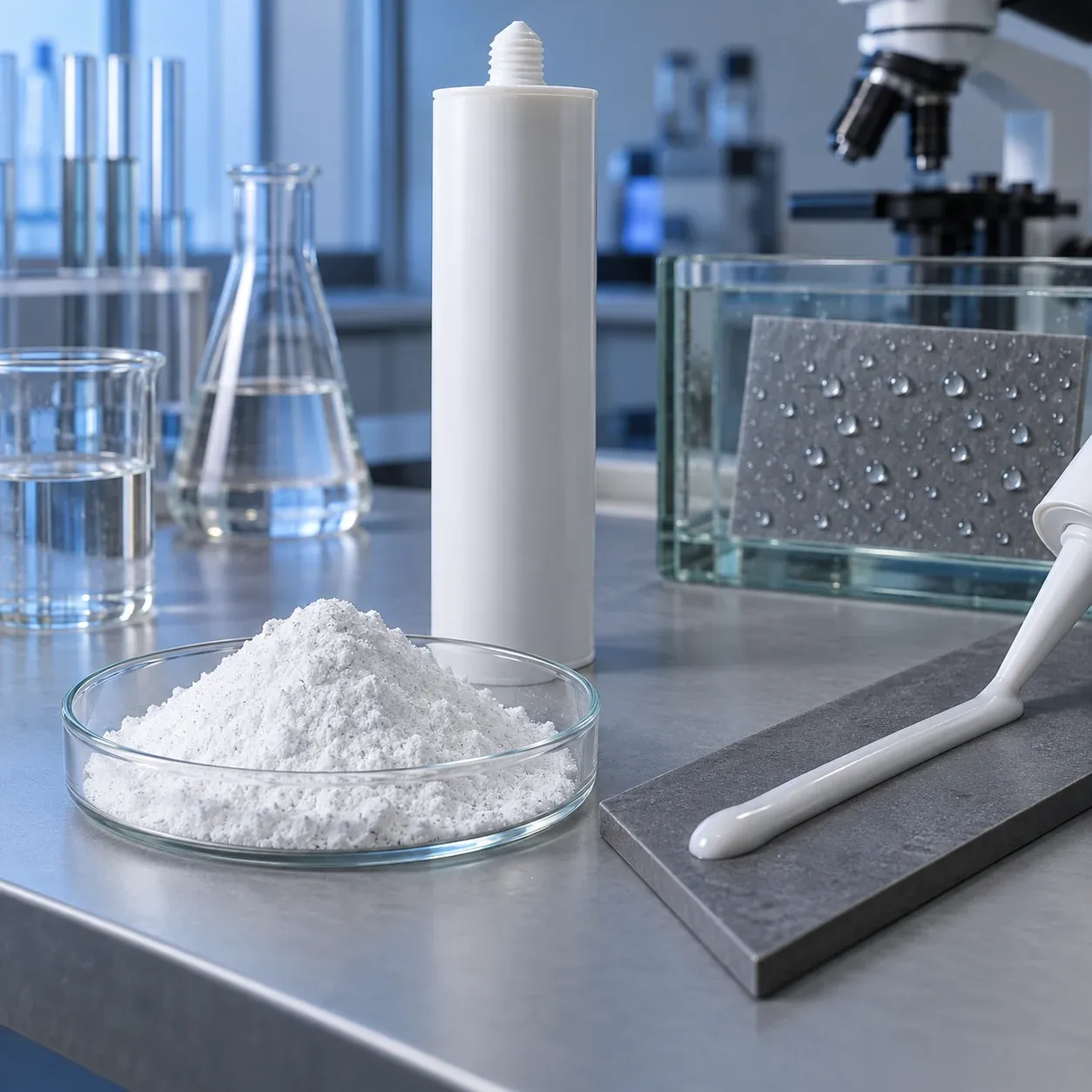
MS POLYMER SEALANT FORMULATION
Hydrophobic silica should improve handling without stealing cure capacity.
In moisture-curing MS polymer sealants, a surface-treated silica grade can change yield stress, sag resistance, extrusion force and water interaction at the same time. A useful trial therefore measures the application window and cure response together.
Material Identity
Hydrophobic surface-treated silica is a silica powder whose surface has been modified to reduce water affinity and improve compatibility with selected polymer systems. It is distinct from untreated fused silica powder and from crystalline quartz powder. The treatment chemistry, surface area and moisture history must be confirmed for the grade under trial.
Properties and Trial Controls
| Control | Why buyers track it | Suggested evidence |
|---|---|---|
| Hydrophobicity / moisture | Excess water interaction can change cure profile and storage stability. | Current COA, moisture method and sealed-pack handling record. |
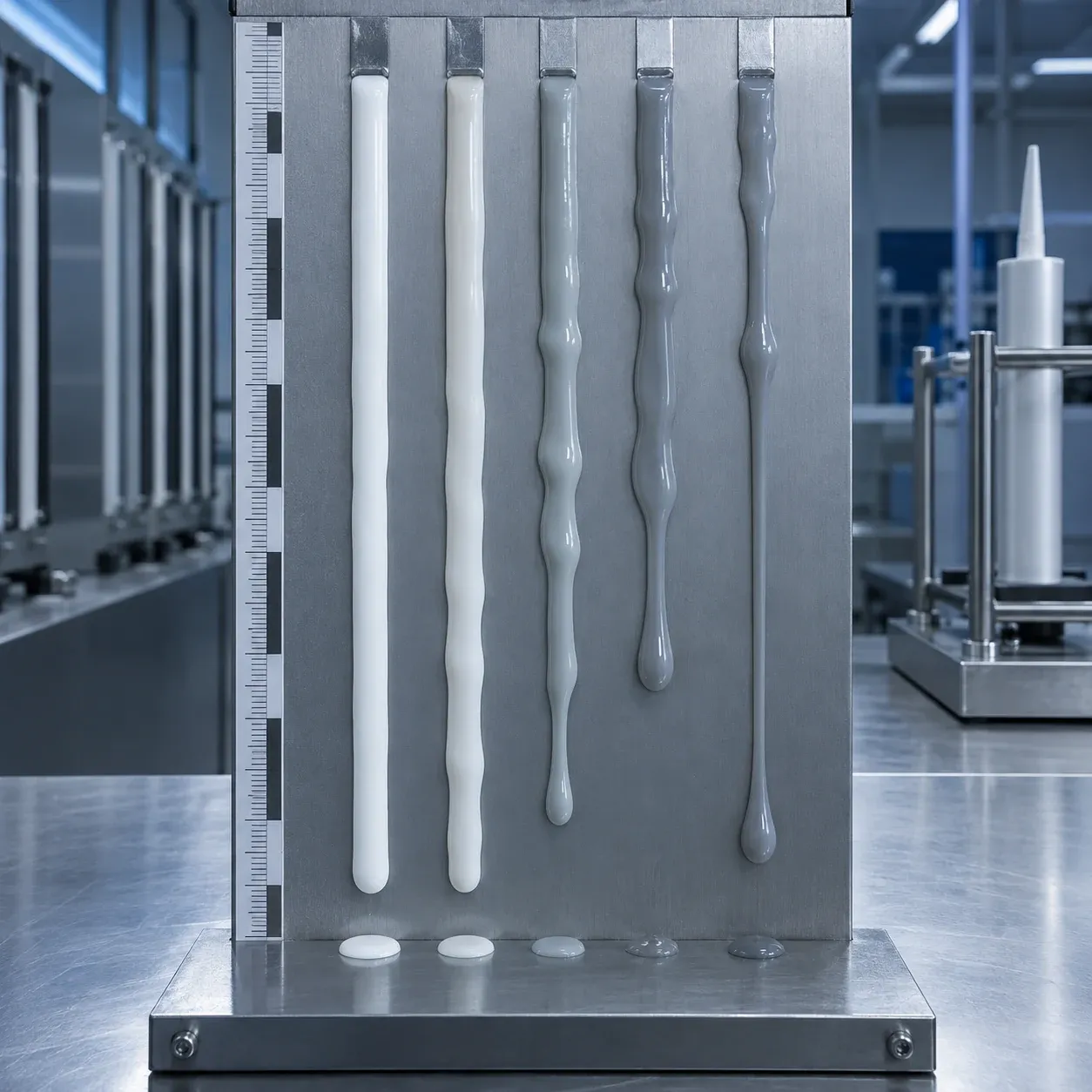
| Rheology and sag | Controls vertical bead shape and tooling feel. | Extrusion force, slump and bead recovery at use temperature. |
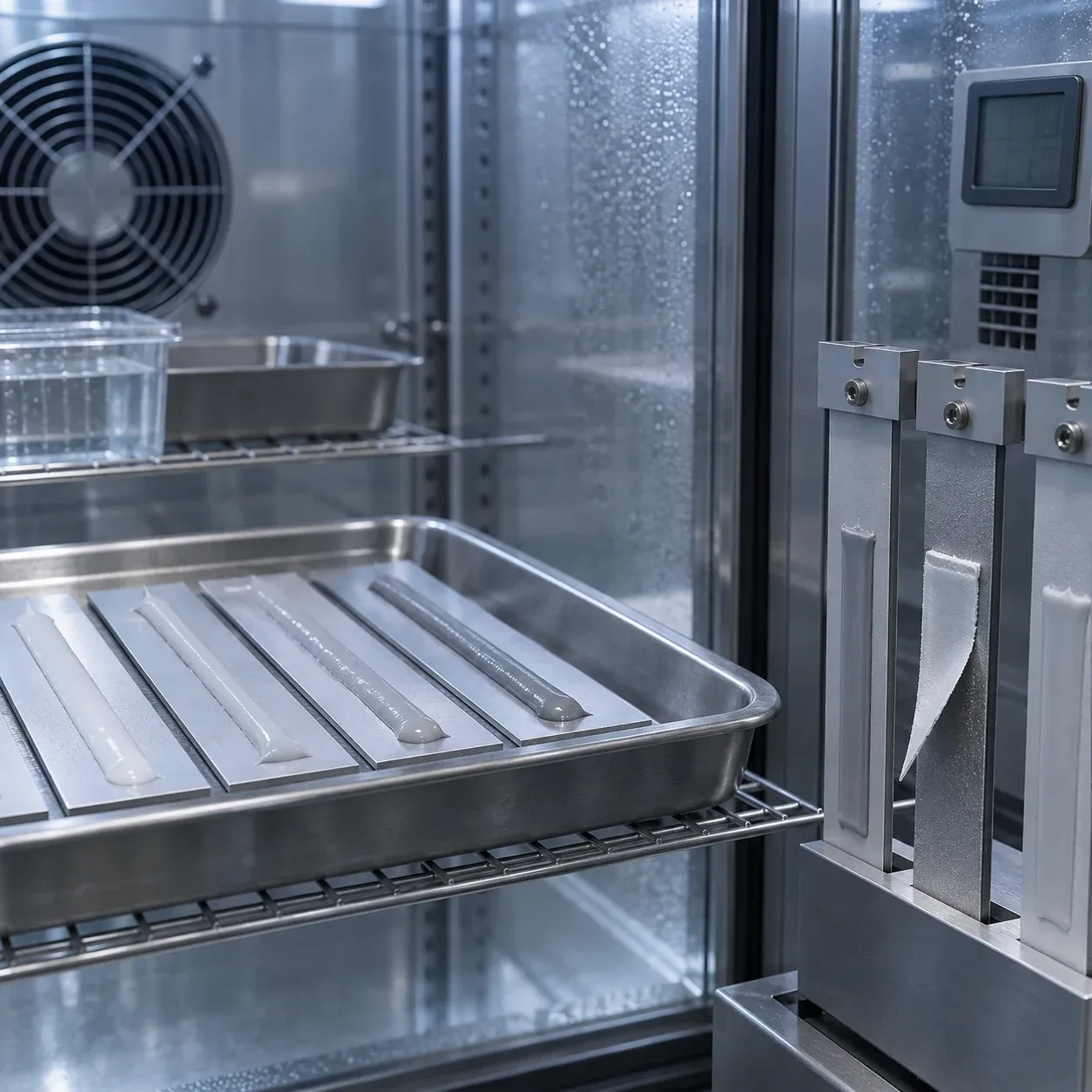
| Moisture cure | Filler can alter skin formation and through-cure rate. | Skin time, cure depth and adhesion after defined humidity exposure. |
Reference context only: no universal dosage or cure time is implied. Confirm by current TDS/COA and customer trial in the complete sealant formulation.
A Four-Point Formulation Screen
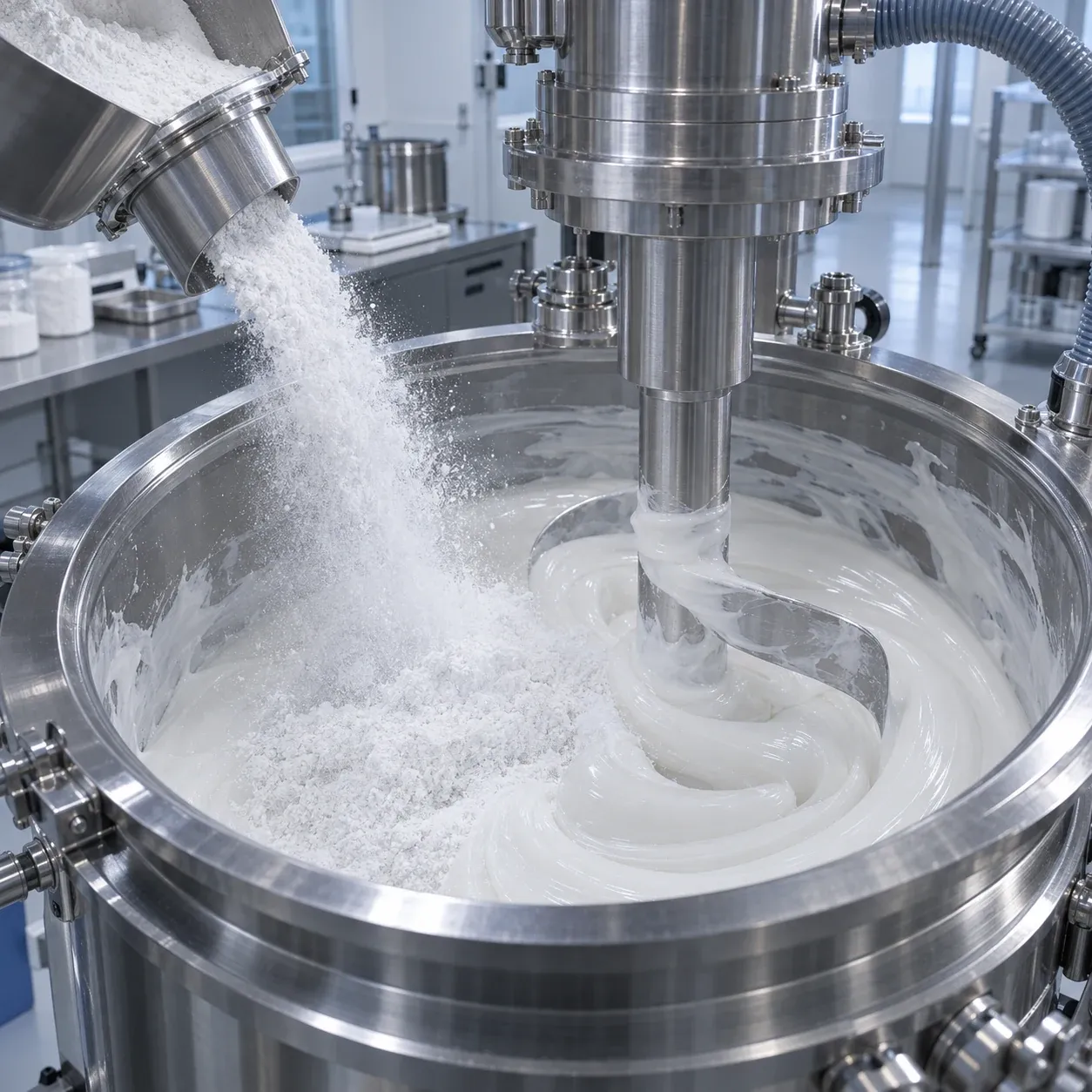
- Precondition polymer, filler and additives to a recorded temperature and humidity.
- Screen low, middle and high loading while holding catalyst and plasticizer constant.
- Measure mixing torque, deaeration, extrusion force, slump and surface skin.
- Age cartridges under the customer’s storage condition, then repeat extrusion and adhesion checks.
Applications and Decision Boundaries
Construction joints
Prioritize sag control, tooling and adhesion after humidity exposure.
Facade and glazing
Check bead geometry, weathering plan and substrate compatibility.
Battery-module sealants
Use the separate EV encapsulation grade guide when dielectric and thermal-interface requirements apply.
Related Product and FAQ
For polymer masterbatch, compare hydrophobic surface-treated silica for masterbatch; the carrier resin and dispersion target are different. For electrical potting, see silica powder filler for electronic compounds.
Can hydrophobic silica always increase filler loading?
No. Higher loading may improve sag resistance but can raise torque or reduce elongation. Let extrusion, cure and mechanical data set the usable window.
What should be included in a sample request?
Specify polymer type, target hardness, catalyst package, cartridge size, application temperature, required skin time and storage period.
Request a Quote
Send polymer base, filler loading window, application method, storage condition and required cure/adhesion tests. We will map the request to a grade-specific TDS/COA review.
Request a Quote