
How Changtong Matches Silica Material Inquiries to the Right Grade
See how Changtong routes silica material inquiries by application, phase, particle-size method, chemistry limits and document scope before a grade is approved.
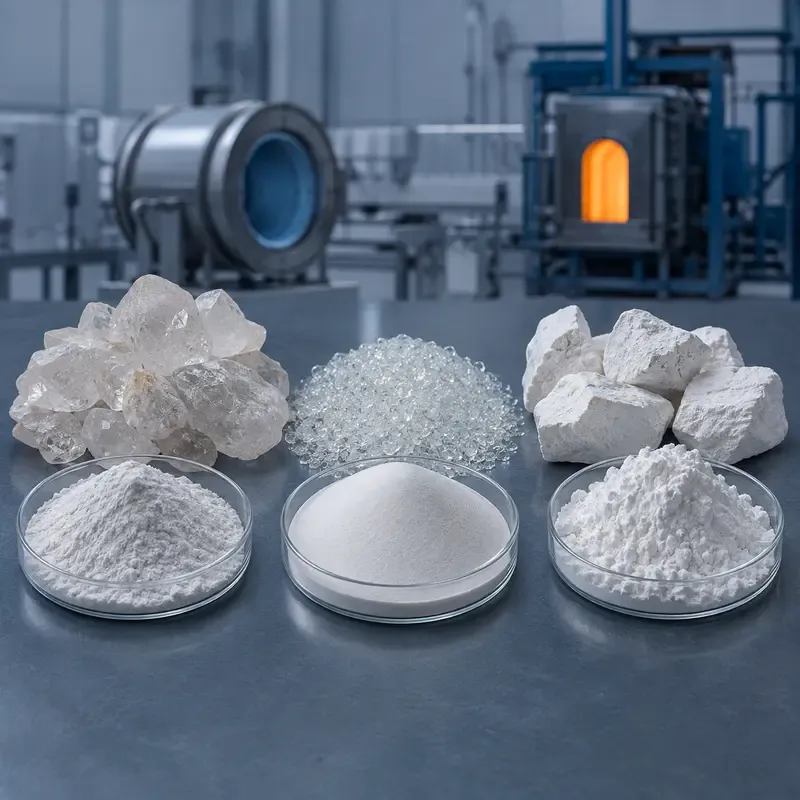
The fastest way to match a silica grade is to describe the process before asking for a price.
Changtong routes a material inquiry through application, material identity, particle-size method, chemistry limits and document scope. This article explains that inquiry workflow; it is not a general comparison of silica material families.
Last updated:
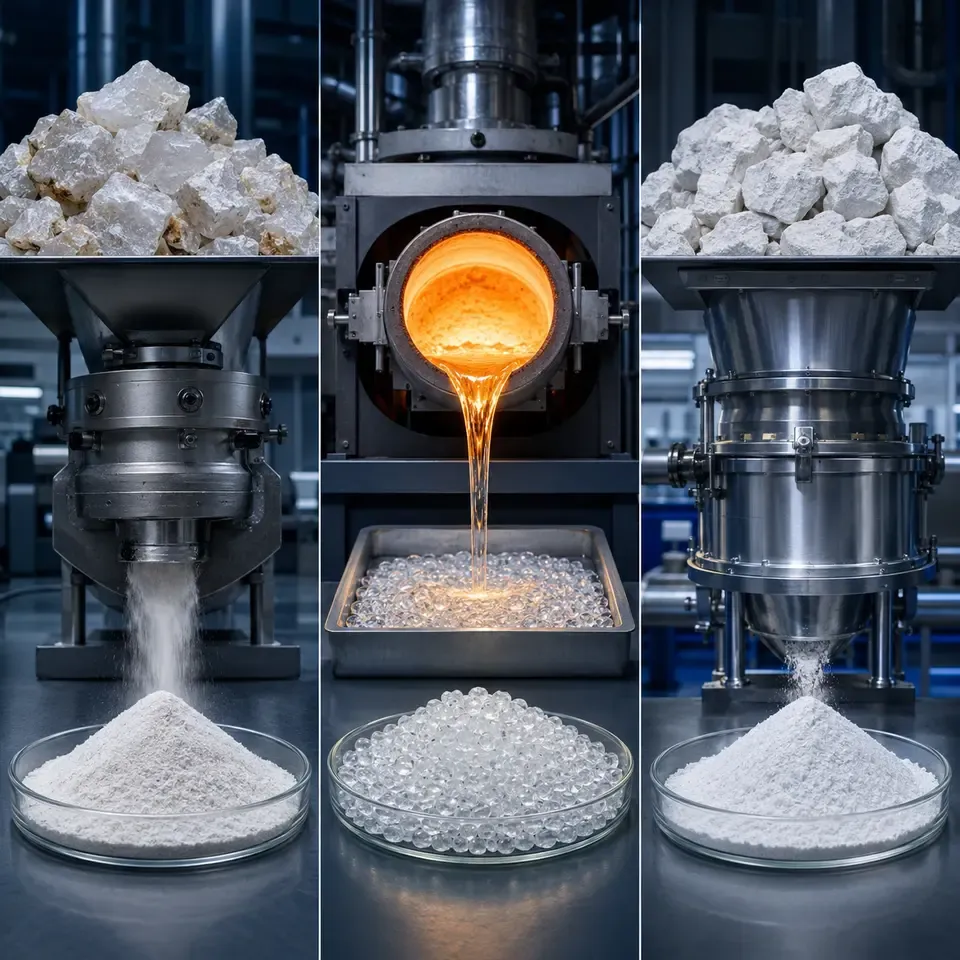
What Changtong Needs to Know Before Recommending a Grade
A product name alone is rarely enough to match a silica material to a process. The same broad word can describe different material families, particle-size methods and document scopes. A useful inquiry starts with the operating problem and then identifies the evidence needed to evaluate it.
| Inquiry field | What to state | Why it changes the recommendation |
|---|---|---|
| Application and process | For example: investment casting shell, resin formulation, coating, rubber, ceramic or refractory process. | It identifies the performance and handling conditions that the grade must survive. |
| Material identity | Natural crystalline quartz, fused silica or cristobalite, together with the required phase evidence. | Material identity determines which technical documents and validation questions apply. |
| Particle-size language | Mesh/sieve cut, retained percentage, D10/D50/D90 or another named method. | It prevents a nominal sieve opening from being mistaken for a complete particle-size distribution. |
| Chemistry and appearance | SiO2 target, relevant oxide limits, whiteness or color requirement where applicable. | It separates a general grade discussion from a controlled acceptance requirement. |
| Document and packing scope | TDS, SDS, COA, XRD or other evidence; package size, lot identification and destination market. | It defines what can be reviewed before trial and what must accompany shipment. |
Changtong's Five-Gate Inquiry Workflow
Gate 1: Clarify the process outcome
The first question is what the powder must do in the customer's process: fill a particle-size window, support a shell or refractory body, disperse in a resin, control appearance or meet a handling requirement. This keeps the discussion tied to a measurable use case.
Gate 2: Confirm the material route
The request is checked for the intended material identity and processing route. Natural quartz grinding, fused-silica production and cristobalite conversion are not interchangeable descriptions, so the grade name must be matched with the relevant TDS, SDS and test evidence.
Gate 3: Normalize the size requirement
Mesh, micron, sieve pass rate and laser-diffraction values are recorded using their actual method. If a buyer supplies only a mesh number, Changtong can ask whether the requirement concerns nominal opening, retained percentage or a measured D-value.
Gate 4: Separate reference values from release limits
A typical value, a grade reference and a lot-specific acceptance limit are different kinds of information. The quotation and sample discussion should state which one is required before a number is treated as purchasing-ready.
Gate 5: Define the verification path
The final gate identifies the sample, trial conditions, documents and incoming checks needed to make a decision. The purpose is to create a traceable next step, not to promise performance from a material name alone.
How the Material Route Changes the Next Question
This article does not replace the dedicated material comparison guide. In an inquiry, the distinction is used only to decide which question comes next.
| Declared route | Immediate clarification | Evidence to request or review |
|---|---|---|
| Natural quartz grinding | Is the requirement a general crystalline silica grade, a treated grade or a specific application cut? | Current chemistry, size method, moisture/handling information and application trial requirements. |
| Fused silica | Is amorphous identity and low-expansion behavior part of the process requirement? | Grade chemistry, particle-size evidence, current SDS and any relevant phase or structure evidence. |
| Cristobalite conversion | Is the required phase, whiteness and conversion scope stated for the intended grade? | Current grade documents, phase/quality evidence, particle-size cut and destination-market SDS. |
Turning a Sample Request into a Useful Trial
A sample is most informative when the request records the formulation or shell system, loading level, mixing method, firing or curing conditions, and the result that will decide acceptance. Without those details, a sample can demonstrate appearance but not process fit.
Changtong can use the trial feedback to refine the next discussion around particle-size distribution, flow, dispersion, surface treatment, phase, chemistry or packaging. The feedback belongs to the buyer's process and should not be converted into a universal grade promise.
What the Available Changtong Records Can and Cannot Prove
| Record | Useful for | Boundary |
|---|---|---|
| Fused silica COA, December 2025 | Reviewing the named grade and lot-related chemistry, physical and mesh/pass-range fields. | Use the current revision and the exact grade or lot scope. |
| Fused silica XRD report, test dated August 6, 2014 | Understanding the reported amorphous-state conclusion for the identified 325F and 200F samples. | Historical sample evidence, not an automatic current-lot release result. |
| Investment-casting grade sheet, December 2023 | Discussing the stated grade reference values and application context. | A grade reference does not replace a current shipment COA. |
| Current inquiry information | Connecting a requested grade to the buyer's process and verification plan. | Must be confirmed by the buyer and matched with current documents. |
Frequently Asked Questions
What should I send Changtong first?
Send the application, material identity if known, particle-size method, chemistry limits, expected quantity, destination market and document requirements. A photo or existing specification can also clarify the starting point.
Can Changtong choose a grade from mesh size alone?
No. Mesh may describe a sieve reference, but the suitable grade also depends on material identity, distribution, chemistry, process conditions and the acceptance method.
Does a successful sample trial become a universal guarantee?
No. Trial results apply to the tested material, formulation and process conditions. The approved grade and current lot evidence should still control purchasing.
Explore Changtong Product Families
Use these current product pages as grade-level starting points: General-Purpose Crystalline Silica Powder 325 Mesh, Fused Silica Powder for Investment Casting, and High-Whiteness Cristobalite Powder for Epoxy and Refractory Applications. Final selection should follow the application, method and current specification.
References
Send the Process Before Requesting the Grade
Share the application, material route, size method, chemistry limits and required evidence so Changtong can structure the next technical discussion.
Contact Changtong technical sales