First Silica Powder Stock: A New Distributor’s Customer-Use Plan
Build a first silica powder assortment from customer applications, not a generic mesh list. Use a two-grade example and a question-led sample route.

FIRST-STOCK DECISION GUIDE
Start with the customer use case, then choose the smallest credible range.
A new distributor does not need the largest silica catalogue to serve its first customers. It needs a small, clearly identified starting range tied to real use cases, sample questions and a repeatable handoff from trial to order.
What will the customer make?
Which grade evidence is needed?
What proves the next lot matches?
Three customer calls before a first purchase
Call a ceramics or refractory compounder, an electrical resin formulator, and a local trader who already has a defined customer request. Record the actual process and buying stage. If none can state a formulation or acceptance test, hold off on speculative inventory and offer a sample inquiry.
| Question to ask | What the answer changes | Action before stocking |
|---|---|---|
| Is the filler natural crystalline quartz, fused amorphous silica, or a treated grade? | Phase identity and safety documentation | Keep each material family in its own SKU and label. |
| What is the process: dry blend, resin dispersion, or firing? | Relevant trial observations | Request a named product and a process sample. |
| Which size result and method does the buyer accept? | A mesh label alone may be insufficient. | Agree a full grade-specific specification and lot evidence. |
| Sample, pilot, or repeat demand? | Commitment and reorder timing | Record milestones; do not turn inquiries into forecast volume. |

A two-product illustration, not a universal starter pack
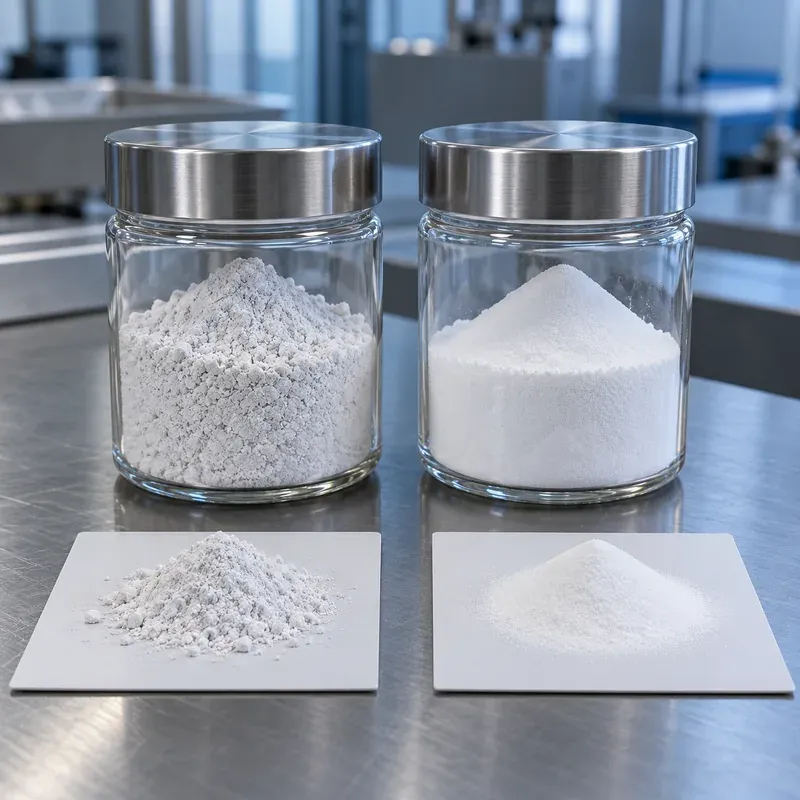
Changtong’s catalog lists General-Purpose Crystalline Silica Powder 325 Mesh for ceramics, refractories and mineral-filled compounds, with a published SiO₂ range of 99.3–99.7%. It separately lists Fused Silica Powder 325 Mesh, an amorphous material for ceramics, refractory and electrical resin applications, with a catalog SiO₂ range of 99.8–99.99%. These are product-page ranges, not a promise about a particular shipment or a customer’s test result. Confirm the selected grade and current COA before quoting acceptance limits.
Illustrative case: a shop has one ceramics dry-blend inquiry and one electrical casting inquiry. It creates two separate sample records rather than advertising one “325 mesh silica for all uses.” The buyer approves or rejects each in its own process. No sales or trial outcome is assumed.
Turn samples into a limited stock decision
- Obtain the current TDS/SDS and a lot-specific COA for the proposed grade. Match the document identifiers to the sample and quotation.
- Ask each customer to define the pass/fail response in its own formulation; record a control material and sample lot.
- Keep sample, pilot and repeat requests separate. Only set an initial holding quantity after the buyer confirms a repeat need, shelf space, packing and lead time.
- Quote the material identity in plain language; keep crystalline quartz, fused silica and surface-treated grades distinct. Neither precipitated nor fumed silica is a substitute by name.
What to request from the supplier
Send the buyer application, intended grade, target size data and test method, packaging, destination, forecast stage and documentation request. Ask Changtong which grade-specific data are available and what must be confirmed by trial. For a mature RFQ, see the silica powder RFQ checklist. The first-stock decision is still the distributor’s: a catalog item is a candidate, not proof of market fit.
FAQ
Should I stock crystalline and fused 325 mesh as one SKU?
No. Their material identity and intended use differ despite a shared mesh label. Verify grade, phase and lot documents separately.
Can a customer’s mesh request determine the grade?
Only partly. Ask for full size distribution or sieve criterion, method, binder or process conditions and acceptance results.
What if I have no firm buyer yet?
Start with documented application questions and samples; do not claim a local demand forecast or a universal minimum order without a supplier quotation.
Source basis: Changtong’s two linked product pages (catalog ranges and applications); NIOSH silica and worker health is general safety reference, not Changtong test evidence. Confirm current TDS/SDS/COA for a selected grade and destination-specific obligations.
Request a Quote
Tell Changtong your customer’s use, material family, target size, sample stage and destination so the proposed grade and documents can be matched.
Contact Changtong about a first distributor assortment