How to Choose Hydrophobic Silica Powder for Resin Formulations
Compare hydrophobic silica powder by wetting, viscosity, oil absorption, dispersion and resin compatibility before approving a grade.
Hydrophobic silica powder should be selected by measured wetting and process behavior, not by the word “active” alone.
For resin and coating formulations, the buying decision usually turns on water repellency, oil absorption, viscosity, dispersion and compatibility with the binder. These are application questions; they must be confirmed against the current Changtong grade documents and a controlled trial.
Last updated:
What “Hydrophobic” Means in a Purchasing Specification
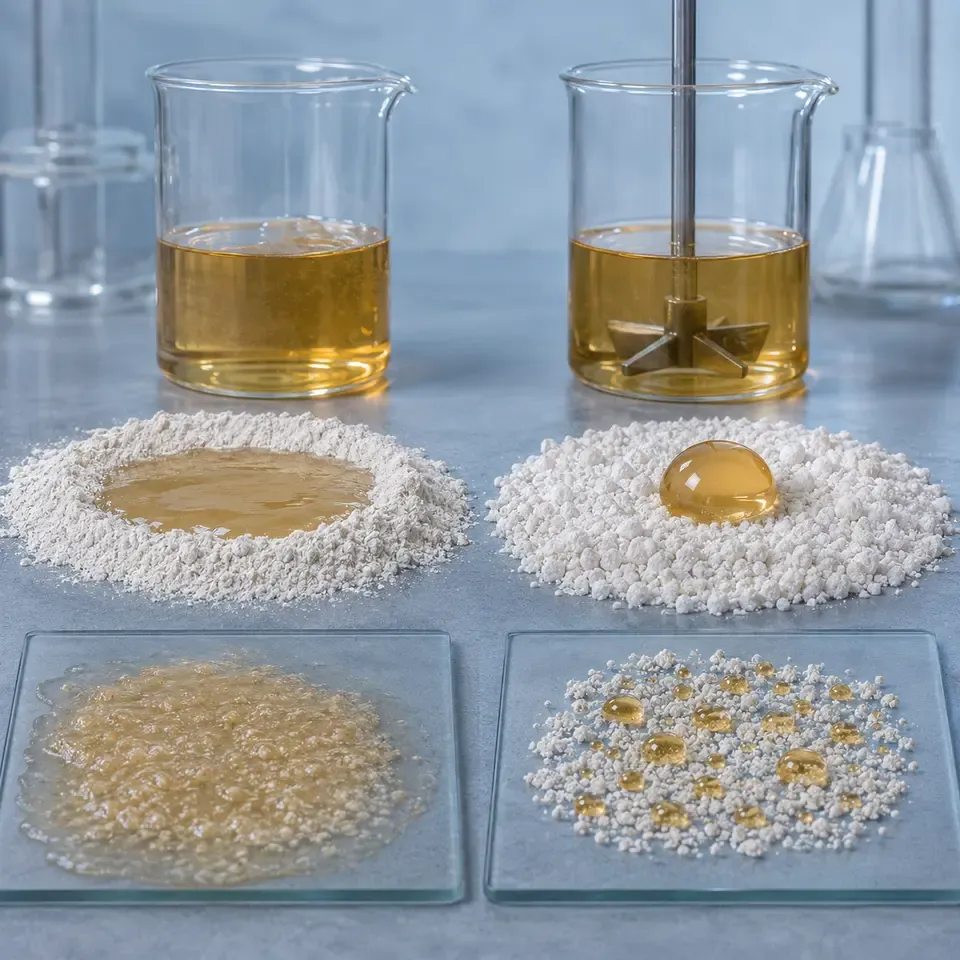
Hydrophobic treatment changes how a natural-quartz-based silica surface interacts with water and the liquid binder. It does not automatically define particle size, chemistry, oil absorption or final viscosity. A useful specification therefore names the treatment status and the test or acceptance method for the property that matters in the formulation.
| Buying question | What to request | Why it matters |
|---|---|---|
| Water repellency | Declared treatment status and the supplier’s test method or comparative result. | Hydrophobicity is method-dependent and should be tied to the intended liquid phase. |
| Oil absorption | Current value, method, sample condition and whether the value is typical or a release limit. | Oil absorption influences binder demand, loading and paste or coating consistency. |
| Viscosity | Test formulation, solids loading, shear condition and temperature. | A powder cannot be assigned a universal viscosity effect without the resin system. |
| Dispersion | Wet-out procedure, mixing energy and observation criteria. | Good dry flow does not prove rapid wetting or stable dispersion. |
| Compatibility | Binder type, loading range and trial acceptance criteria. | Surface treatment must match the chemistry of the customer’s formulation. |
How Low Viscosity and High Dispersion Are Actually Verified
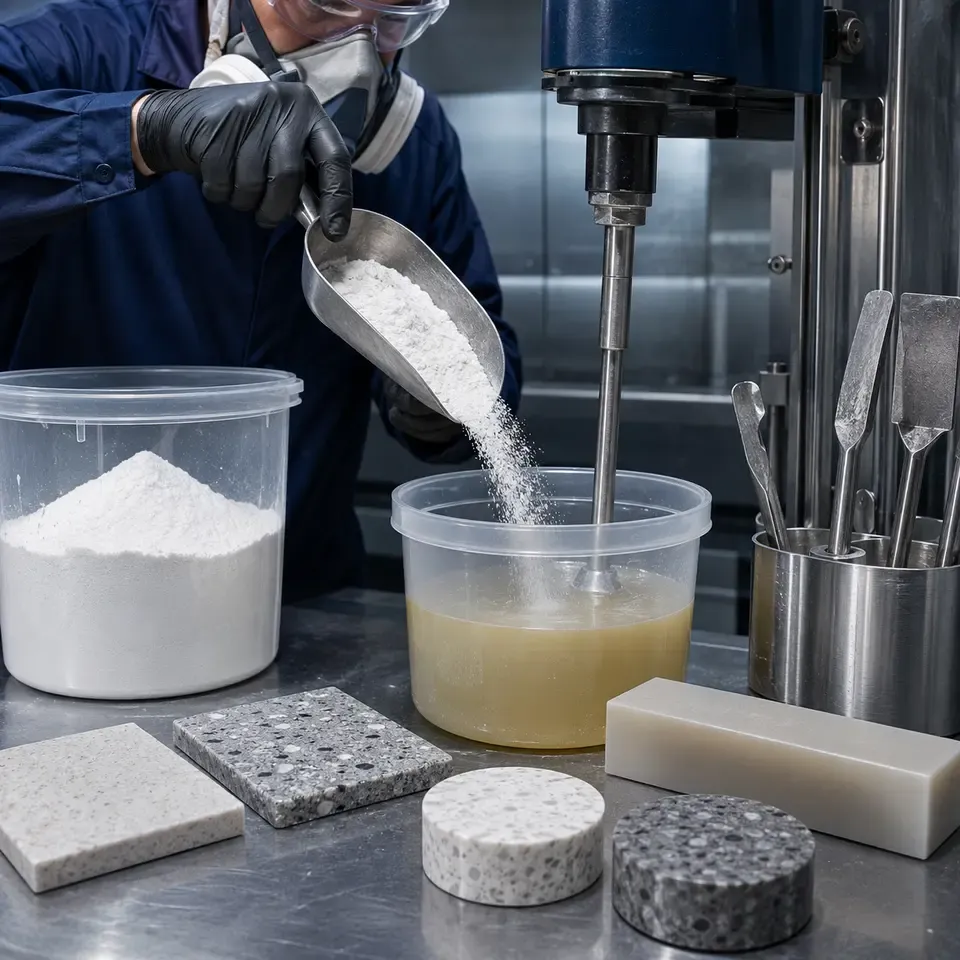
“Low viscosity” and “high dispersion” are useful search phrases but incomplete technical claims. The result changes with resin polarity, solids loading, mixing sequence, temperature, shear rate and de-airing. The strongest purchasing method is a matched comparison using the same binder, loading and test sequence.
| Trial control | Keep constant | Record |
|---|---|---|
| Binder | Resin type, batch and temperature. | Initial viscosity and any compatibility issue. |
| Powder addition | Loading, addition rate and mixing order. | Wet-out time, agglomerates and dust behavior. |
| Mixing | Equipment, speed, time and vacuum/de-airing. | Final viscosity, appearance and sedimentation. |
| Acceptance | Application-specific pass/fail criteria. | Whether the result applies to the tested lot only. |
Changtong Data Scope and What Must Be Confirmed
Changtong’s public introduction describes silica powder size ranges from 200–6000 mesh and identifies application families including rubber, paint and epoxy. Those ranges are portfolio context, not a promise that every active grade has the same size, surface treatment or performance. The current TDS/COA should control the grade discussion.
When a buyer needs a treated natural-quartz grade, the request should identify the desired hydrophobic behavior, target particle-size method, binder, loading, oil-absorption limit, viscosity test and packaging requirement. If a value is not present in the approved document, it should remain a confirmation item rather than being converted into a Changtong claim.
Frequently Asked Questions
Is active silica the same as precipitated or fumed silica?
No. This guide concerns surface-treated natural quartz silica powder. Precipitated and fumed silica are different manufacturing routes and should not be substituted in the specification.
Does hydrophobic treatment guarantee low viscosity?
No. It may change wetting and binder interaction, but viscosity still depends on the resin, loading and shear condition.
What should be tested before approval?
Confirm treatment status, particle-size method, oil absorption, moisture, dispersion procedure and viscosity in the customer’s own formulation.
Related Changtong Product
For a current product starting point, review Hydrophobic Surface-Treated Silica for Polymer Masterbatch, then confirm the treatment chemistry, particle-size method and resin trial conditions for your formulation.
References
- ISO 13320 particle-size analysis by laser diffraction.
- OSHA crystalline silica information.
- Particle-size distribution and process behavior.
Request a Matched Active Silica Trial
Send the resin type, loading, viscosity method, oil-absorption target and required particle-size evidence.
Contact Changtong technical sales