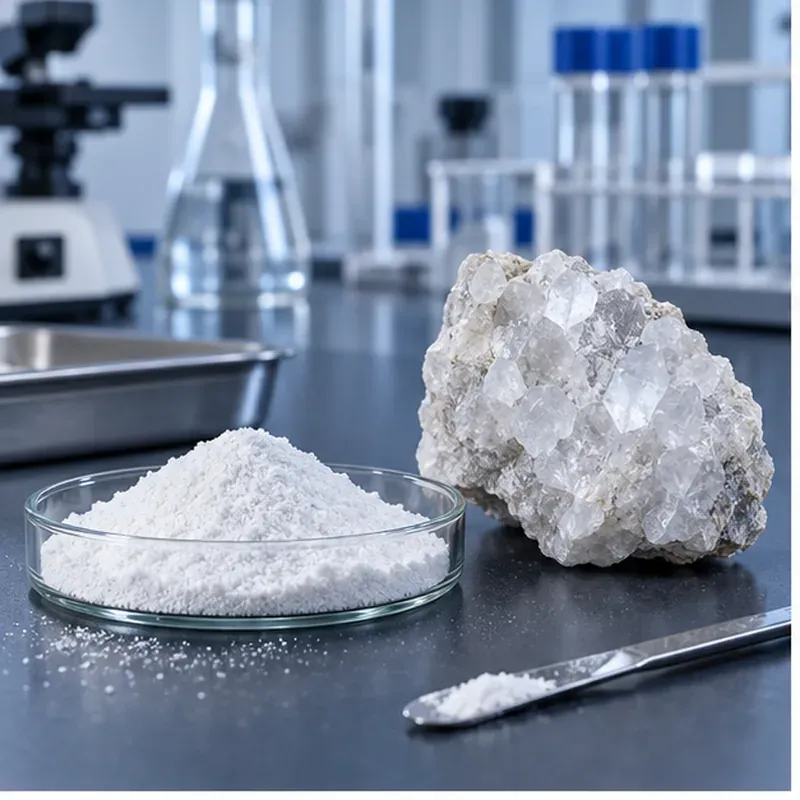
Quartz sand is a raw material; a glass-ceramic results from a complete batch and defined heat history. Qualify a sand by connecting its particle size, chemistry and mineral phases to repeatable fired-material measurements. SiO₂ alone cannot identify fired phases or predict finished properties.
Build a traceable raw-to-fired comparison
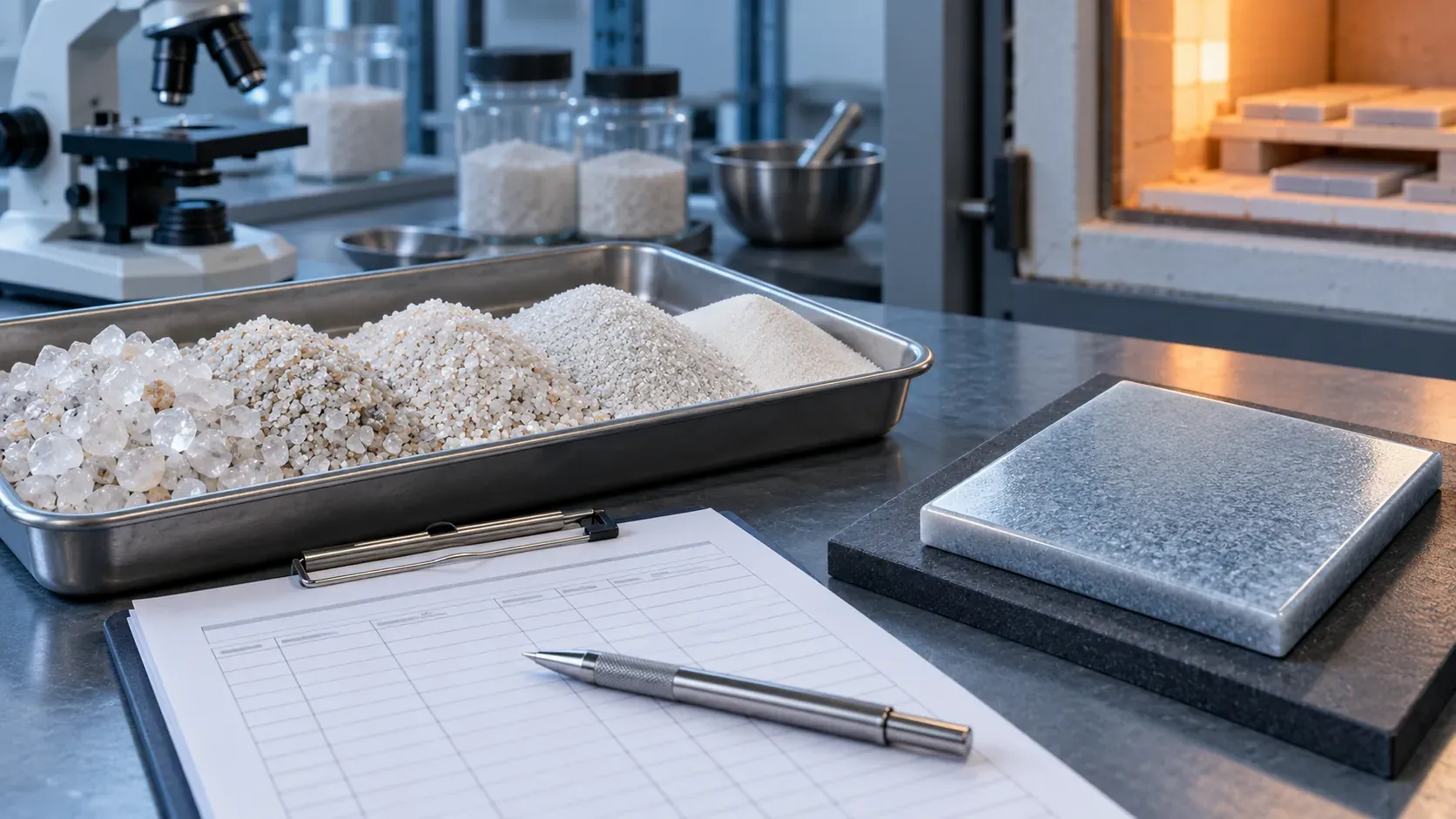
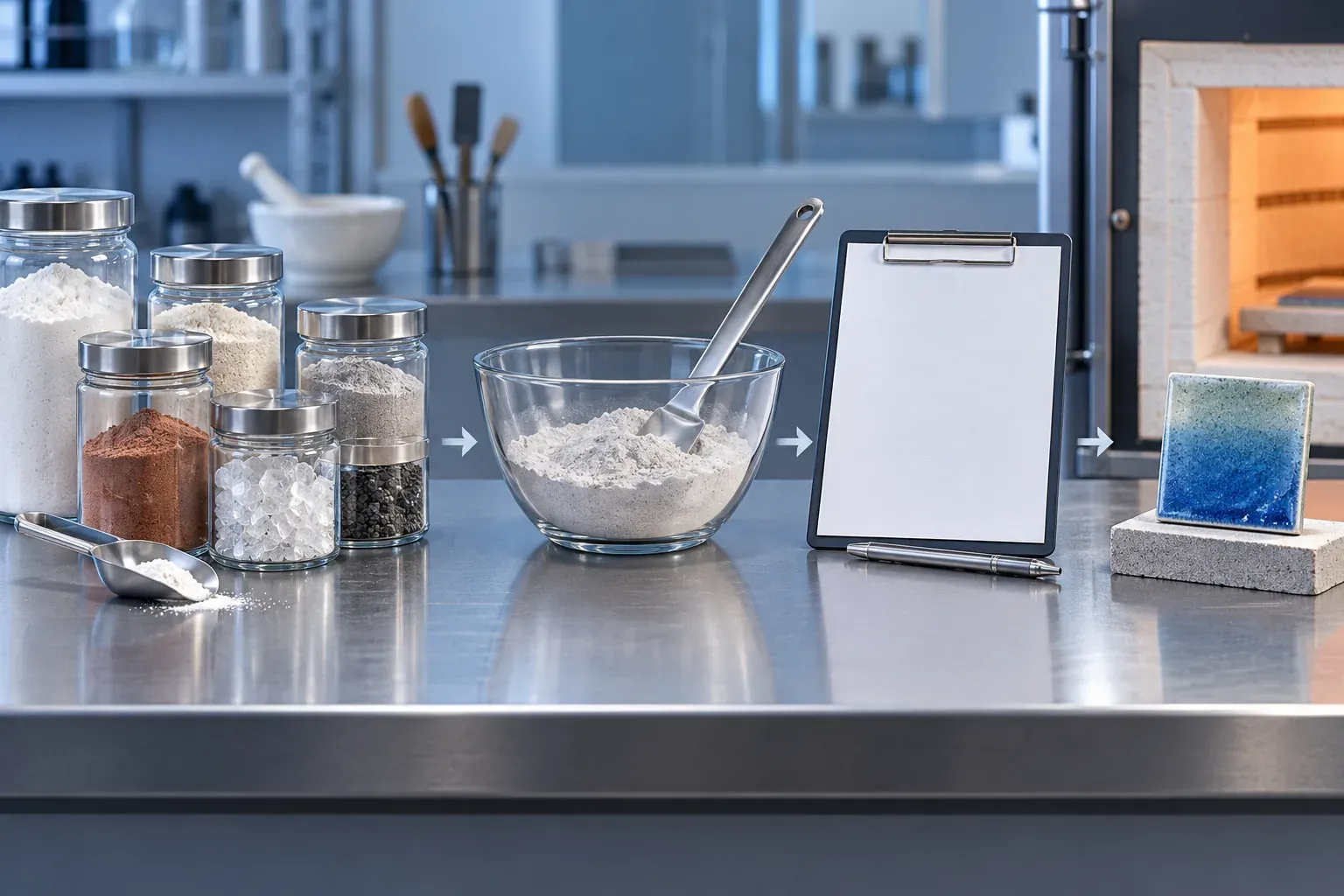
Use one target formulation and the current approved sand as control. Keep batch composition, mixing, melting or sintering route, specimen geometry, atmosphere and heat schedule fixed while screening a candidate. Label each batch and retain raw sand from the same lot to link incoming material with fired specimens.
When the purpose is to isolate raw-material variability, adjust batch additions to preserve the target oxide composition, and document every correction. If you intentionally use the sand as received without correcting its chemistry, record that as a formulation change: the comparison then tests both sand identity and the resulting batch composition. Avoid changing sand source, batch chemistry, particle-size range and thermal schedule together in a single screen.
Collect evidence at both stages
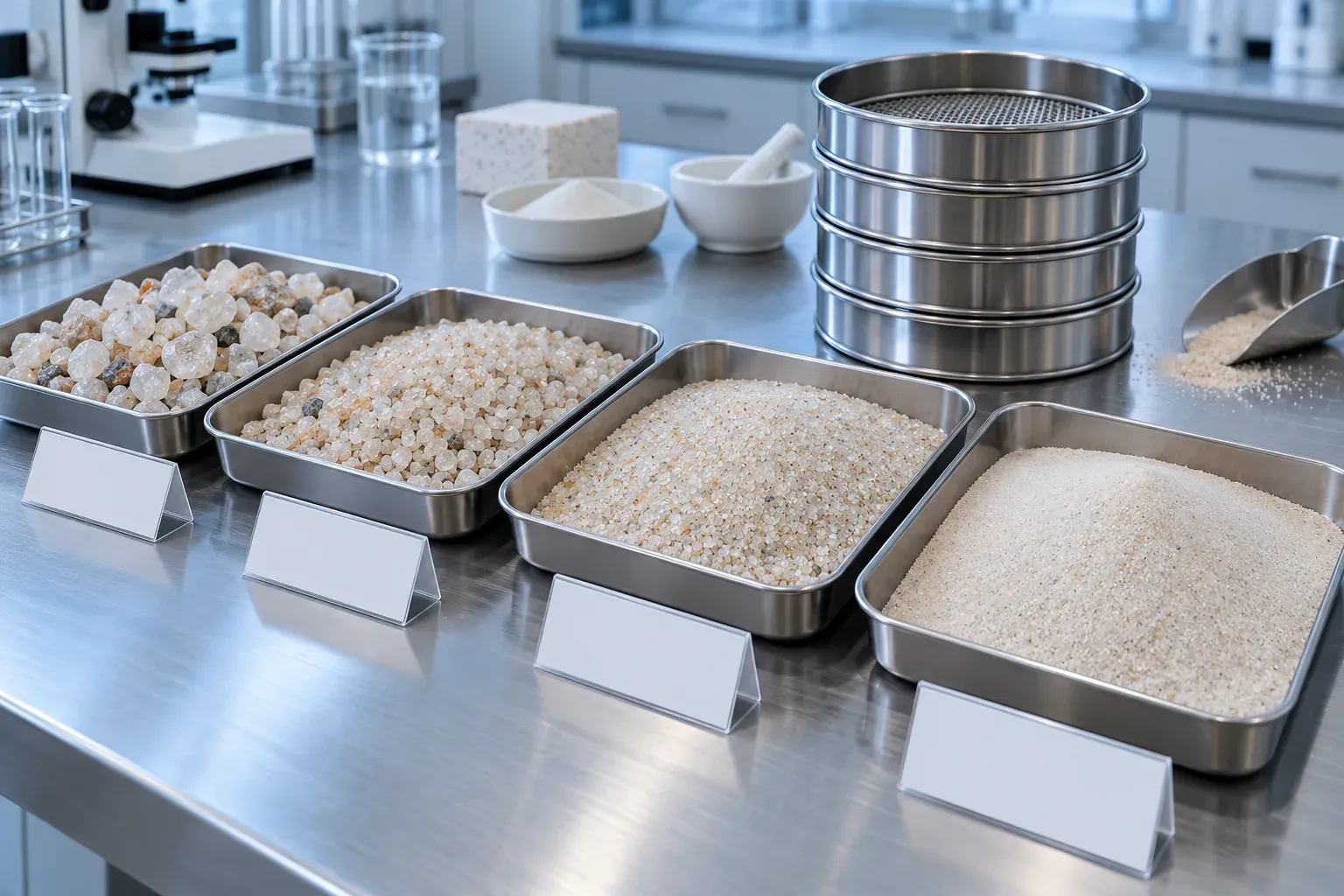
For raw material, document representative lot sampling and preparation. Measure process-relevant grading, bulk chemistry (for example, XRF) and mineral phases by XRD when needed. Record moisture, loss on ignition or contamination indicators as relevant. Chemistry and XRD answer different questions: oxide totals do not identify all phases, and phase analysis alone does not establish batch behavior.
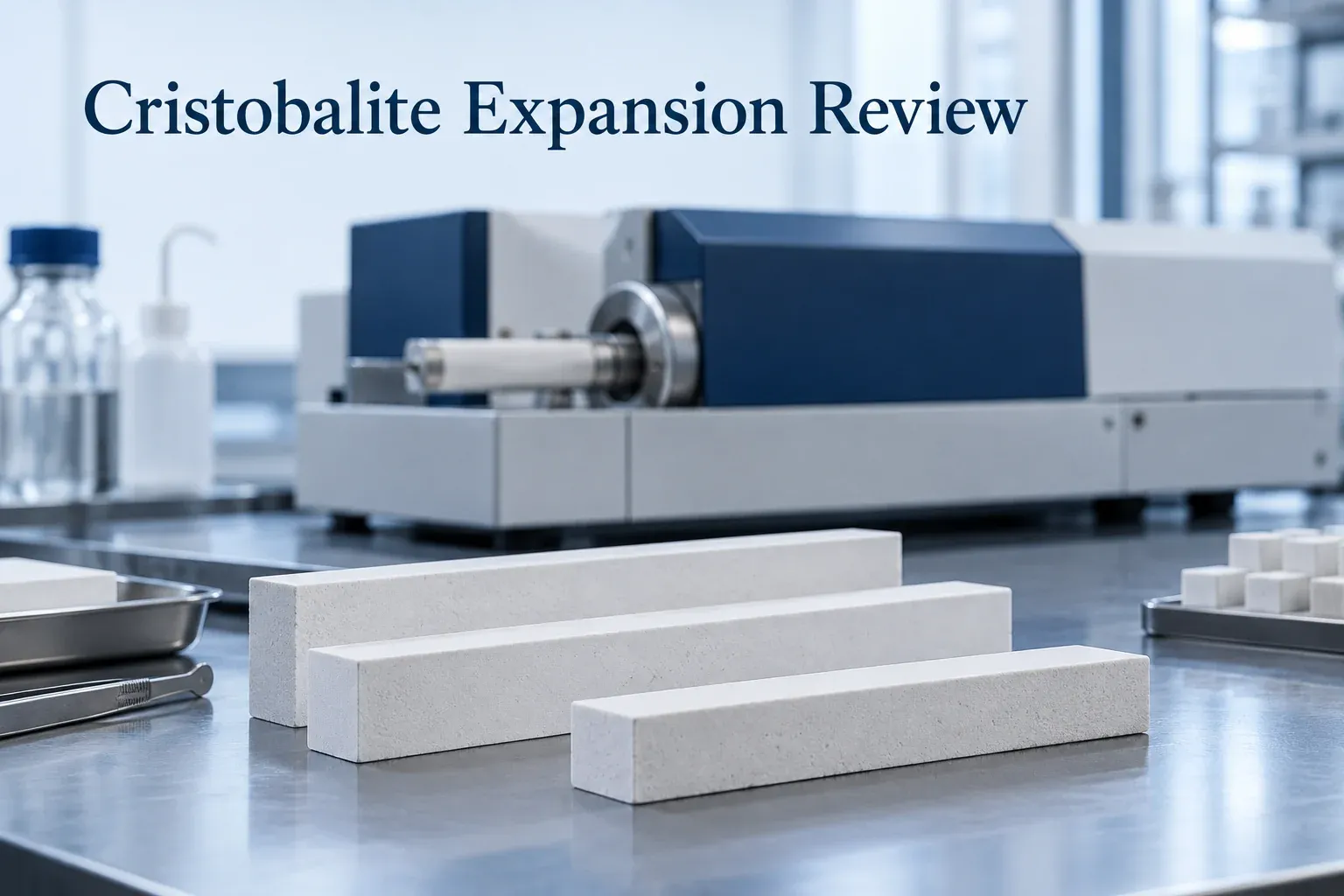
Retain fired samples from the same batch and heat history for phase, microstructure and physical tests:
Use fired phase results to interpret the raw sand
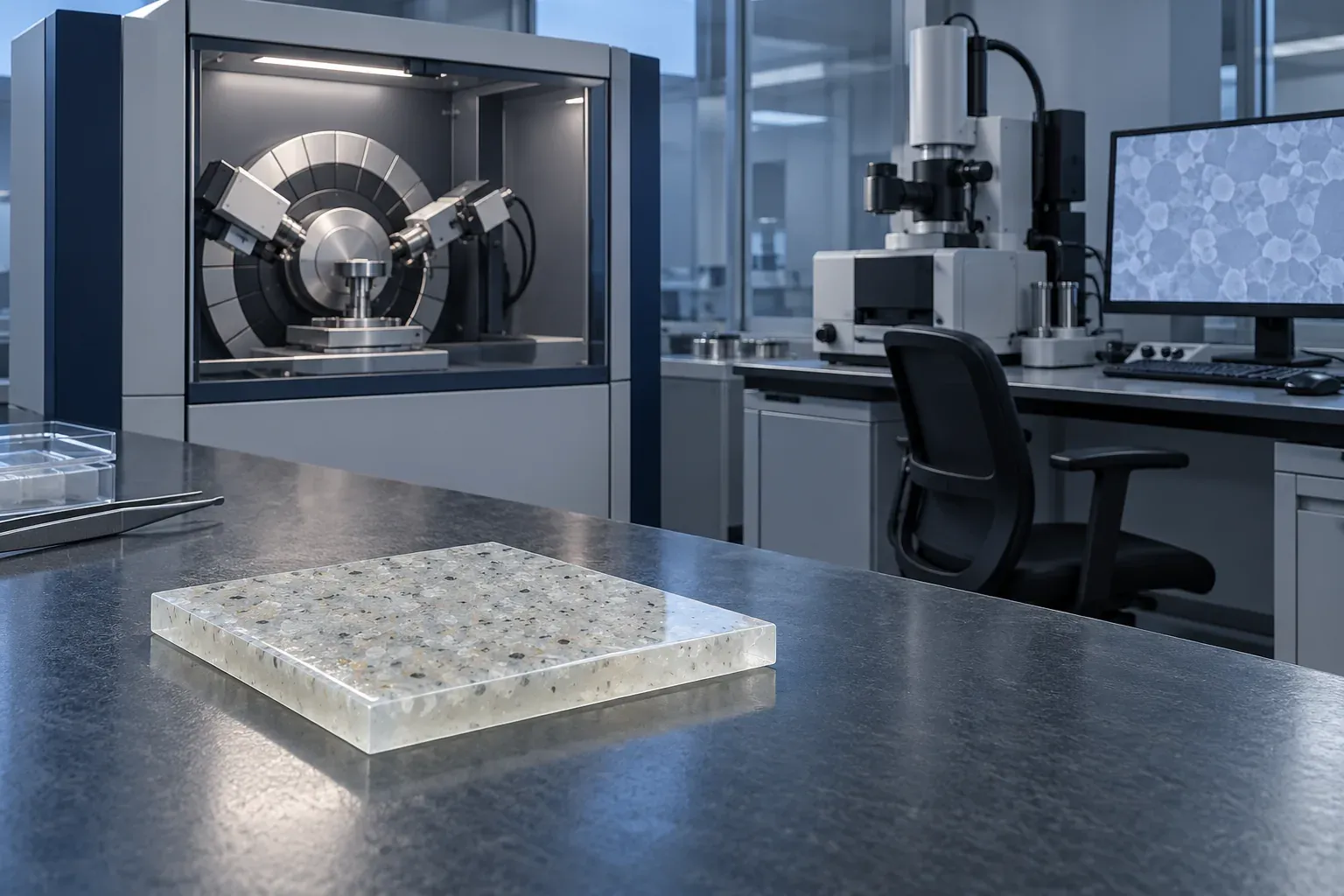
Analyze fired specimens by XRD under a consistent preparation and measurement method. Compare phase identities and, where the method supports it, quantitative phase estimates. Pair those results with optical or electron microscopy to examine crystal distribution, residual glass, pores and other features relevant to the intended material. Record specimen orientation and surface preparation where they affect the measurement.
Then connect phase and microstructure results to linear shrinkage, water absorption and bulk density measured with the same specimen dimensions, conditioning and test methods. These properties are outcomes of the batch and heat treatment. They should not be attributed to sand chemistry alone without a controlled comparison. SiO₂ in the incoming sand is one input; it is not a label for the fired phases, nor evidence that a particular target phase formed.
What the published studies can—and cannot—tell you
Wang and colleagues report quartz glass-ceramics made using desert sand and examine how pretreatment, including sieving and magnetic separation, changes sand chemistry and relates to glass stability, crystallization, phase transition, microstructure and properties. The article supports treating sand preparation and composition as variables to characterize. It does not establish performance for a different deposit, recipe or Changtong product grade.
Tulyaganov, Ribeiro and Labrincha studied calcium-magnesium-aluminosilicate glass-ceramics prepared from natural raw materials, including quartz sand, using a defined parent-glass composition and heat treatment. They used thermal analysis, XRD, SEM and dilatometry to follow sintering and crystallization. Their paper illustrates why results belong to a complete formulation and thermal history; its recipe and phase outcomes are not transferable specifications for this application.
Changtong’s natural quartz sand product page describes available size grades and published specification ranges. Those catalog details are a starting point for a grade inquiry, not independent evidence of glass-ceramic fired phases or finished properties. Confirm the current grade-specific TDS/COA and evaluate a representative lot in your own process.
A practical qualification decision
Set criteria for raw grading and chemistry, fired-phase repeatability, microstructure, property ranges and lot consistency. If results differ, check sampling, analytical repeatability and heat-history records; repeat before attributing the change to sand identity.
Does higher SiO₂ mean the desired fired phase will form?
No. Fired phases depend on the full batch chemistry and thermal history. Verify them on fired specimens.
Should raw sand XRD replace chemistry testing?
No. Chemistry and mineral-phase measurements are complementary; choose methods based on the question and specification.
Can a published sand-based glass-ceramic formula be used as our production recipe?
Not without independent formulation and process development. The cited studies describe specific materials and conditions.
Is the linked quartz-glass article a glass-ceramic specification?
No. It concerns quartz glass and is linked only as a related raw-material comparison.
Conclusion
Qualify natural quartz sand by preserving the chain from lot sampling and raw chemistry/mineralogy through batch identity, heat history and fired XRD, microscopy, shrinkage, water absorption and density. That evidence can show whether a specific lot is consistent with your defined process and acceptance criteria; it cannot be inferred from SiO₂ content or a supplier grade name alone.
Request current grade documentation
For current grade documentation, sample availability or a quotation, contact Changtong.
Sources and scope: Wang W. et al., “Crystallization behavior and properties of quartz glass-ceramics synthesized from desert sand,” Ceramics International (2024); Tulyaganov D.U., Ribeiro M.J. and Labrincha J.A., “Development of glass-ceramics by sintering and crystallization of fine powders of calcium-magnesium-aluminosilicate glass,” Ceramics International (2002). Both are cited for study-specific characterization and process context only. Their compositions, conditions and results are not product data or recommendations for Changtong grades.