Reading Cristobalite Expansion Curves: Heating, Cooling and CTE
Read cristobalite expansion curves with specimen identity, heating and cooling branches, calibration and CTE intervals. Separate powder and body evidence.
BEFORE APPROVING AN EXPANSION REPORT
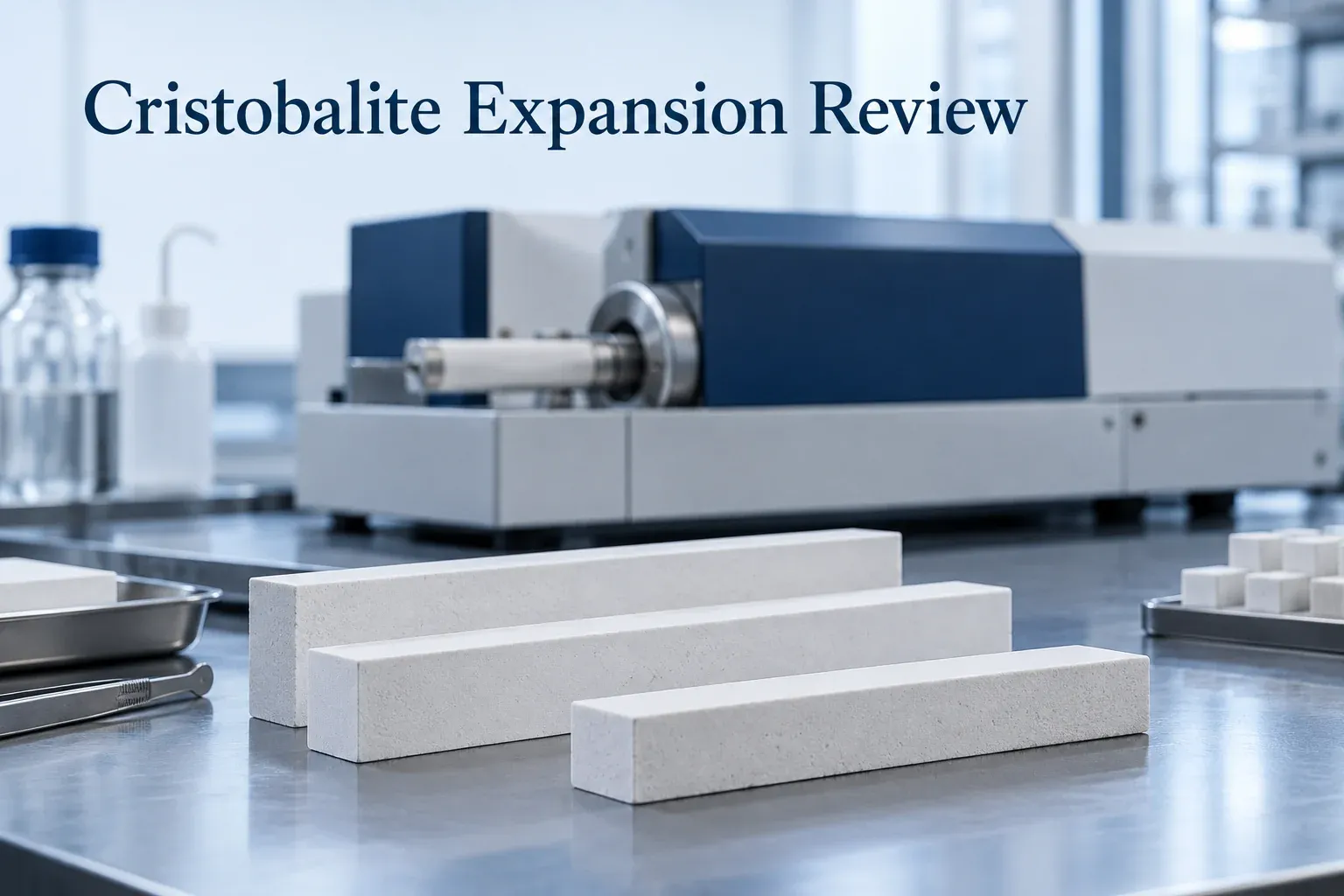
Find the specimen description, both temperature paths and the interval attached to the CTE value. If any is missing, ask for the underlying report before transferring the number into a design.
A single coefficient can hide the shape of an expansion curve. For a cristobalite-containing material, the purchasing question is therefore more precise than “what is the CTE?” It is “what specimen was measured, over which interval, under which thermal history, and which part of the curve is relevant to our component?” This guide is about interpreting that evidence, not assigning a universal expansion value to a powder.
Identify What the Instrument Actually Measured
ASTM E228 describes push-rod dilatometry for rigid solid materials. Its public scope emphasizes calibrated reference material and the importance of both length and temperature measurements. A report on a formed body is not automatically a report on loose powder, and a powder XRD identification is not itself a dilatometry result.
| Evidence | What it describes | What it does not establish |
|---|---|---|
| Powder XRD | Phase identification under the reported measurement conditions | The expansion curve of a customer ceramic or coating. |
| Dilatometry of a prepared specimen | Length response of that specimen under its test program | A universal coefficient for every formulation using the powder. |
| Finished-part cycling | The component response to a defined use-related cycle | An isolated powder property independent of the matrix. |
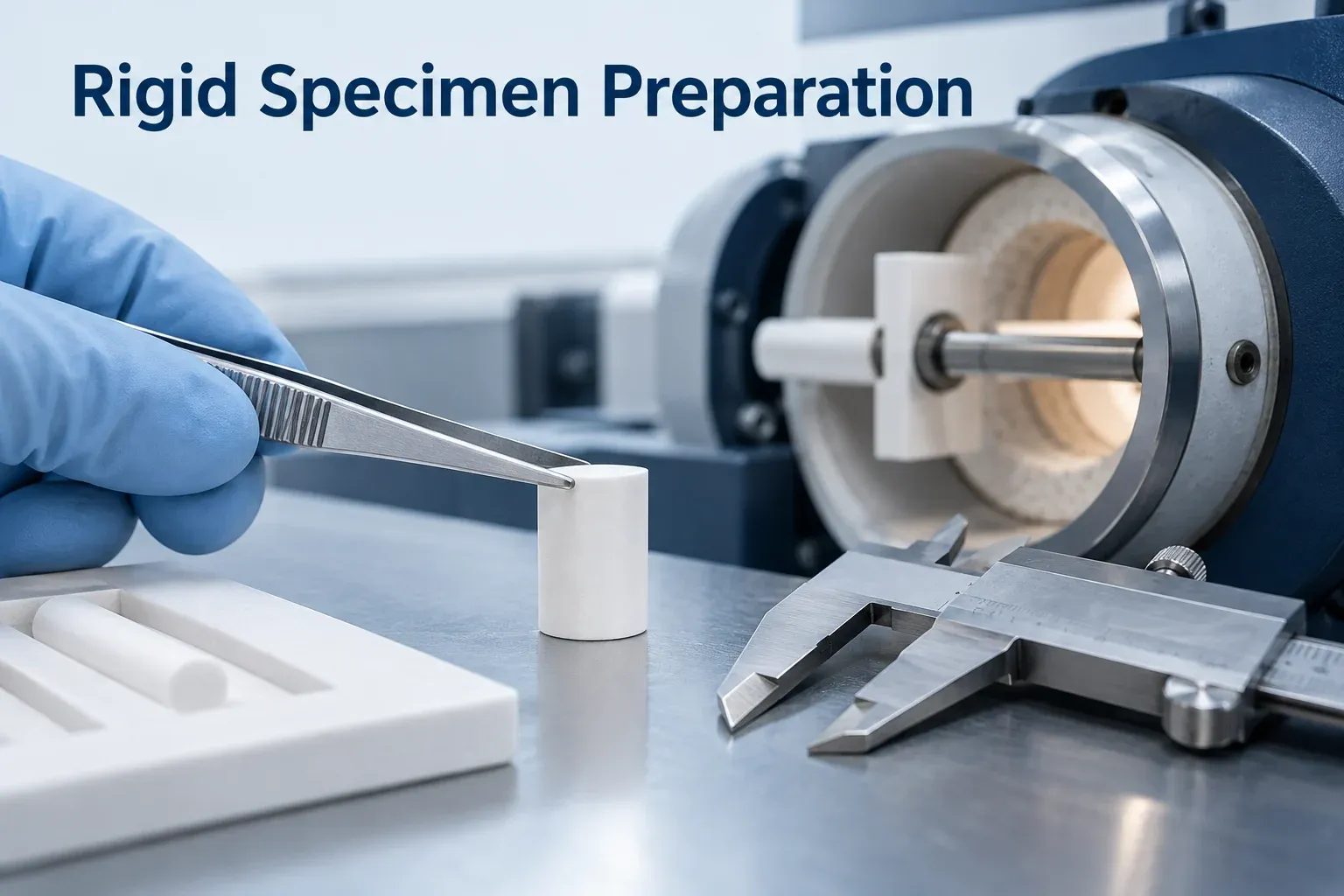
Record the specimen recipe, preparation, firing history, dimensions, measurement direction and any density or porosity information supplied by the laboratory. If the specimen is a composite, keep the binder or ceramic matrix identity visible. Without that context, two curves may look different for reasons unrelated to the incoming cristobalite grade.
Keep Heating and Cooling as Separate Branches
Damby and colleagues’ 2014 study used in-situ XRD and calorimetry to investigate volcanic cristobalite and compare it with synthetic samples. It reported sample-dependent behavior and a hysteresis loop associated with the alpha–beta transition. This is scientific reference evidence that material origin and thermal path matter; its transition temperatures and measured expansion must not be used as Changtong grade specifications.
A proposed report review should label each run and identify heating rate, cooling rate, dwell conditions, atmosphere and cycle number. Ask whether the curve was corrected for the instrument system and whether the reference calibration covers the measurement interval. Do not infer those details from a smooth-looking chart.

Attach the Temperature Interval to Every CTE Value
An interval-average linear expansion coefficient can be expressed as ΔL divided by the reference length and the temperature difference, with the report’s definition of reference length retained. A local or differential coefficient describes a different calculation. Specify which quantity is being compared and keep its units consistent. The arithmetic definition does not remove physical changes in the measured specimen.
| Report item | Question to resolve | Design boundary |
|---|---|---|
| Interval | Which start and end temperatures define the number? | Do not move a coefficient into a different interval without evidence. |
| Thermal branch | Heating, cooling or another selected run? | A branch must be identified when interpreting hysteresis. |
| Reference length and correction | What baseline and calibration were used? | Method consistency is needed before comparing suppliers. |
| Curve shape | Was a transition region included or excluded? | An average can hide behavior relevant to restraint or fit. |
For a constrained ceramic or bonded layer, the engineer should evaluate the measured material in the actual assembly and thermal program. A powder purchase limit alone cannot establish stress, cracking resistance or joint compatibility. Keep the proposed acceptance condition tied to the customer specimen and required service cycle.
Request a Matched Evidence Set
For an existing development direction, review controlled-phase cristobalite for technical ceramic body trials. Ask for the current grade identity and available phase evidence, then arrange the application-specific specimen measurements needed for the project. No commercial transition temperature, conversion percentage or CTE is promised in this article.
Do not silently relabel calcined quartz as cristobalite without phase evidence. Ground quartz, cristobalite and amorphous fused silica require distinct identities. Surface-treated quartz also needs its treatment description; precipitated and fumed silica are separate families. This matters because a curve should remain associated with the material and specimen that produced it.
Before interpreting an expansion specimen, establish the phase-evidence boundary using cristobalite XRD incoming-inspection guide.
Questions Buyers Ask
Does XRD provide a CTE value?
No. Phase evidence and a length-versus-temperature measurement answer different questions.
Can one published transition temperature define our grade?
No. Use grade and specimen evidence under stated conditions; research samples are not commercial batch guarantees.
Should heating and cooling be averaged together?
Do not combine them without a defined purpose and method. Preserve the separate traces for interpretation.
Is a low average CTE enough to approve a part?
No. The relevant curve, assembly constraint, processing history and component acceptance tests still need review.
Scientific and Method References
ASTM E228-22, public scope for push-rod dilatometry; Damby et al., The alpha–beta phase transition in volcanic cristobalite (2014), Journal of Applied Crystallography, DOI 10.1107/S160057671401070X. These are external technical references. The review workflow is engineering guidance, not Changtong measurements. References checked 8 October 2026.
Request a Quote
Provide the specimen recipe, intended temperature interval, heating and cooling program and required phase documents. Keep the component acceptance criteria attached to the trial request.
Discuss Your Silica Requirement