Silica Powder Quality Documents Buyers Should Request
Learn which silica powder quality documents to request, including specifications, lot records, safety information, and test evidence.
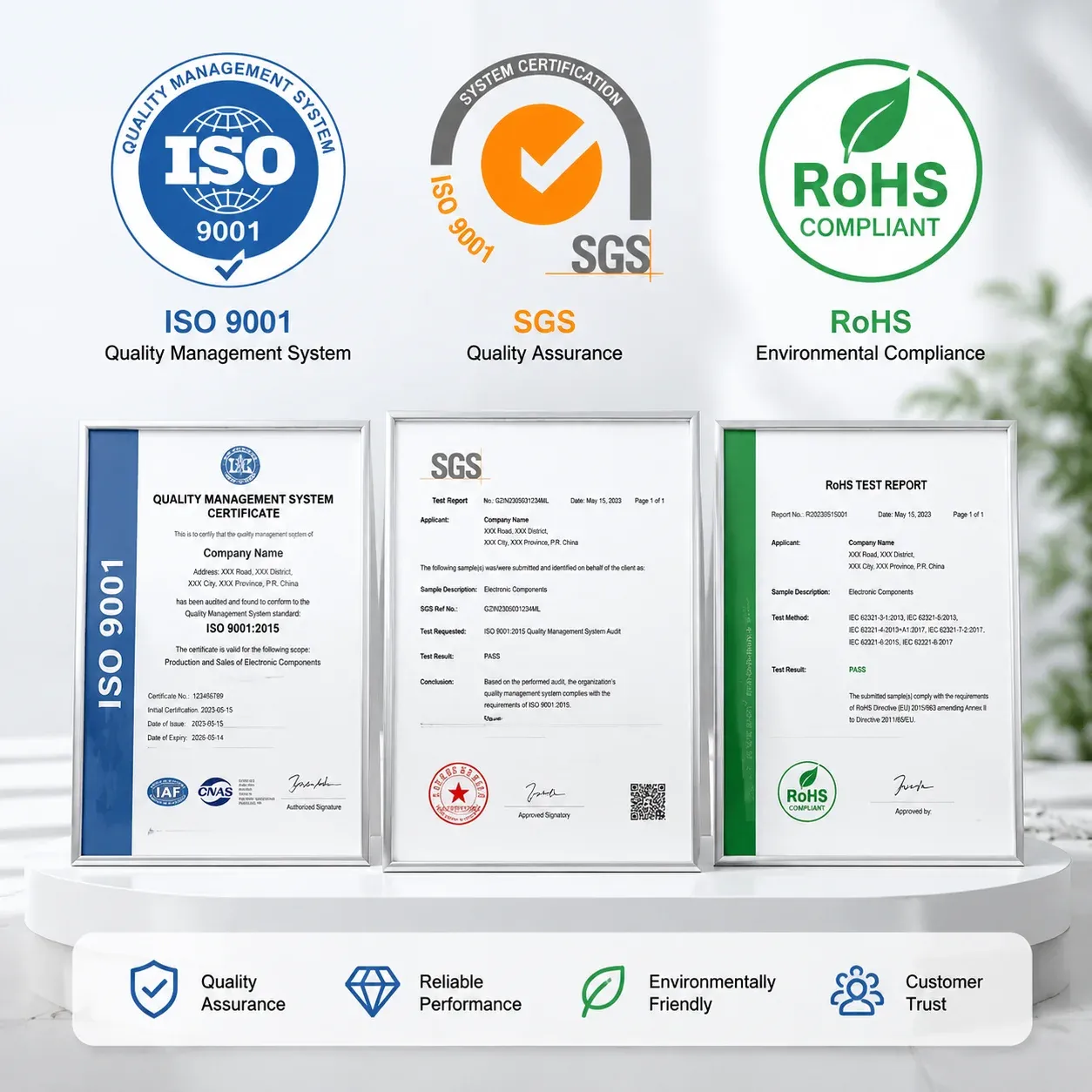
A complete silica-powder quality file connects the material identity, agreed specification, test method, result, lot and shipment.
Commercial documents help clear and receive the shipment. Technical, safety and quality documents help the buyer decide whether the material is suitable and whether the shipped lot can be released.
Last updated:
The Four Document Layers
Changtong document examples reviewed
These examples show how a document package can be tied to a grade, date and evidence type. They are not a substitute for current lot documents.
| Document | Scope and date | Evidence type |
|---|---|---|
| Fused silica COA | RG400/RG600; December 2025 | Grade-linked chemistry, physical properties and mesh/pass-range fields. |
| Investment casting grade sheet | Investment-casting grade; December 2023 | Grade-specific chemistry, physical properties and dust-removal statement. |
| Fused silica MSDS | March 2021 | Hazard, handling, cleanup and PPE guidance; verify the current revision. |
| Cristobalite EU SDS | M3000/G325; revision March 2020 | Product identity and EU-market hazard context; historical version. |
| XRD report | 325F/200F samples; test dated August 6, 2014 | Historical amorphous-state evidence for the tested fused silica samples. |
Source documents are controlled by their own revision, date and sample/grade scope. Ask for the current TDS, SDS and lot COA before release.
| Layer | Typical document | What to verify | When it matters most |
|---|---|---|---|
| Commercial and shipping | Commercial invoice, packing list, bill of lading and origin document where required | Product name, quantity, package count, lot or batch reference and consignee details | Customs, receiving and inventory reconciliation |
| Technical | Technical data sheet, specification and lot Certificate of Analysis | Material identity, chemistry, particle-size method, moisture and acceptance limits | Supplier approval, incoming release and formulation control |
| Safety | Current SDS for the exact grade and destination market | Hazards, handling, storage, exposure control, PPE and transport information | EHS review, receiving and worker training |
| Independent or regulatory | Third-party test report or requested compliance evidence | Laboratory, sample identity, report date, test scope and applicability to the quoted material | Customer audit, regulated application or higher-risk specification |
What the Certificate of Analysis Should Show
The COA is useful only when it is traceable to the material that will be received. At minimum, request the supplier's grade name, lot number, test date, reported units, methods and release status. The actual test fields depend on the product and application.
| COA field | Buyer verification question |
|---|---|
| Material and grade | Does the description match the quotation, sample and purchase order? |
| Lot or batch number | Can the result be tied to the package label and shipping documents? |
| Chemistry | Are SiO2, relevant oxides and units reported against the agreed limits? |
| Particle size | Is the result a sieve cut, retained percentage, D-value or another measure? |
| Moisture and other application fields | Are conditions and methods clear enough to compare with the buyer's incoming test? |
| Approval and date | Is the document current and signed or released under the supplier's quality process? |
How to Use Third-Party Reports Correctly
Check identity before reading the result
The report should identify the sample, material description, laboratory, date and scope. A report for one sample does not automatically certify every future shipment.
Separate screening from certification
A screening report can support a purchasing decision, but it is not the same as a product specification or lot release record. Keep the report's limitations with the purchasing file.
Match the test to the application
Chemical screening, restricted-substance screening, PSD, moisture, whiteness and other tests answer different questions. Request only evidence that maps to a real acceptance or compliance need.
Documents to Request Before the First Trial
- Current technical data sheet for the exact grade.
- Current SDS for the destination market.
- Representative sample with a matching identification label.
- Sample or recent lot COA showing methods, units and limits.
- Packaging and traceability information.
- Any customer-specific, regulatory or third-party report required by the application.
For a grade discussion, the buyer may compare 325-mesh fused silica powder, investment-casting fused silica powder, and High-Whiteness Cristobalite Powder for Epoxy and Refractory Applications. The current data sheet and COA should control the final approval.
Frequently Asked Questions
Is a TDS enough to release a shipment?
Usually not. A TDS describes a grade; a lot-specific COA connects measured results to the shipped material. Your own incoming inspection may still be required.
Should every report be from a third-party laboratory?
Not necessarily. Routine lot release can use the agreed supplier quality process, while independent reports may be requested for audits, regulated applications or defined risk controls.
What if a supplier sends a report without a lot number?
Treat its traceability as incomplete and ask for a corrected or additional document before approving the shipment.
References
- OSHA 29 CFR 1910.1053 — Respirable crystalline silica, for safety-program context.
- ISO 13320 — Particle size analysis by laser diffraction methods, for PSD method context.
Build the Document Package Around Your Acceptance Plan
Tell us the grade, application, destination market, required tests and lot-document expectations so the quotation file can be aligned before shipment.
Contact our technical sales team