Fused Silica in Epoxy: Separate Low Expansion from Heat Transfer
Separate dimensional-control and heat-transfer requirements in fused-silica-filled epoxy. Compare thermal impedance with thickness, contact and casting quality.
Does a low-expansion filler also make a heat-dissipating epoxy? That question combines two different design requirements. A casting can be dimensionally stable and still have an inadequate heat path. State both requirements separately before selecting a mineral grade.
Changtong technical guide · · Silica Materials & Properties
Turn the Product Brief into Two Acceptance Lines
The first line concerns dimensional response: the customer's thermal range, cured formulation and permitted movement relative to adjoining materials. The second concerns heat flow: where heat enters, how far it travels, the available area and how the casting contacts other surfaces. Electrical insulation remains a further requirement rather than a consequence of either thermal result.
Changtong's electrical epoxy casting product is positioned as a low-expansion fused-silica raw material for formulation trials. It is not a finished thermally conductive compound with a guaranteed conductivity value. A powder property, a composite property and the performance of the assembled component are three distinct pieces of evidence.
Measure the Thermal Path You Intend to Compare
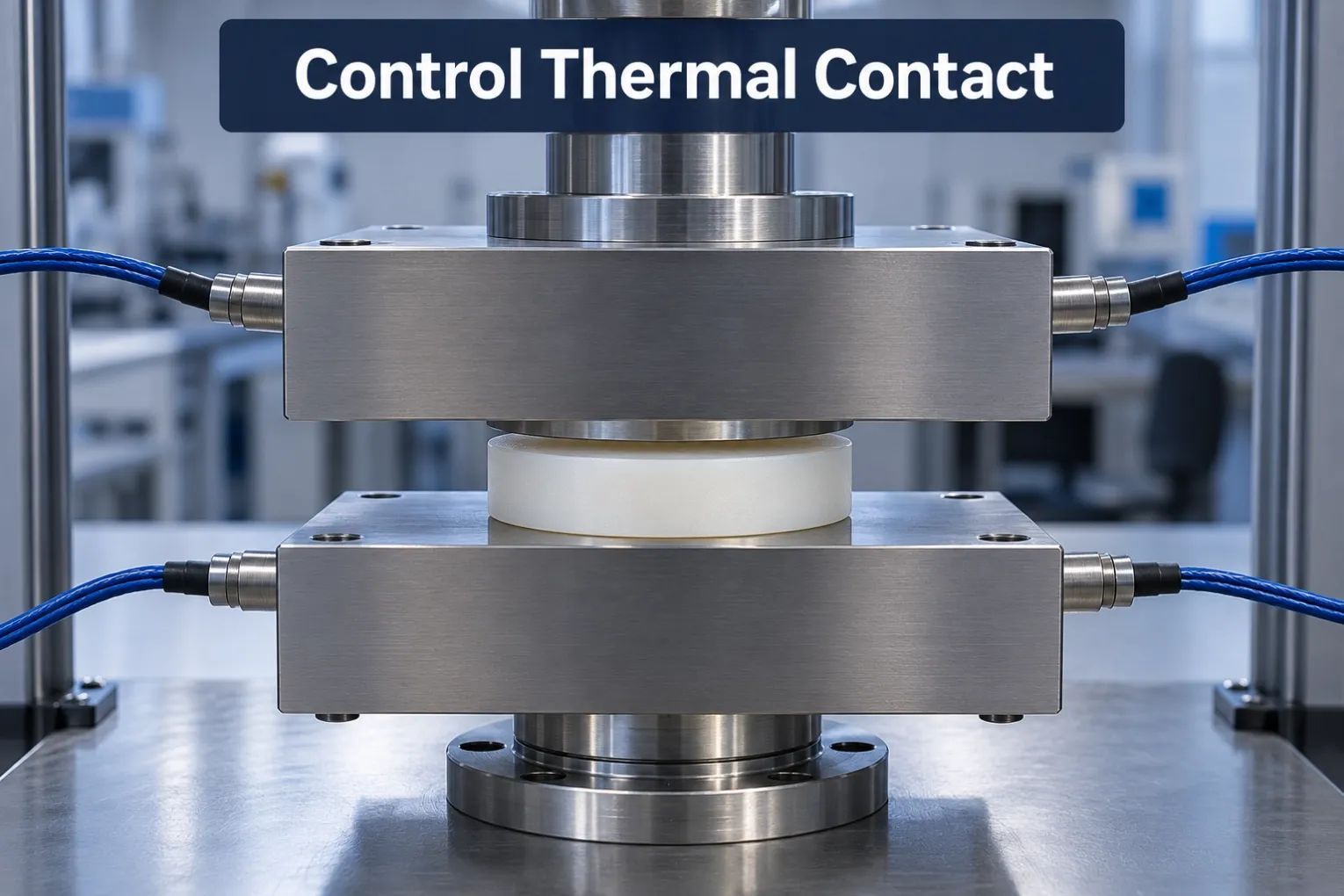
For a specimen with an approximately one-dimensional steady heat path, thickness and apparent conductivity contribute to thermal resistance. Contact resistance adds to that path. A thin test piece with favorable surface contact is therefore not automatically a better bulk material than a thicker piece with a rough interface.
ASTM D5470-17(2024) is a relevant method family for thermal transmission of electrical insulation materials. The public description explains the need to distinguish specimen behavior from interface effects. Have the laboratory select the applicable procedure and geometry. Do not calculate a supplier conductivity claim from an unexplained single thermal-impedance number.
| Requirement | Evidence to request | Misleading shortcut |
|---|---|---|
| Dimensional control | Cured-system expansion under the relevant thermal history | Using powder expansion as the finished-part value |
| Heat transmission | Method, thickness, temperature and contact conditions | Comparing isolated conductivity or impedance figures |
| Electrical casting release | Relevant insulation tests and specimen quality | Assuming heat-transfer performance proves electrical suitability |
Use a Thickness Series When the Method Requires It
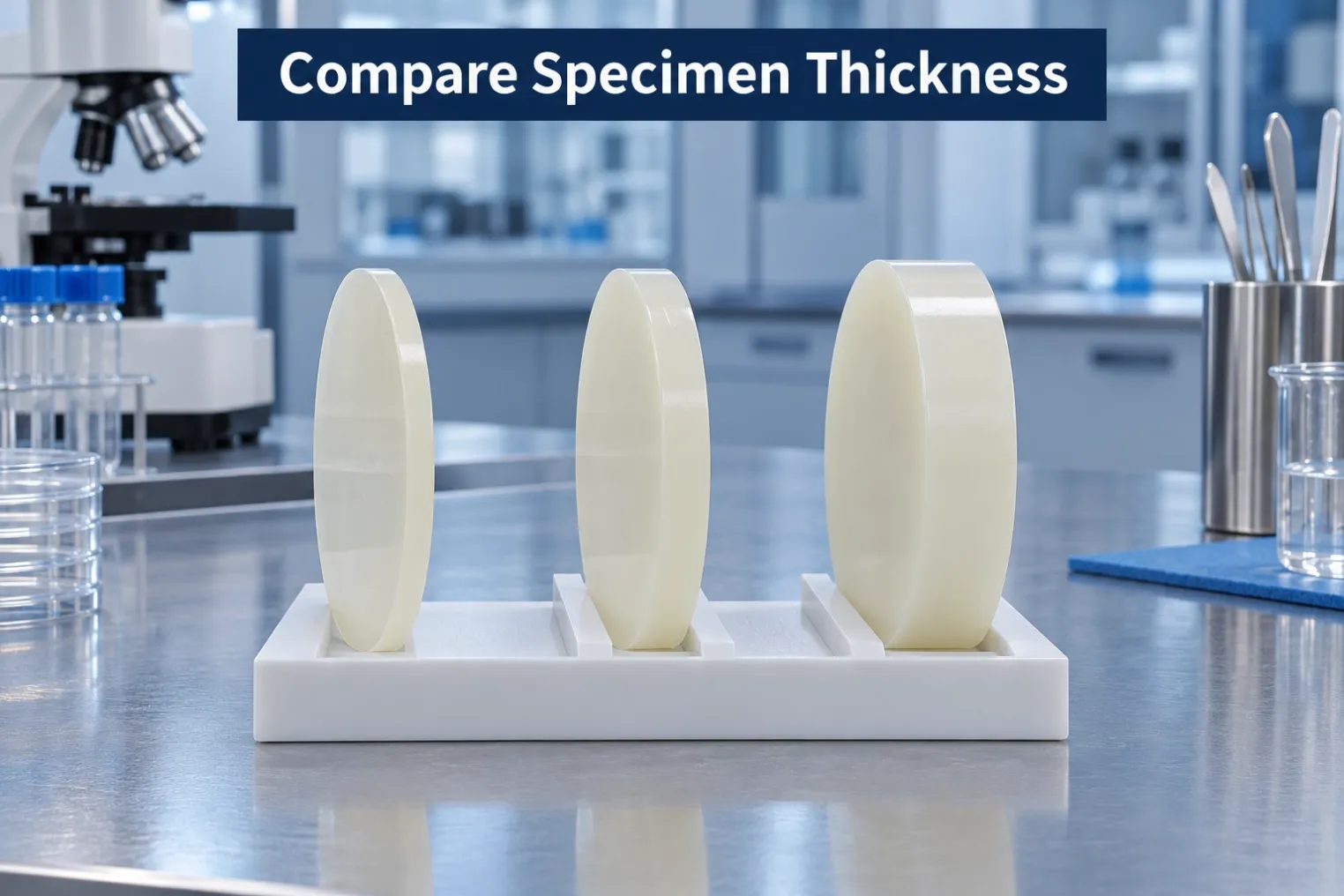
Discuss whether matched specimens at different measured thicknesses are appropriate for the selected method. Keep formulation, cure, conditioning, surface preparation and applied pressure consistent. The relationship between thickness and measured impedance can help separate bulk and contact contributions when the method assumptions are met.
Thickness variation should not conceal a changed casting quality. Check for voids, poor wetting, sedimentation and nonuniform cure. A specimen series prepared from different mixing histories may introduce effects that resemble a thickness dependence. Preserve the batch identity and specimen orientation so that the laboratory result can be interpreted.
Choose the Grade Against the Complete Design
Compare the existing approved recipe and the proposed fused-silica recipe using declared loading bases. If a different filler family is introduced to pursue heat transfer, qualify it as a new formulation and recheck processing, electrical properties and dimensional behavior. Do not transfer thermal or dielectric values from nanosilica, spherical silica or other mineral systems to angular fused silica.
The procurement decision should name which requirement is being supported and which remains open. A successful dimensional trial may justify further development while heat-transfer testing continues. It should not be described as a completed thermal-management qualification. Ask for current mineral grade evidence and define cured-part tests with the component designer.
No Changtong composite conductivity, CTE or thermal-management performance value is asserted. This guide separates procurement requirements and measurement conditions, without prescribing an unverified formulation.
Frequently Asked Questions
Can low expansion substitute for a conductivity requirement?
No. Define and measure both against the actual component design.
Is a single impedance number enough?
Only with the method, geometry and interface conditions needed to interpret it; it is not automatically a bulk conductivity.
What belongs in the RFQ?
Resin and cure system, loading, casting geometry, dimensional requirements, heat-path conditions and required electrical tests.
Related products
Fused Silica Powder for Electrical Epoxy CastingRelated technical guides
Comparing fused silica–epoxy dielectric-loss evidenceReferences and Evidence Limits
- ASTM D5470-17(2024): thermal transmission method listing
- ASTM D5470 public significance-and-use explanation (earlier edition; not the execution procedure)
Public source descriptions checked on 22 October 2026. References support the stated subject and method boundaries; they are not Changtong test certificates. Consult the applicable full method for execution.
Request a Quote
Send the epoxy system, casting geometry, expansion target, heat-transfer test basis and electrical acceptance requirements for a grade discussion.
Request a Grade Review and Quote