
How to Read a Silica Powder COA: Fields and Test Scope
Learn how to interpret SiO2, particle size, moisture, appearance, lot identity and test methods on a silica powder certificate of analysis.
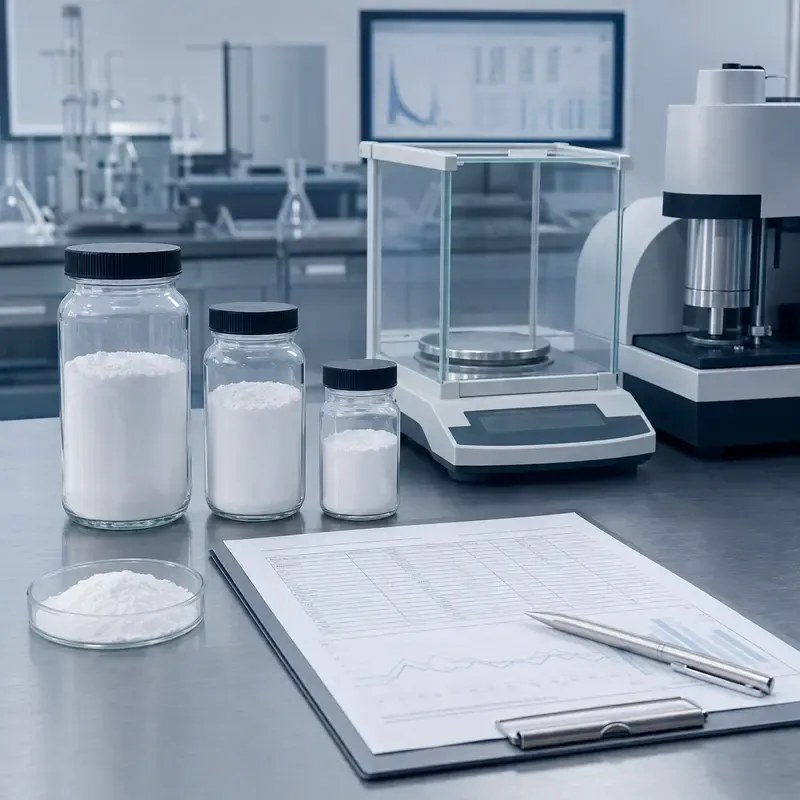
A COA is useful only when its result is connected to the right material, method, lot and acceptance limit.
This guide explains how to read a silica powder certificate of analysis without extending one report into an unsupported guarantee for every grade or shipment.
Last updated:
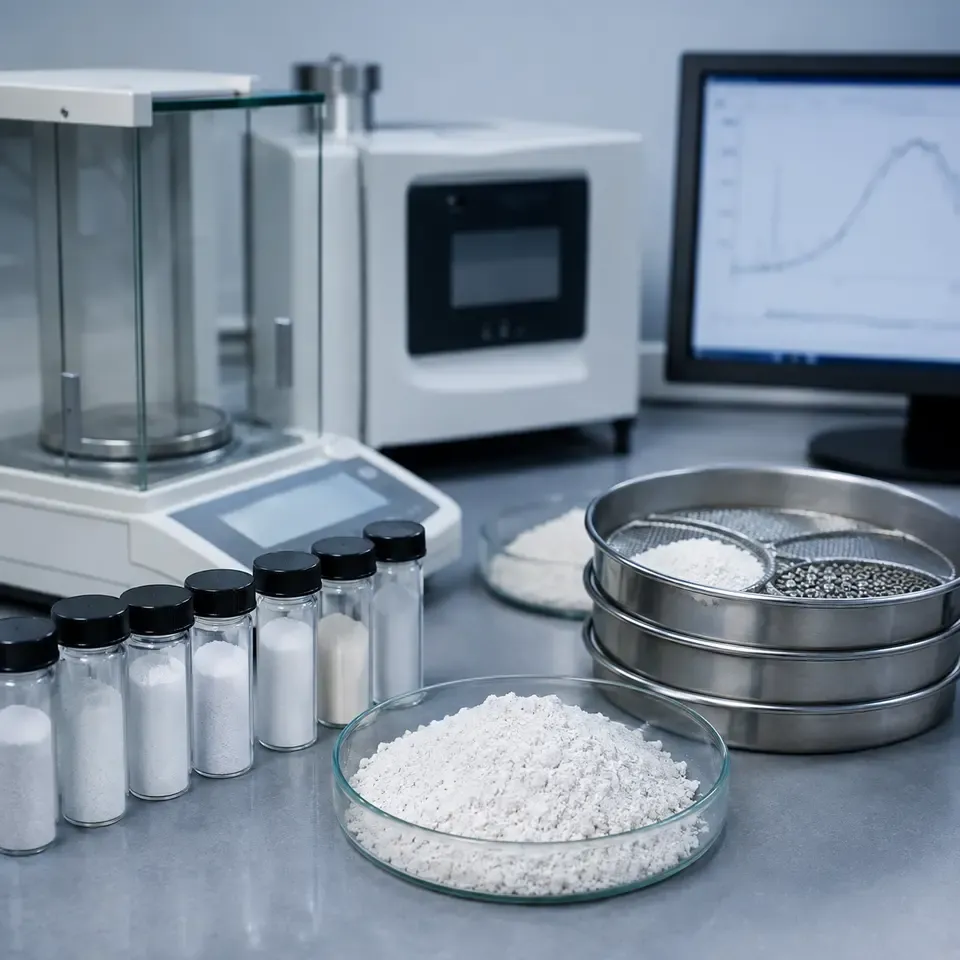
The COA Reading Order
| Check first | Question | Why it matters |
|---|---|---|
| Product identity | Does the name match the ordered material family and grade? | Quartz, fused silica and cristobalite are not interchangeable. |
| Sample or lot | Is the report tied to a lot, sample or general grade? | A lot result cannot automatically represent every future shipment. |
| Method | Which method and units were used? | Mesh, sieve and laser PSD results answer different questions. |
| Result and limit | Is the number a typical value, specification limit or measured result? | It determines whether the result can support release. |
| Date and revision | Is the document current for the purchasing decision? | Old evidence may be useful historically but not sufficient for release. |
How to Interpret SiO2 and Particle Size
Changtong’s fused silica COA identifies an amorphous structure and reports SiO2 above 99.85% for the named material. The important reading discipline is to keep that result attached to the document’s product and scope. It should not be copied into a natural crystalline silica or cristobalite article as a universal company value.
For particle size, the buyer should read the mesh or micron column together with the method, pass/retained basis and sample reference. A single sieve result is not the same as D50 or a complete distribution.

COA Errors That Create Purchasing Risk
| Error | Why it is risky | Better action |
|---|---|---|
| Reading the number without the method | Different methods may produce non-equivalent size descriptions. | Record the method and acceptance basis in the specification. |
| Using a typical value as a limit | A typical result is not necessarily a release boundary. | Ask the supplier to identify the agreed limit. |
| Using an old report for a new lot | Historical evidence may not represent current material. | Request current lot-matched evidence where release requires it. |
| Ignoring identity | Similar names can hide different phases or production routes. | Match COA, TDS, SDS and order line to the same grade. |
Frequently Asked Questions
Does a COA replace a TDS?
No. A TDS explains the grade reference; a COA reports a defined sample or lot result. They serve different roles.
Is SiO2 above 99.85% valid for every Changtong silica product?
No. That value belongs to the identified fused silica COA scope and must not be generalized to other material families or grades.
What should I do when the COA has no lot number?
Ask whether it is a grade reference or a shipment result, and request a traceable lot or sample identifier before release.
Related Changtong Product
Use Fused Silica Powder 325 Mesh as a product-level example when comparing COA identity, chemistry and sieve fields. The current lot COA and agreed test method should control acceptance.
References
- ISO 13320 particle-size analysis by laser diffraction.
- Changtong COA, TDS, SDS and XRD evidence chain.
- Silica powder quality documents buyers should request.
Request a Lot-Matched COA Review
Send the grade, lot, intended acceptance limits and particle-size method for a focused review.
Contact Changtong quality team