Fused Silica vs Cristobalite vs Quartz
Compare fused silica, cristobalite, and crystalline quartz by structure, properties, process fit, and purchasing questions.
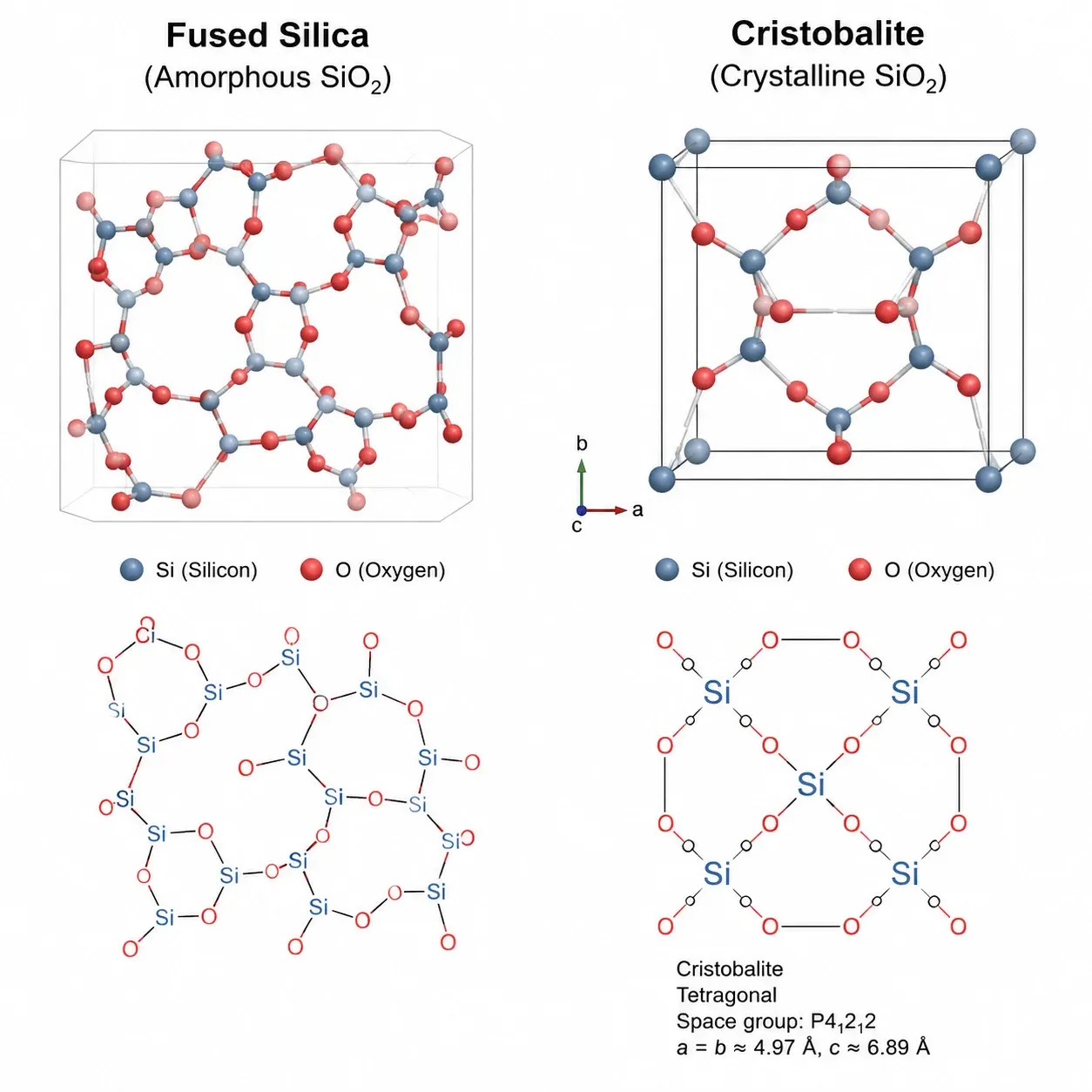
Fused silica, cristobalite and crystalline quartz are all silicon-dioxide materials, but they are not interchangeable grades.
Their origin and structure change the thermal, optical, chemical, handling and application questions a buyer must ask. Choose by process requirement—not by the word “silica” alone.
Last updated:
Changtong evidence note
The company documents below support material identity, but each item is limited by its date and sample/grade scope.
| Material/document | Evidence | Scope limitation |
|---|---|---|
| Fused silica COA, December 2025 | Structure is listed as amorphous. | Applies to the documented RG400/RG600 COA scope. |
| Fused silica XRD report, test dated August 6, 2014 | 325F Mesh and 200F Mesh samples conclude “Amorphous State.” | Historical test evidence; not current-lot release evidence. |
| Cristobalite EU SDS, revision March 2020 | Identifies Cristobalite Flour trade names M3000/G325, CAS 14464-46-1, with cristobalite >85%. | Historical EU SDS; confirm the current TDS/SDS for the destination market. |
Source documents are evidence for the named scope only. Do not transfer a phase or specification statement to another grade without current supporting documents.
Comparison at a Glance
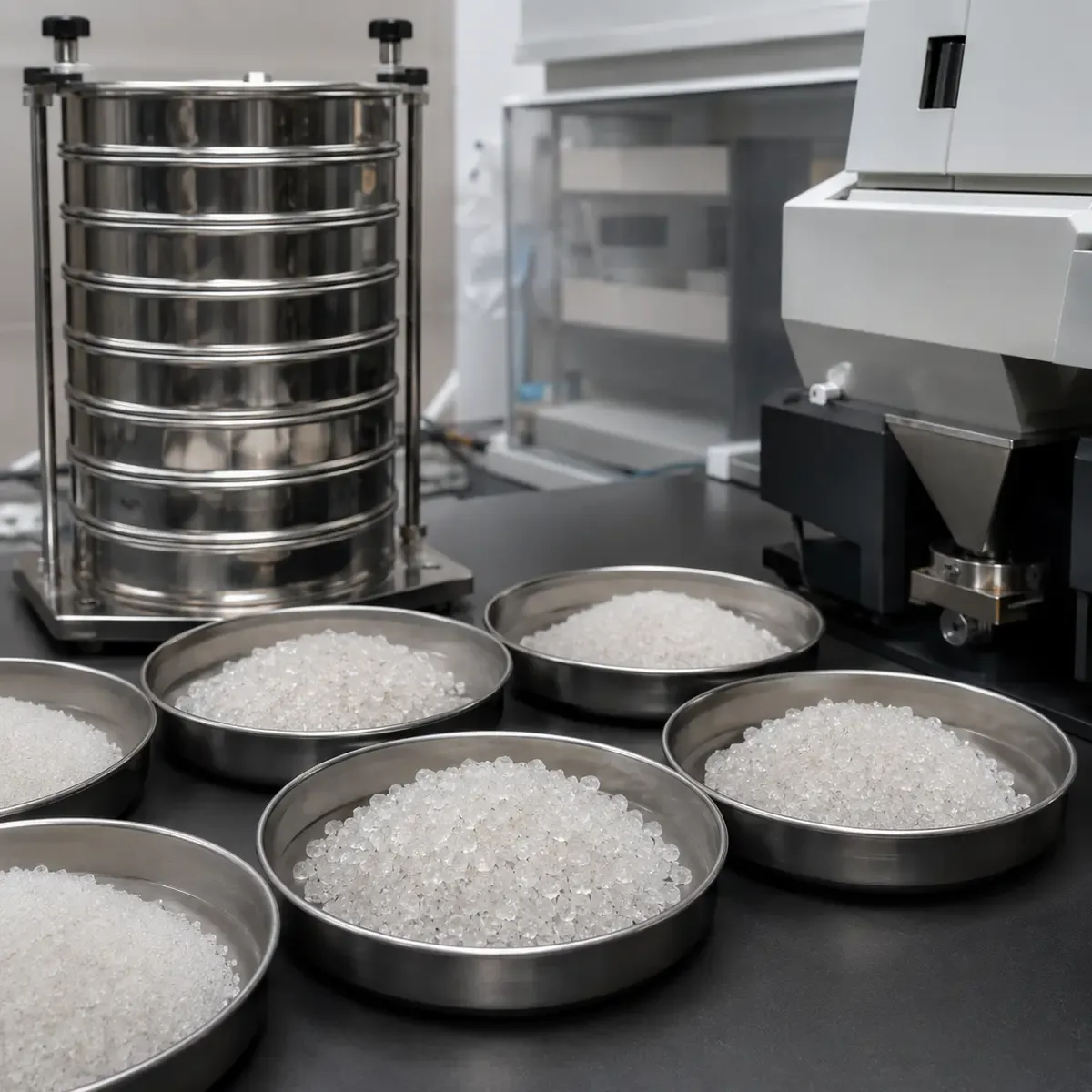
| Material family | Origin and structure | Selection strengths | Questions to verify |
|---|---|---|---|
| Fused silica | Quartz melted and cooled into an amorphous form. | Low thermal expansion relative to many crystalline fillers; useful when thermal shock or dimensional stability is central. | Grade chemistry, PSD, dust condition, shell or resin compatibility and firing cycle. |
| Cristobalite | Quartz converted through controlled high-temperature treatment, then ground and classified. | White, fine filler grades can support casting, coatings, ceramics and other applications where whiteness and a controlled cut matter. | Conversion evidence, whiteness, chemistry, PSD, moisture and safety documents. |
| Crystalline quartz powder | Natural quartz reduced by crushing, grinding and classification without conversion to fused silica or cristobalite. | Broad filler family for coatings, plastics, rubber, adhesives, casting and other formulations. | Source consistency, chemistry, PSD, moisture, surface treatment and dust controls. |
Why Structure Changes Process Behavior
Amorphous fused silica and crystalline materials respond differently to heating and cooling. Cristobalite is a crystalline phase produced by thermal conversion, while natural quartz remains the starting mineral in a ground-quartz product. These distinctions affect thermal design, phase expectations, whiteness, formulation behavior and the safety documentation that accompanies dry powder.
A material comparison should record application temperature, dimensional-stability target, appearance target, binder or resin, PSD, chemistry limits and handling controls.
Choose by Application Question
| Application question | Likely priority | Evidence to request |
|---|---|---|
| Repeated heating and cooling? | Thermal expansion, phase behavior and thermal-shock response | Material identity, relevant grade data and application trial |
| Bright white filler or surface? | Whiteness, contamination control and fine-particle consistency | Current TDS, chemistry result and agreed whiteness method |
| Resin, rubber or coating blend? | PSD, wetting, viscosity, dispersion and surface compatibility | PSD method, moisture, surface-treatment status and formulation trial |
| Dry industrial handling? | Respirable-dust controls and SDS review | Exact SDS, exposure assessment and housekeeping procedure |
Common Substitutions That Create Risk
- Replacing fused silica with ground quartz because both names contain “silica.”
- Replacing cristobalite flour with untreated quartz without checking phase and whiteness requirements.
- Comparing mesh labels without comparing the same sieve or PSD method.
- Comparing a typical value from one grade with a guaranteed limit from another.
Changtong supplies crystalline silica, fused silica and cristobalite product families. Review the relevant investment-casting fused silica powder, 325-mesh fused silica powder, or High-Whiteness Cristobalite Powder for Epoxy and Refractory Applications page, then approve current grade documents and trial results for your own process.
Frequently Asked Questions
Is cristobalite the same as quartz powder?
No. Cristobalite is a crystalline phase produced from silica through high-temperature conversion. Ground quartz powder remains the natural quartz phase unless separately treated.
Why is fused silica often selected for investment casting?
Its amorphous structure and low thermal expansion can support dimensional stability and thermal-shock control. The suitable grade still depends on the shell system, particle size and firing cycle.
Can the three materials share one specification?
No. Material identity, chemistry, PSD, thermal behavior, safety documentation and application limits should be written for the actual family and grade.
References
- ISO 13320 — Particle size analysis by laser diffraction methods, for comparable PSD reporting.
- OSHA — Crystalline silica overview, for handling and exposure-control context.
Choose the Material Family Before the Grade
Send the process temperature, application, binder, target particle size, chemistry limits and required documents for a material-selection discussion.
Contact our technical sales team